
Hampden Estate
Hampden Estate has distilled rum in Trelawny Parish, Jamaica, since 1753. It ferments molasses on wild yeast in open cedar vats, acidified with vinegar it makes from its own cane, feeds those vats with dunder and muck drawn from pits in the ground, distills on double retort pot stills, and adds nothing to what comes off them.
PM Spirits is the United States importer for Hampden Estate, the high ester Jamaican rum distillery in Trelawny.
The estate
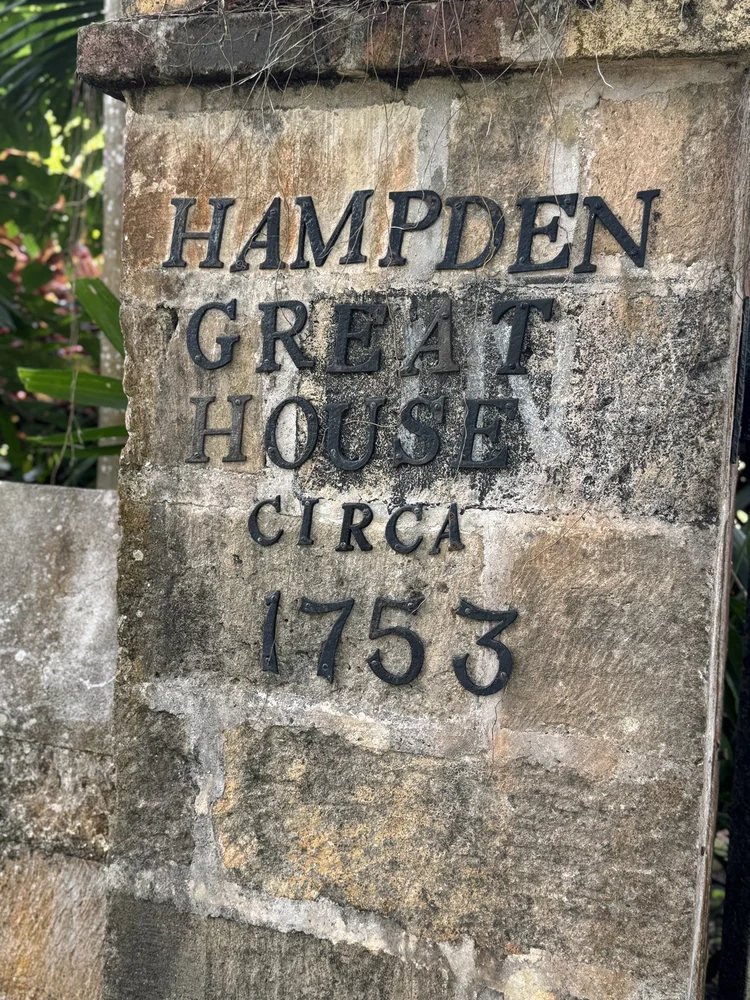
The gatepost at the Great House.
The estate dates to 1753. The Great House was built in 1779 by the Stirling family, and its ground floor held barrels waiting to go to port, which it went on doing into the twentieth century. It still stands.
Hampden holds about two thousand acres, four to five hundred of them under cane. Trelawny has been the reference parish for heavy Jamaican rum for as long as anyone has been keeping track.
John Crow Batty
Jamaicans have called this rum John Crow Batty for generations. The John Crow is the local name for the turkey vulture, a bird that finds carrion by smell from further off than most animals manage. The name is a compliment about reach. You know the rum is in the room before you are anywhere near the glass.
It was never a brand and nobody registered it. The rum left the estate unlabelled and went round the local bars, and the sound of bottles clinking through the gate at the end of a shift was one people knew. Wray and Nephew started the same way, as rum with no label that eventually got one.
Listed in 1969
In Bulletin No. 58, the Wine and Spirit Association of Great Britain and Northern Ireland published the marks of Jamaica rum current at 31 March 1969, revising a list first drawn up in 1948. It covers every producing estate on the island: Hampden, Long Pond, Innswood, Monymusk, Richmond-Llandovery, Barnett, Holland, Caymanas, Serge Island, Jamaica Sugar Estates.
Hampden is the only estate in it with ester counts printed against its marks. Every other estate is given a mark and a rum type and no numbers at all.
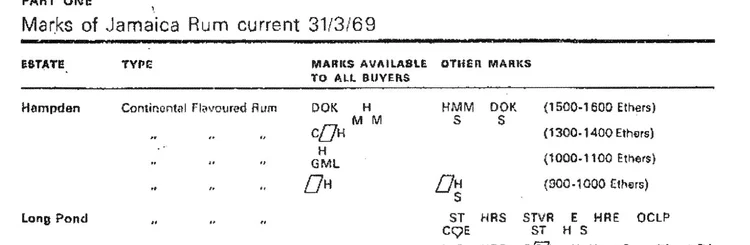
Wine and Spirit Association of Great Britain and Northern Ireland, Bulletin No. 58. Marks of Jamaica Rum current 31 March 1969.
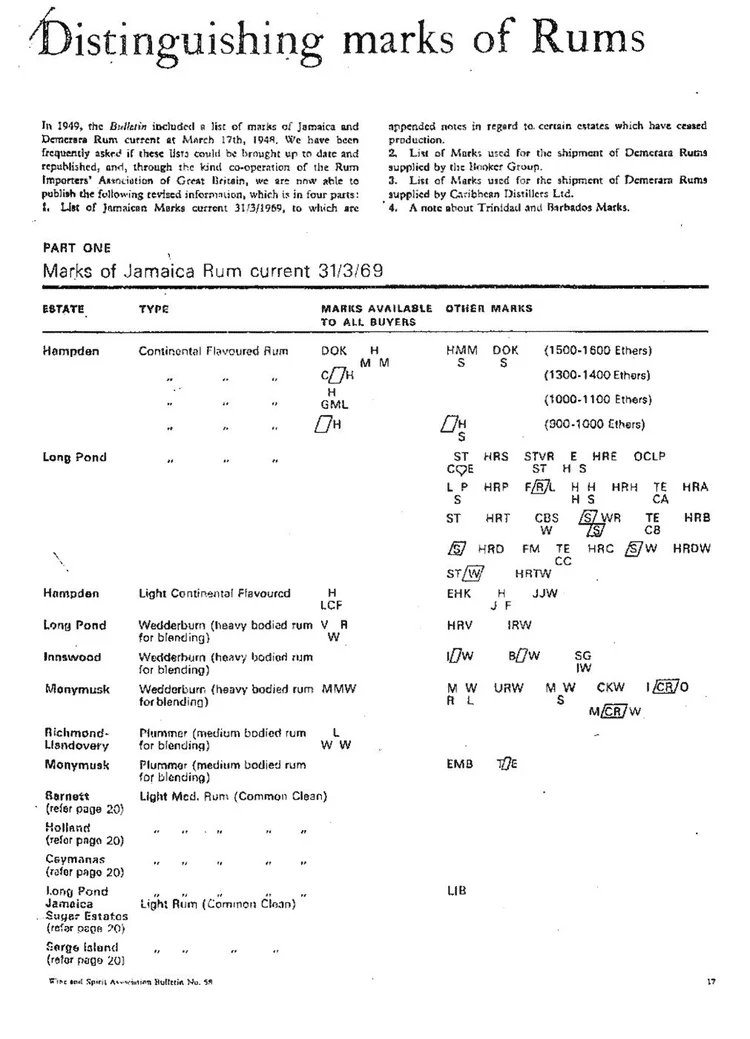
The full page.
Hampden publishes the same bands today. They have not moved.
| Marque | Ester band |
|---|---|
| OWH | 40 to 80 |
| LFCH | 90 to 120 |
| LROK | 200 to 400 |
| HLCF / HJF | 400 to 600 |
| <>H | 900 to 1000 |
| HGML | 1000 to 1100 |
| C<>H | 1300 to 1400 |
| DOK | 1500 to 1600 |
The cane and the vinegar
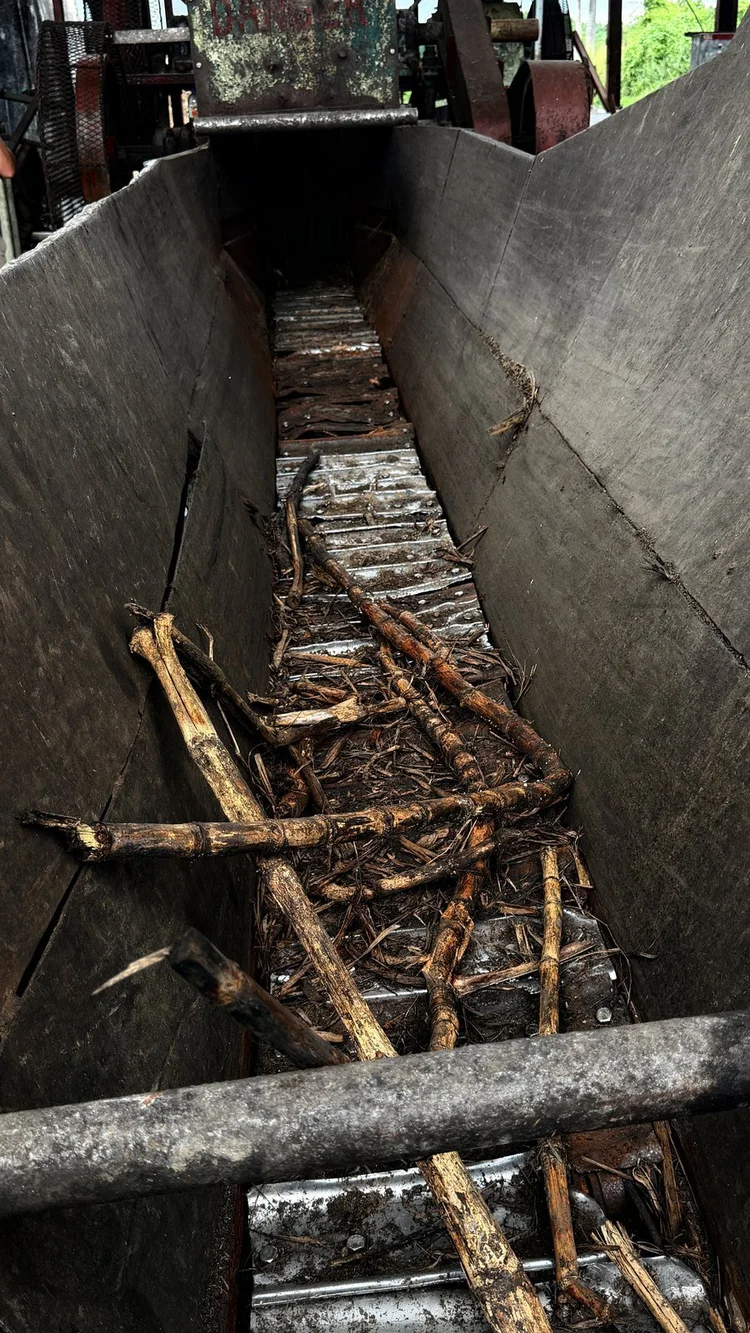
Cane going into the mill.
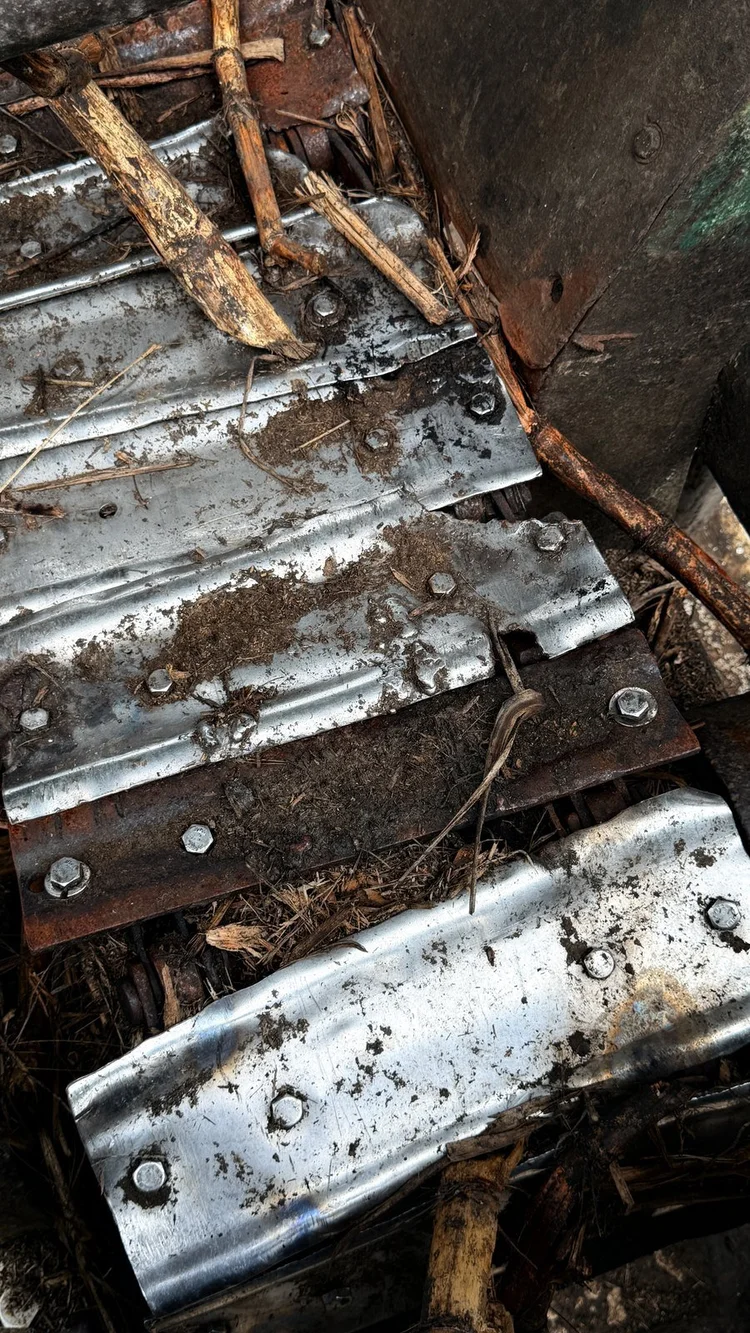
The metal plates the cane travels on going into the mill were made on site, which is the rule here rather than the exception.
The rum is fermented from molasses. The cane grown and crushed on the estate is for something else. Hampden makes its own sugar cane vinegar on site, and that vinegar goes into the vats. It is the acid that lets a fermentation run for ten days and more without spoiling, and acid is what esters are built from. Cane solids off the same crush go into the graves.
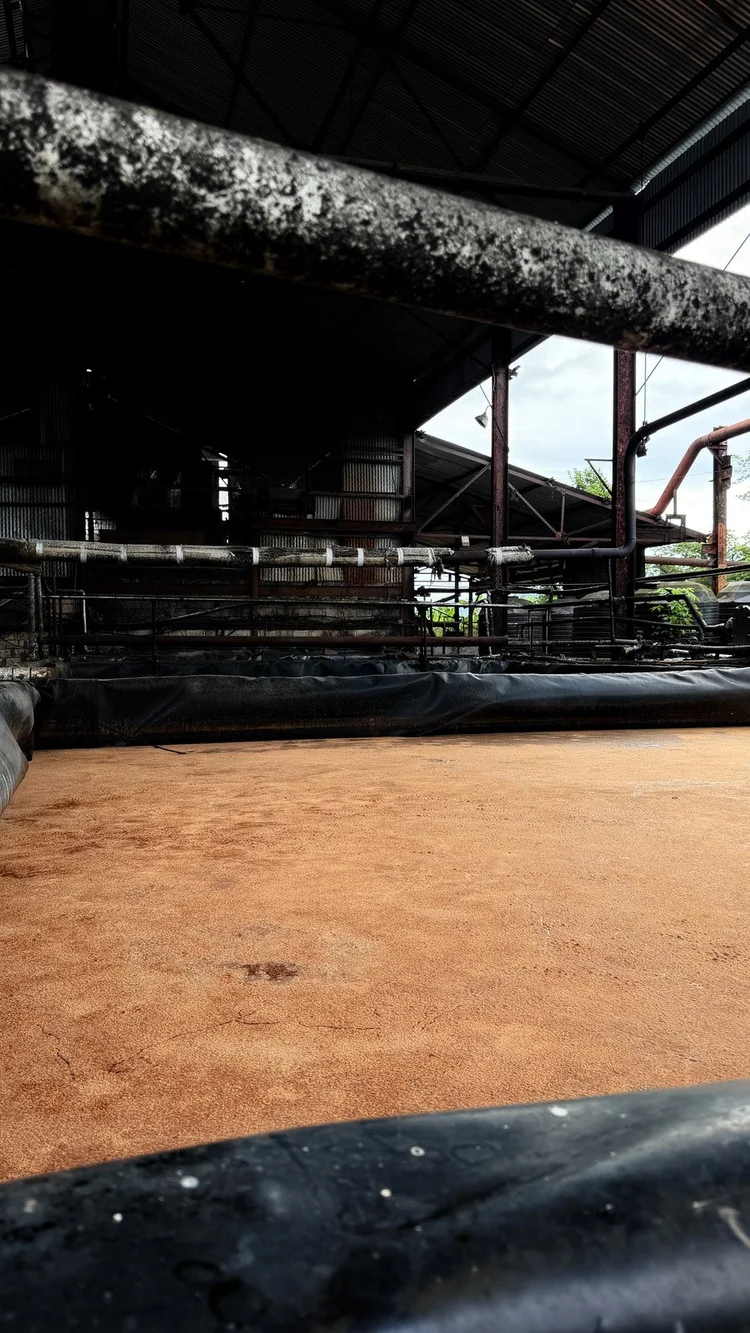
The cane vinegar pool.
The recipe
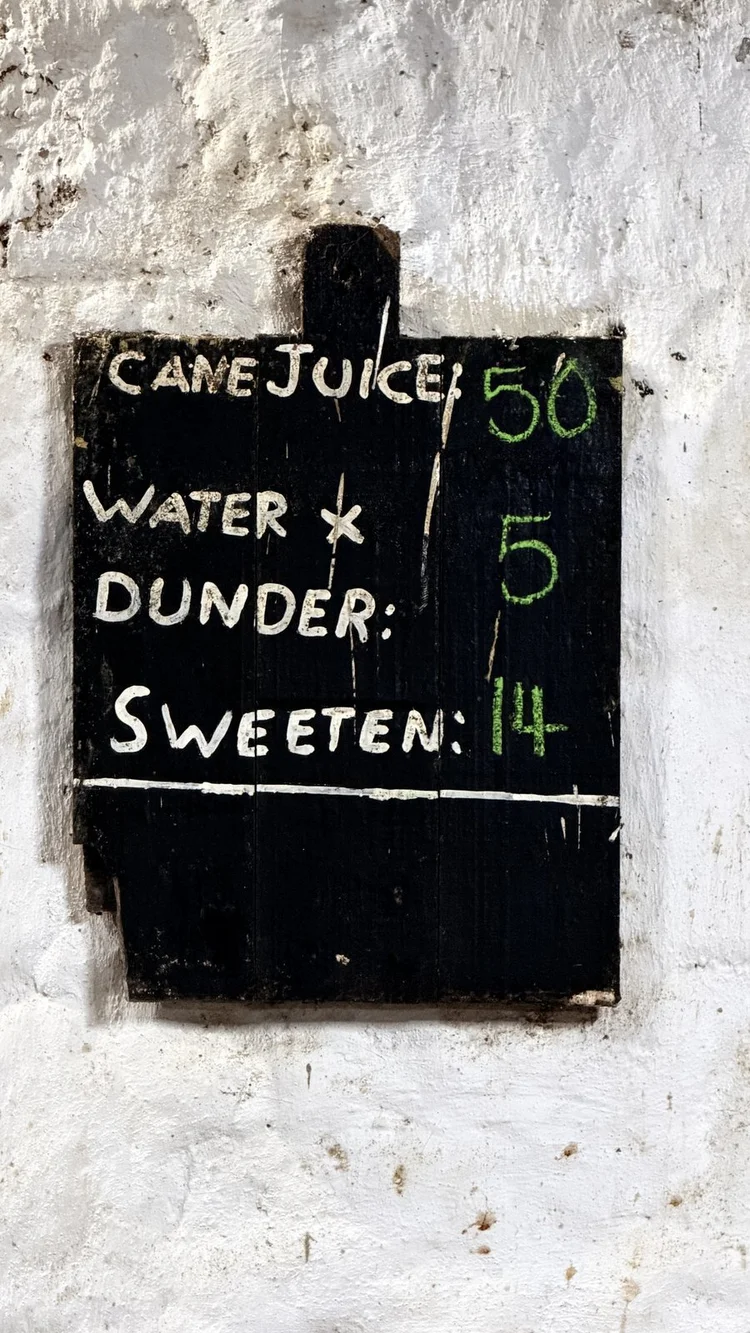
The recipe for a vat.
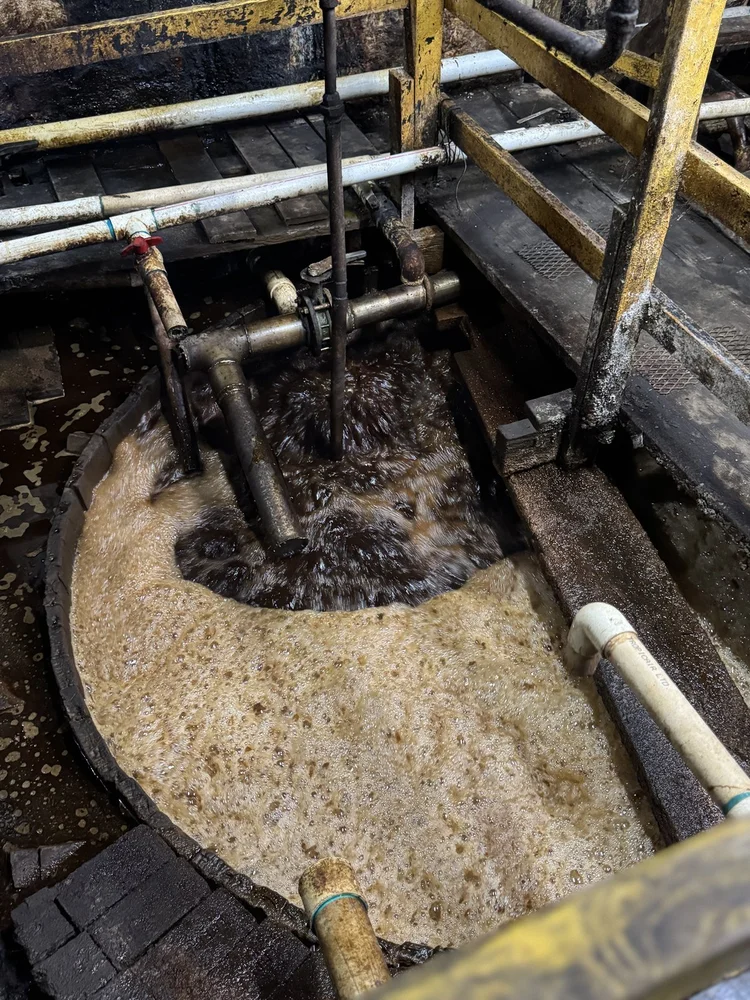
Where the mix is made.
The recipe for a vat is written on a board on the wall and chalked over when it changes.
How much of each goes in is what separates one marque from the next. The lowest marques are close to molasses and water alone. The high ester marques take cane vinegar, dunder and muck on top, and the more they take the further up the scale they land.
The graves
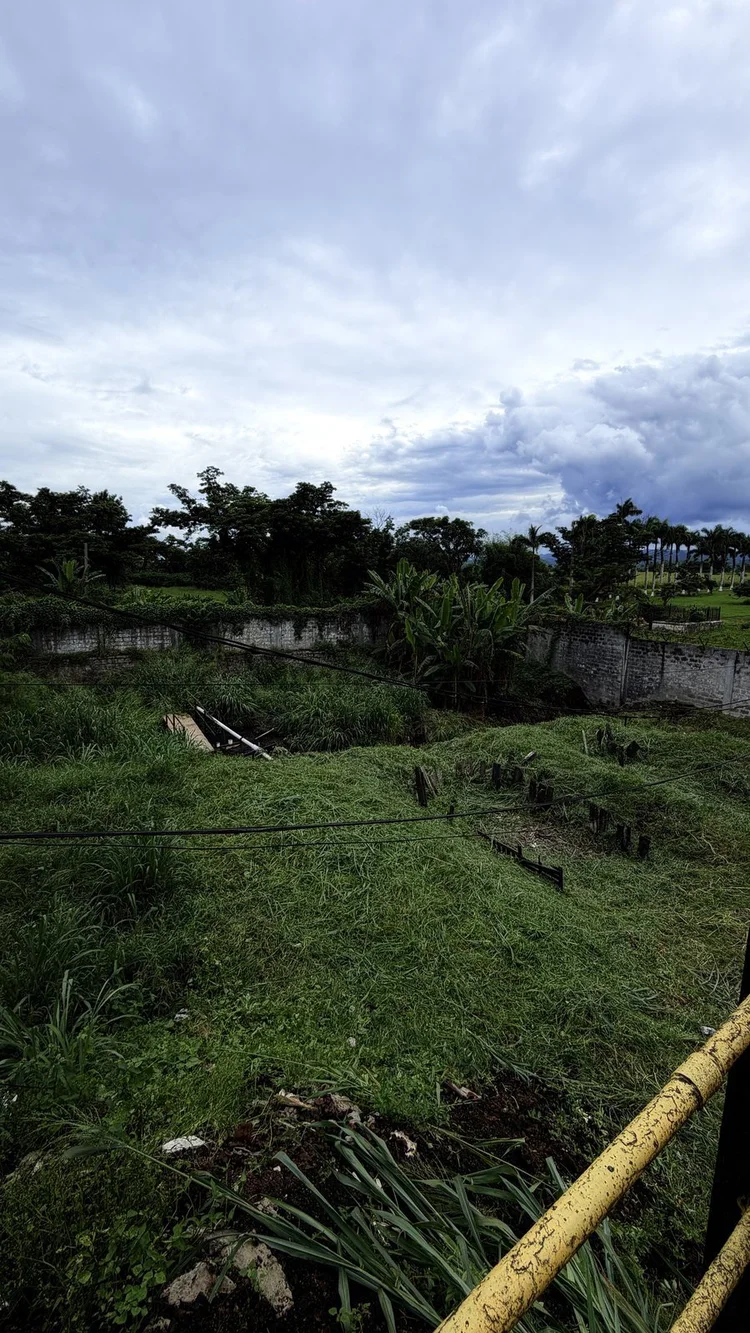
The graves.
There are about eight graves. Each is a pit roughly six feet deep, lined with wood, filled with fermentation sediment and cane trash, wetted with dunder and left for eight to ten years. Wooden headstones carry the dates. When a grave is dug up the headstone is replaced with a new one and the muck pit is topped up from what came out. The wood goes back in too, headstones and lining alike.
The bacterial cultures that make the high ester marks possible live in those pits. Nothing else in spirits works this way. Everything that happens in the fermentation room starts here.
The fermentation room
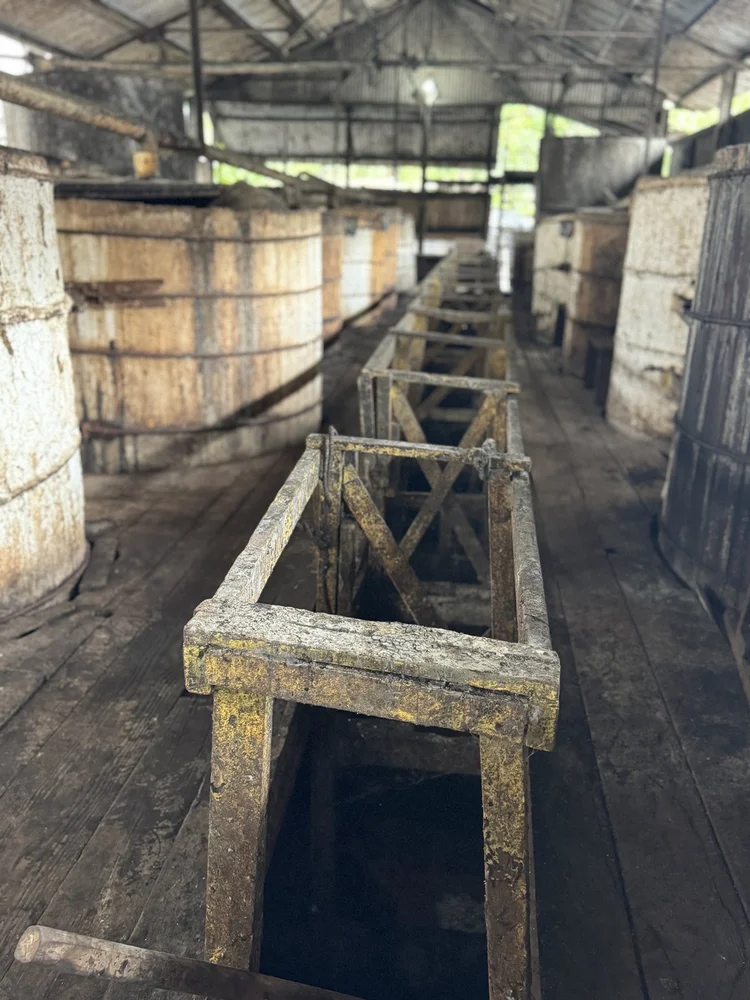
The fermentation room.
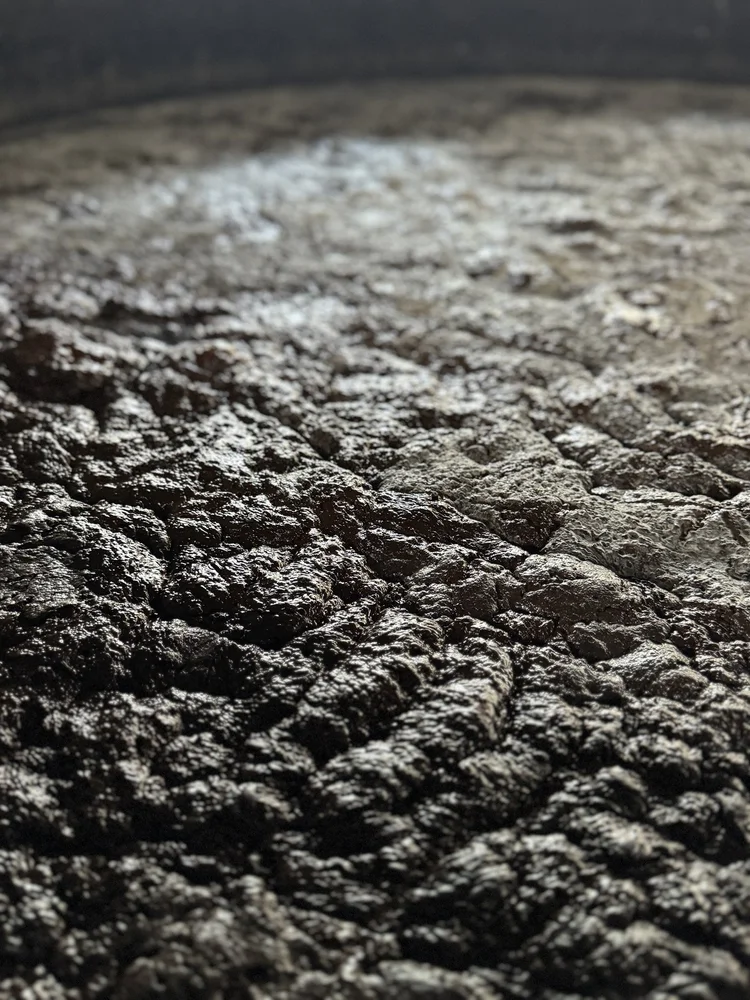
The top of a vat.
The vats are cedar, cut from trees on the estate and milled on site. Nothing is pitched into them. The wash ferments on the ambient yeast of the room it has always fermented in, and the vats leak, and that is not a fault being tolerated. It is the room doing the work.
Fermentation length is not fixed. A mark that wants more ester development gets more time, ten days and beyond, rather than the standing three or four day cycle most distilleries run.
Spent wash comes back from the stills into concrete cooling pits, through cedar boxes, and returns to the vats. It is the rum equivalent of sour mash, and it never stops.
Distillation
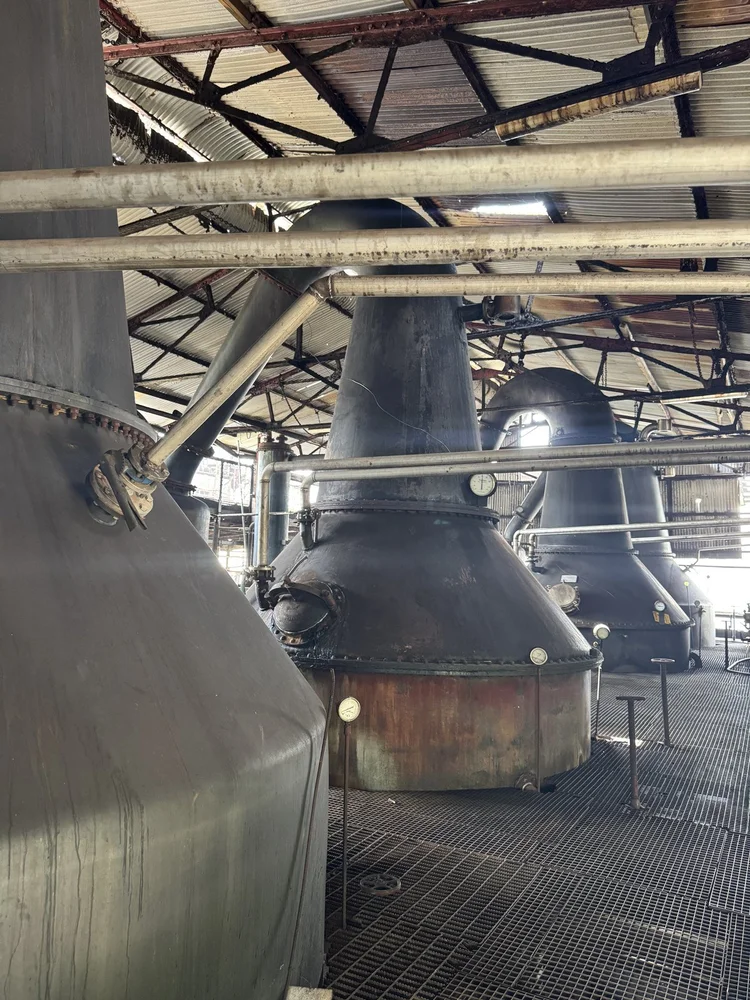
The double retort pot stills.
Everything is distilled on double retort pot stills. They are cleaned every weekend, because a boil that should take five hours stretches to ten or twelve if the buildup is left.
The low ester marks are the expensive ones to run. Making them means sanitising the equipment and fitting new pipe, because the building is colonised for the opposite. At Hampden the clean rum is the hard one.
The water
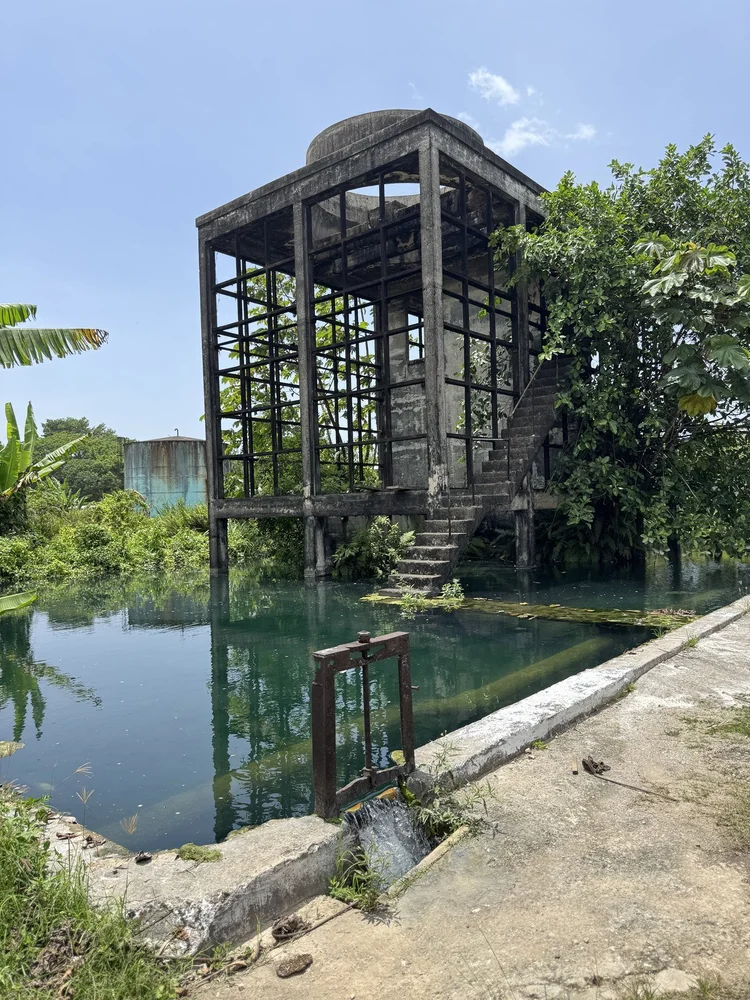
The water cooling station.
Hampden sits on a limestone aquifer fed by springs, some as far off as Flower Hill. The water rises through limestone, which filters it on the way, and it is drinkable where it surfaces. People nearby still take their drinking water from the spring heads.
The dam is a real dam and it stands in Cockpit Country. Cobblestone, built in a semi-circle against the base of a hill, a couple of inches off the ground at one end and about thirty feet deep at the middle. Water reached the distillery first through a stone aqueduct cut from the same stone as the buildings, and now through cast iron pipe. Shut the supply at the dam and the pond here takes about three days to drain.
The water is not microfiltered. It passes through water grass and sand at the dam and that is all. River water carries things through and away. Well water is inert. This water stands, in one of the most biologically dense corners of the island, and whatever accumulates in it comes into the distillery.
About five sharks live in the cooling water. One of them is pregnant, as of November 2026.
Everything is made here
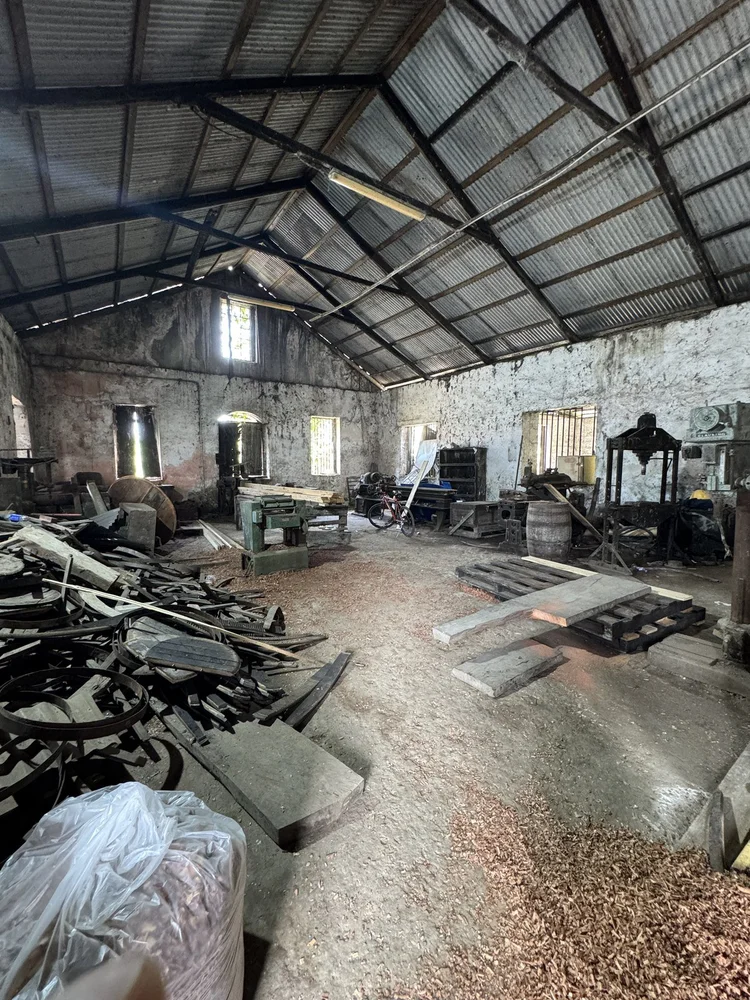
The cooperage.
The distillery is remote enough that calling a contractor is not a realistic plan, so almost nothing here is bought in finished. There is a cooperage on the estate. There is a workshop. Tanks are fabricated on site, and so are the plates, the plate work and the fittings that keep the plant running.
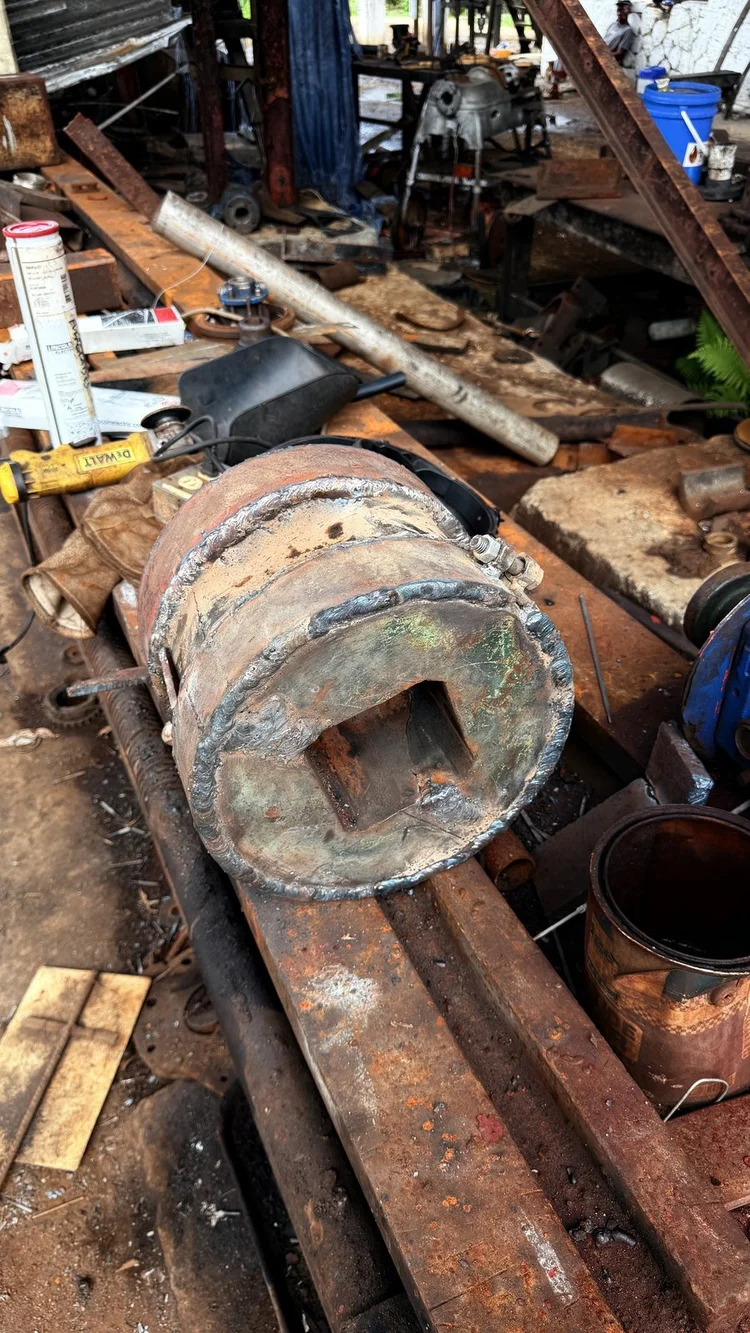
The workshop.
Repairs are made the same way, hurricane damage included, and the cedar for the fermentation vats is cut from trees on the property and milled here. Power comes from an LNG turbine, the mains, and a backup diesel generator. The phrase used on the estate is that you do not call a company to come work.
Most of it leaves unbranded
For most of its history Hampden sold almost everything it made in bulk and unlabelled. A rum this aromatic is not really bought as a drink. It is bought as a raw material, by the fraction, because a small quantity of it will carry a very large quantity of something else. The German trade built a whole category on exactly that, blending Jamaican rum into neutral spirit at up to twenty to one and selling the result as Rum Verschnitt.
It goes all over the world, at scale, to anyone who needs something to taste or smell of something. Flavouring and fragrance both, and it has been that way for hundreds of years. Most people have eaten, drunk or smelled Hampden at some point without ever being told what it was. That business is still running.
It also explains the ceiling on the table above. In 1935 the Jamaican Spirits Pool fixed a maximum of 1600 grams per hectolitre, so that no one distillery could take every order. DOK sits at the top of the range because the top of the range is a law, not a limit of the fermentation.
The distillery runs two shifts, five days a week, and it is at capacity. There is no more white rum to be had.
Hampden only began laying rum down for ageing in 2010. The oldest rum on the estate is fifteen years old.
The expressions
Hampden Estate 1753. 46 percent. HLCF. Three years, all of it in Jamaica, in ex-bourbon.
Hampden HLCF Classic. 60 percent. The mark generally taken as the doorway into high ester rum.
Hampden Estate 8 Year. 46 percent.
Hampden Estate Pagos. 52 percent. The first Hampden aged entirely in sherry wood, in 500 litre Oloroso butts from Bodegas Fundador that had held Oloroso for up to thirty years.
Hampden Great House. A blend of several marks across vintages, renewed every year since 2019.
Hampden Fifteen. 50 percent. LROK. Fifteen years in Jamaica.
Single casks, Habitation Velier bottlings and collaboration releases come and go. The current list is on the portfolio.
In the press
Bloomberg: Incredible Jamaican Rums That Truly Bring the Fruity Funk, VinePair: The 30 Best Rums for 2025, PUNCH: The Best High-End Spirits for Cocktails, Gear Patrol: The Buffalo Trace of Rum Is Still Cheap and Easy to Find. For Now, Forbes: Ho Ho Ho And A Bottle Of Rum, VinePair: The 30 Best Rums for 2024.
Packing
All six bottle cases.
Hampden Estate 1753, 750 ml, PMR-LVHE53-75. Hampden HLCF Classic, 750 ml, PMR-LVHMHL-75. Hampden Estate 8 Year, 750 ml, PMR-LVHE8Y-75. Hampden Estate Pagos, 750 ml, PMR-LVHAPG-75. Hampden Great House 2025, 750 ml, PMR-LVHEG5-75. Hampden Great House 10 Year 2026, 700 ml, PMR-LVHGH6-70.
For wholesale orders, email info@pmspirits.com or call 347 689 4414. Out of state wholesalers can go straight to our US Market Manager, Meryl Cocuzza, at meryl@pmspirits.com. All the ways to reach us are on the contact page.
Hampden Estate is part of the PM Spirits national import portfolio.