
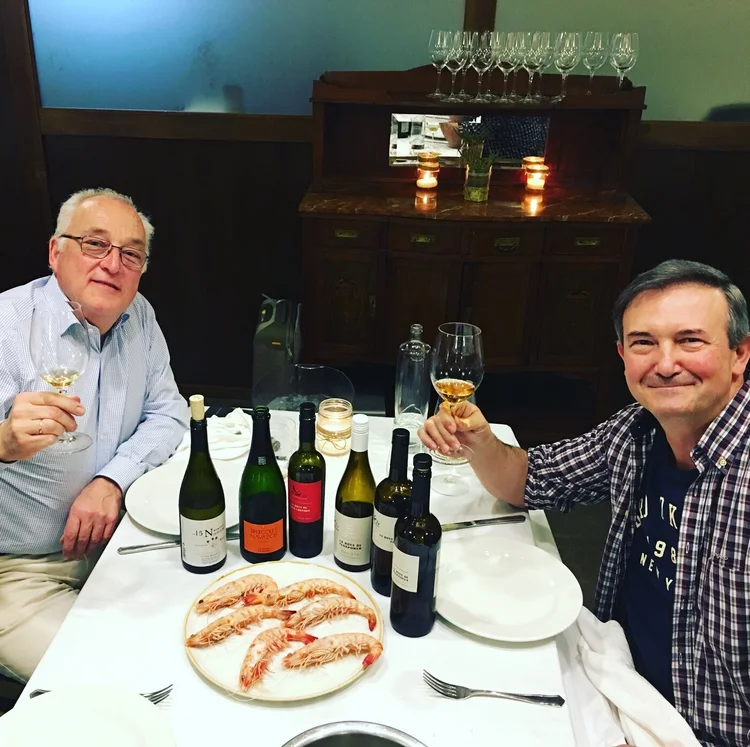
Navazos Palazzi
Equipo Navazos began in 2005 as two enthusiasts and a private club. Eduardo Ojeda was the technical director of Grupo Estevez, the house behind Valdespino, La Guita and Real Tesoro, and one of the most respected palates in Jerez. Jesus Barquin is a lawyer and a professor at the University of Granada. Neither of them needed to be in the wine business, which is rather the point: they went looking for the casks nobody else was looking for because they wanted to drink them.
In December 2005, in a small old bodega in Sanlucar, they found several dozen butts of an exceptionally fine old amontillado that had sat twenty years unsold. They took the equivalent of one butt and bottled six hundred bottles, privately, for themselves and the thirty or so friends who had backed them: oenologists, wine writers, sommeliers and serious amateurs in Spain, Germany, Britain and the United States. The first commercial release came in April 2007. The numbered La Bota series has since passed 130 releases, and they now make wines and brandies alongside partner winemakers as well as selecting them.
Equipo Navazos owns no bodega. They find casks in other people’s cellars, across Jerez, Sanlucar de Barrameda, El Puerto de Santa Maria and Montilla, and bottle them with little or no filtering.
Navazos Palazzi is that same method pointed at spirits, since 2012. The casks were already there. The work is the network: knowing exceptional producers, having them agree to open their cellars, and then having them pour you the best casks they hold.
PM Spirits is the United States importer for Navazos Palazzi, the single cask Spanish spirits and vermouth project built with Equipo Navazos in Jerez.
How it started
A sherry dinner in New York, around 2012. Levi Dalton, the sommelier behind the podcast I'll Drink To That, was running them, and the room was the who's who of wine: writers, editors, people who had been doing this for decades. Nicolas Palazzi had no business being there and knew it.
Then two bottles arrived that stood above everything else on the table, and the name on them meant nothing to him. Equipo Navazos.
A year later he was in Spain on holiday with his wife and her parents, and went to see them, taking his father-in-law along. Ojeda walked them through Valdespino and La Guita, pulling old and rare wines straight from the cask. That was when Nicolas understood what Equipo Navazos actually was: not a producer at all, but a bottler with the standing to get at other people’s best barrels.
Knowing they were spirits people, he handed over a bottle of the single cask Armagnac he was selling in the United States. They gave him an old Spanish brandy. The conversation that started there was about doing single cask Spanish brandy together, which nobody had done, and it has not stopped since.
How it is made
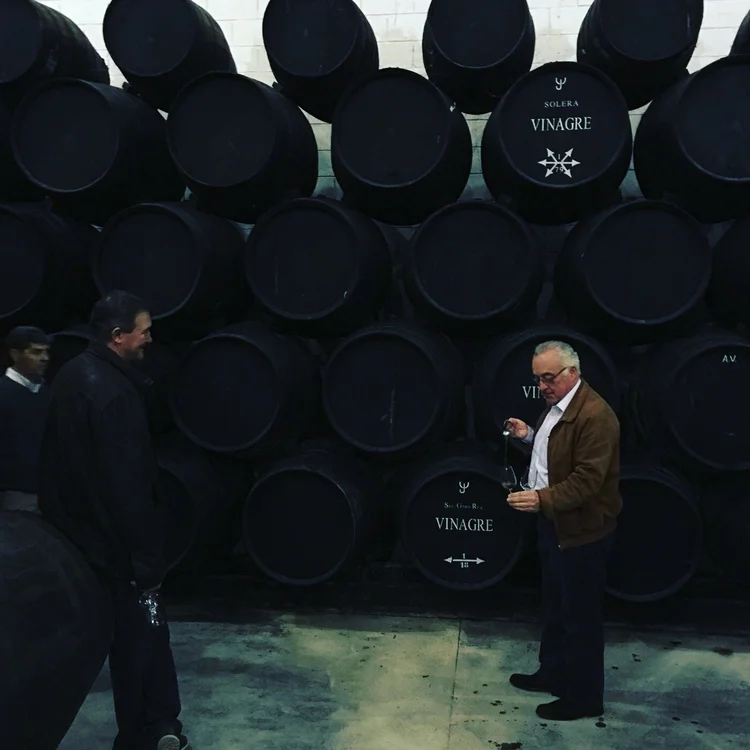
Nothing is made for Navazos Palazzi. Equipo Navazos does not own casks and does not keep them. What they do in sherry is go into other people’s bodegas and select wines that are already lying there, and Navazos Palazzi does exactly that with spirits.
Jesus Barquin, Eduardo Ojeda and Nicolas Palazzi go bodega to bodega and select together. Equipo Navazos’s standing in Jerez is what opens the door, because these are cellars that do not pour for strangers. Inside, the three of them taste the best casks the house holds, and are allowed to choose one and bottle it.
A cask earns a bottling on three counts: it has a personality of its own, all three of them agree it is very good, and it is representative of what that spirit should be. If a cask is merely fine, it does not get bottled.
What goes in the bottle is what was in the cask. Cask strength. No colouring, no sugar, no additives of any kind. Non chill-filtered. Single cask, which means each release is finite and the next one is a different cask with a different name.
Nothing is made to be continuous. There has never been a standing Navazos Palazzi product, and there is not meant to be one.
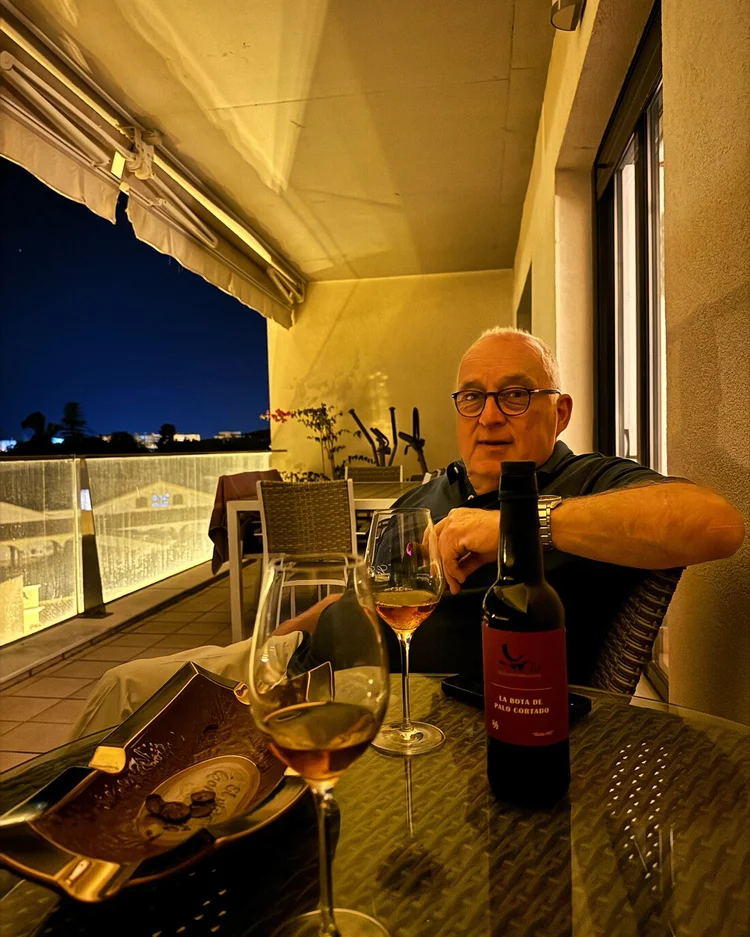
Eduardo is a gourmet and a cigar connoisseur who has been ageing cigars for decades. He is one of the people who opened Nicolas’s eyes to aged tobacco.
The expressions
Vermut Rojo. 17.5 percent, 750 ml. The base is oloroso sherry that spent more than five years in oak, blended with concentrated grape must for sweetness and fortified with neutral grape spirit. The botanicals are macerated individually and then blended: wormwood, savory, coriander, licorice, elderflower, juniper, bitter orange peel and grapefruit peel, all of which grow wild in the fields and mountains of Andalusia.
Eric Asimov in The New York Times: “a mellow, complex vermouth that refreshes as well as intrigues.” Liquor.com named it Best for a Dry Negroni in February 2024, chosen by Robby Dow, bar director of Olivero: “much drier and more savory with notes of juniper, anise, and coriander, with a subtle off-dry sweetness from the oloroso sherry.” Imbibe listed it in 13 to Try: Vermouths the following month.
Previously
Single casks, all of them finished and gone. They are listed because the record is the argument.
Pedro Ximenez Single Cask Brandy de Jerez, 2021. 43 percent, cask strength. Pot distilled to 65 percent from Airen and Palomino, La Mancha and Jerez. Average age 35 years, with some of the brandy over 60, after 30 years and more in a 250 litre oloroso cask and four further years in a freshly emptied 500 litre Pedro Ximenez cask. Non chill-filtered, no colouring, no additives. 720 bottles. 94 points from Kara Newman in Wine Enthusiast, October 2022.
Bota Punta Spanish Malt Whisky, 2021. 15 years old, 53 percent, cask strength. Copper pot distilled from 100 percent Spanish grown malt. A bota punta is the cask at the end of the bottom row of a solera, which takes more air and light than its neighbours and comes out different because of it. 900 bottles. 92 points from WhiskyCast and an A minus from Drinkhacker.
Bota NO Spanish Corn Whisky, 2021. 15 years old, 54 percent, cask strength. Column distilled from 100 percent Spanish grown corn. A bota NO is a cask inside a solera marked not to be topped up, usually because it has gone somewhere the others have not. 900 bottles.
Ron 2020. 51.5 percent, cask strength. Column distilled from molasses in the southern Antilles, five years in first fill bourbon casks there, then shipped to Jerez and 18 years in oloroso casks. 23 years in total. 900 bottles. Found by accident: the team were in a bodega looking at brandy for the next bottling and came across 32 casks of rum nobody had mentioned.
Earlier still: cask strength gin, an overseas malt, a Spanish grain whisky, an amontillado cask brandy and an oloroso cask brandy.
In the press
Liquor.com: The 11 Best Vermouths for a Negroni, Imbibe: 13 to Try: Vermouths, Wine Spectator: Why Vermouth Is the Perfect Bridge to Cocktails for Wine Lovers, In Praise of La Hora del Vermut, 94 points, Pedro Ximenez Single Cask Brandy, Malt Whisky Cask Strength, Palo Cortado Single Cask, Wine Enthusiast Top 100 Spirits.
Everything we hold on Navazos Palazzi
Packing
Navazos Palazzi Vermut Rojo, 750 ml, NVPVTR-75.
For wholesale orders, email info@pmspirits.com or call 347 689 4414. Out of state wholesalers can go straight to our US Market Manager, Meryl Cocuzza, at meryl@pmspirits.com. All the ways to reach us are on the contact page.
Navazos Palazzi is part of the PM Spirits national import portfolio.