
PM Spirits

Provider of Geeky Spirits

eau de vie,Alambique Serrano,Alambique Serrano

Vinepair: The 30 Best Rums for 2025

Alambique Serrano, Best of, clairin, Clarin, Hampden, Isautier, Papalin, Rhum, Rum, VinepairNicolas Palazzi

Rum continues to win hearts and fill jiggers and glasses by virtue of being one of the world’s most versatile and diverse spirits. Distilled from sugar cane juice, molasses, and other derivatives, it is crafted in column and pot stills, and matured in climates ranging from the humid Caribbean to cooler, continental warehouses. The result is a category that stretches from grassy agricoles and funky, high-ester bottlings to ultra-aged expressions that rival any whiskey.

That breadth is just as evident at the bar: Rum is vital to classics like the DaiquiriMojito, and Mai Tai, and central to modern creations like the Kingston Negroni. Of course, there are dedicated, top-shelf sippers, as well as spiced shooters, which accounted for more than half of the rum sold in the U.S. last year.

With all due respect to the latter style, we did not consider flavored selections for our annual rum roundup. Instead, we focused on the diverse range of examples outlined above, tasting roughly 100 bottles from almost two dozen nations to compile this list of the 30 best rums to drink right now.

The 30 Best Rums to Drink in 2025

The Best Rum for Cocktails

Transcontinental Rum Line High Seas

As the old line goes, “what one rum can’t do, three rums can,” and that’s exactly the proposition with this blend of Panamanian, Jamaican, and Martinique distillates. Bottled at 45 percent ABV, High Seas delivers savory, vegetal, and lightly sweet notes, alongside bursts of tropical fruit, spice, and coffee. Expressive but never overwhelming, it offers plenty of personality without threatening to steal the show — making it equally at home in a Daiquiri, Mai Tai, or more modern creations. At $35 per bottle, it’s a top-tier option that’ll basically run you the same amount as two drinks at a bar.

Average price: $35
Rating: 93

The Best Rums Under $100

The Spirit of Haiti Clairin Vaval

Bottled at a precise 53.5 percent ABV, this Clairin is produced by Distillerie Arawaks — owned and operated by Fritz Vaval, whose family has been in the farm distillery business for close to 80 years. Fermented using ambient yeasts and distilled on a proprietary still, the nose juxtaposes papaya and mango with salty umami aromas. The palate commits to more fruity and vegetal notes, with an enjoyably abrasive finish that speaks to the hands-on, traditional practices that led to its creation.

Average price: $50
Rating: 94

Shakara 12 Year Thai Rum

Launched in early 2024, this Thai rum is made from local molasses and runs through a column still before spending 12 years in ex-bourbon casks. Spice leads the profile, with bright accents of lemongrass and lime leaf building over a classic molasses core. Expressive and vibrant, it’s a great example of quality Southeast Asian spirits increasingly making their way to our market.

Average price: $59
Rating: 93

Alambique Serrano 3 Años Oaxacan Rum
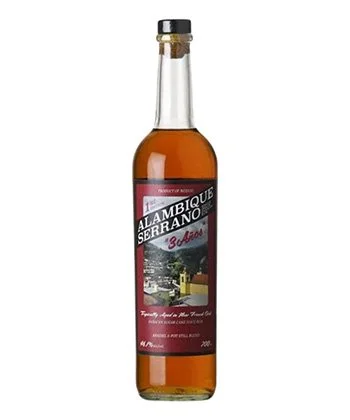
Distilled from Java varietal cane juice and aged just over three years in new French oak, this blend of pot and Krassel column distillates arrives at 46.1 percent ABV. The profile is distinctly spiced, with ginger, nutmeg, and raisin notes evoking winter desserts and holiday delights — a vivid reminder that Oaxacan spirits extend well beyond mezcal.

Average price: $64
Rating: 93

Papalin Jamaica 5 Year High Ester Rum
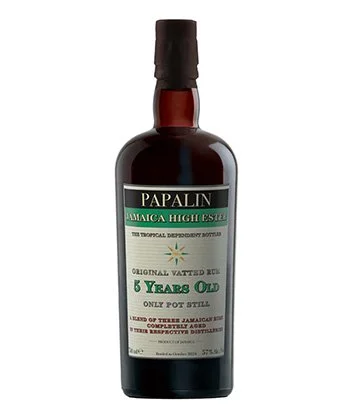
Blended from Worthy Park, Long Pond, and Hampden distillates, this 5-year-old Jamaican rum is pot-distilled, aged in ex-bourbon casks, and bottled at 57 percent ABV. Aromas of overripe fruit and warm spice lead the way, with pepper, banana skin, and assertive heat defining the palate. While not the most intense rum Jamaica has to offer, it’s a complex, lively pour and a great intro to high-ester rum.

Average price: $67
Rating: 93

Privateer Rum The Queen’s Share
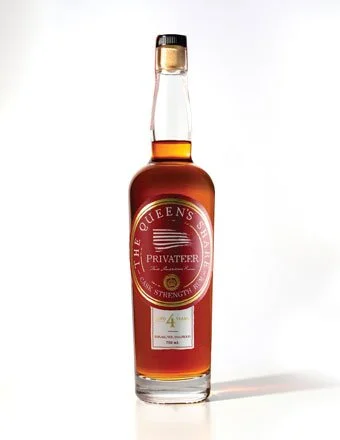
This Massachusetts rum revives the old Cognac tradition of collecting the “seconds” — the transitional cut between hearts and tails — and distilling everything a second time for added depth. Aged at least four years in a mix of new and used American oak, the barrels are then blended and re-casked for additional maturation. Bottled at cask strength, it delivers burnt sugar, coconut, and vanilla with remarkable balance. Approachable yet simultaneously complex, it stands as a benchmark American rum.

Average price: $70
Rating: 93

The Best Rums Over $100

Hampden Estate Pagos Jamaican Rum Batch 3
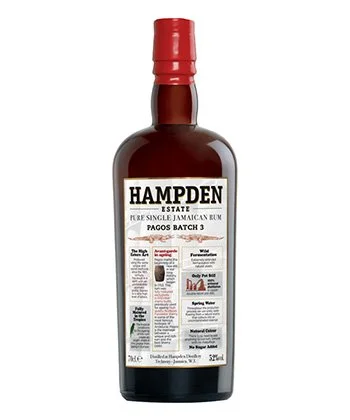
Aged entirely in former oloroso sherry casks from Bodegas Fundador, the third batch of Pagos builds on Hampden’s signature high-ester intensity with oxidative depth and dried fruit character. Bottled at 52 percent ABV, it delivers walnut, clove, and brandied cherry, alongside cocoa, honey, and citrus. The palate is nuanced, with savory depth meeting flashes of freshness.

Average price: $113
Rating: 94

Isautier Rhum Agricole 16 Year
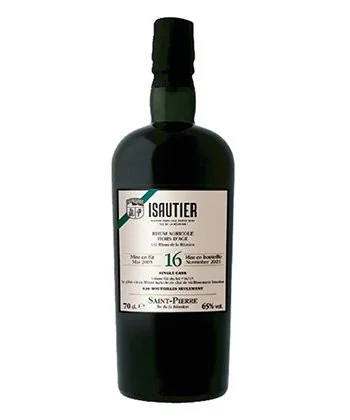
Distilled in 2006 and aged 16 years in tropical conditions, this Reunion release was bottled at 59 percent ABV with just 3,790 bottles produced. The profile is bold yet refined, opening with dried fruits, warm spice, and citrus zest, then following with caramelized sugar and herbal accents. A singular agricole, it underscores Reunion’s credentials as one of the world’s most compelling — and still underappreciated — rum regions.

Average price: $144
Rating: 94

https://vinepair.com/buy-this-booze/best-rums-2025/

bon appétit: How One Man’s Obsession with Fruit Created the UK’s Most Exquisite Spirits

Bon Appétit, Capreolus, eau de vie, PM SpiritsNicolas Palazzi

Barney Wilczak and his tiny distillery are bottling the wildness of the orchard.

BY OSAYI ENDOLYN

May 12, 2025

The fruit is coming.”

The urgent phone call that Barney Wilczak anticipates typically comes in the middle of the night. The caller is one of his local farmer partners who has just walked their orchards to touch, smell, and taste the fruit. The brief exchange notifies Wilczak that the quince, perry pears, blood oranges, raspberries, or damson plums destined for distillation are ready to harvest. A distiller of groundbreaking eaux de vie, Wilczak describes his work as being “in service to the fruit.” Part of that service is to represent the fruit at its highest level of flavor, to harness its essence. So the processing must begin right away. Wilczak takes the farmer’s call as his cue, rises in the early darkness, and prepares to receive by the truckload literal tons of fruit.

Wilczak built Capreolus Distillery in 2016, on the same property as his childhood home in Cotswold, southwest England. His eaux de vie have an almost unnerving ability to transport the drinker to those abundant fields. The region is known for its endemic fruits, many of which don’t appear in other parts of the world. The name Capreolus refers to the deer that frequent Wilczak’s garden. “They’re the most beautiful native deer we have and they’re so ephemeral,” he says. “You see them and then they disappear. It felt apt, as we try to capture things that only last for moments.”

That late night/early morning phone call from Wilczak’s farmer collaborator wouldn’t have been a surprise. Wilczak firmly believes that production revolves entirely around the wisdom of the trees and the people who cultivate them, not marketing drives or quarterly sales targets. Every piece of fruit that arrives at the distillery is hand-sorted to check for outliers of “too much softness or spring,” before it is hand-pressed and guided through distillation and bottling.

Hand-sorting gooseberries at Capreolus. Photograph By Barney Wilczak

You might say that Wilczak practices a type of conservation: His farming supports much-needed biodiversity, and drinkers around the world can experience hyperlocal plants they wouldn’t otherwise have access to. The quince evokes notes of cinnamon, fig, and dark cherry. It tastes of earth yet bright twig and leaf—to drink these eaux de vie is to be situated in terrain.

“Last year we spent 7.5 hours sorting 700,000 individual raspberries. That’s 3.6 tons,” Wilczak says, with a look of bewilderment. All that fruit, time, and effort across a team of four people, yielded roughly three hundred 375-ml bottles. With a sense of pride and maybe surrender, he adds, “It’s ridiculous.”

Wilczak has fans, if not acolytes, of his so-called ridiculousness. Among them, famed cocktail bartender Ryan Chetiyawardana, professionally known as Mr. Lyan, who features Capreolus eaux de vie at Seed Library in London’s Shoreditch, Washington D.C. bar Silver Lyan, and Super Lyan in Amsterdam. He credits Dawn Davies of The Whisky Exchange for introducing him to the spirit. “It was revolutionary to try an eau de vie that represents my favorite fruits as a UK native,” Chetiyawardana says. “Barney sees the whole essence of the plant as not just a biological creature, but what it stands for. I was flabbergasted.”

A view of the orchard

Preserving nature in the bottle

Wilczak found distilling through his love of nature. As a student he thrived in botany and biology, but couldn’t make sense of working nonstop in a lab. He pivoted to study photography and specialized in conservation. In brief, he became a plant photojournalist. “I was photographing habitat restoration on six continents, building media libraries for botanic gardens in 118 countries.” Alongside his studies, he developed a hobby for making ciders, exploring the technicalities of distillation and méthode traditionnelle, a style of winemaking that involves a secondary fermentation in the bottle. The leap to distilling was not a huge jump. “It all comes down to a love for plants.”

As he approached age 30, Wilczak experienced “a bit of a life crisis.” He didn’t want to only document plants for visual archives. He wanted to promote the growth and appreciation of those plants for others. “I realized that people are obsessed with varietal differences in wine, but it’s also true of every single fruit.”

When Wilczak launched Capreolus, his bank account was overdraft by eight pounds, but supported by his partner Hannah Morrison, whose taste became imperative to Wilczak’s process. Everything was once done by hand and muscle, though he’s since acquiesced to buying a mill. He committed to work with farmers within a fifty-mile radius of his home-distillery, and just recently purchased meadowland to plant quince trees, which will soon bring that particular eau de vie production within range (it was previously the lone outlier).

His focus on local farmers came down to pay equity. “Early on I was talking to someone in Finland about wild-picked cranberries and they said, ‘We’ll get them to you for 2 euros per kilo.’ I knew that was really really cheap for wild-picked fruit,” he explains. The fruit would be picked in Russia. “What are the labor laws there? What are people getting paid?” Wilczak wanted to work with people he could meet, with operations he could see. “We wanted to pay people a proper wage, focused on farming well,” he says, a nod to the price point of his lineup, which can range from about $90 to $185.

With his local focus, he learned that there was not “a single piece of overlap in flavor or aroma.” The realization inspired him to learn how these individual expressions manifested. He spent about seven years studying fruit distillation practices in epicenters of Austria, Germany, Italy, and France, and translating non-English books on the subject.

After distilling perry pears from 200-year-old 45-foot trees, Wilczak was shocked. The distillation didn’t smell like fruit. “It smelled like sun-warmed bark, ripe and unripe wood, autumnal leaves, and almost like the grass around the trees,” he says. “My self-guided education had a huge focus on a technological, yield-driven way of working, but that robbed the eau de vie of complexity and organic structure,” he continues. “I became interested in making eaux de vie that are truly organic and expressive of where they come from.” That meant becoming dogmatic about respecting the inherent knowledge of the trees and the ecosystems that allowed them to produce such varied fruit. “Suddenly, the eaux de vie started to smell like the orchards.”

Black currant eau de vie in progress. Photograph By Barney Wilczak

Around the world with eaux de vie

In New York City, Jorge Riera, wine director at Frenchette, Le Roc, and the newly revamped Le Veau d’Or, features Capreolus eaux de vie as the finishing touch on leisurely, decadent meals. “It’s mind-blowing,” Riera says. “The delicacy, the finesse, the floral notes that Barney gets out of it. I was blown away.”

Riera first tasted the lineup in 2018 in Vienna, Austria, at Karakterre, a 14-year-old natural wine conference celebrating producers primarily from central and eastern Europe (the festival now has a NYC iteration going into its fourth year). Riera immediately called his importer, PM Spirits, to see about getting Capreolus to the States. “With the raspberry eau de vie, you feel the fuzz of the fruit in the nose,” he goes on. “They work with nature and it’s beautiful. But for me, I see the result at the dining table. I see the emotions from people immediately.”

One of the more evocative eaux de vie is the damson plum, a quintessential British fruit. “Old recipes of distilling damson take on this slightly jammy, tart note,” Chetiyawardana says. “Barney manages to capture the smell of the blossoms as you walk past the bush. It has that white flower elegance. The purple fruit notes encapsulate the tartness of the skin and the yield of the flesh. It pulls through to this wonderful fresh almond note from the kernel.”

For this writer, Capreolus eaux de vie feels like falling into a safe, warm memory you didn’t know you had. The damson plum is an example of Wilczak’s conservation ideology: “No one knows what to do with a cooking plum; it’s something we’ve lost from our vocabulary. We can let these things slip away. But if we want those genetics as a resource given changing climate, we have to give a justification for them to be grown.” His exquisite bottles make for a compelling reason. The only experience better than sipping Capreolus is to share it with someone as willing to be moved as you.

https://www.bonappetit.com/story/capreolus-distillery-united-kingdom-most-exquisite-spirit-eau-de-vie

Bloomberg: The 15 Best New Bottles I Tried in 2024, From $26 to $26,000

Best of, Bloomberg, Hampden, Alambique Serrano, RumNicolas Palazzi

Season’s greetings, spirits sippers! It’s Brad Japhe, the resident expert on the subject, reporting for duty. As is customary this time of year, I’m presenting my annual list of the absolute best bottles I encountered over the past 12 months. The stable of contenders was crowded in 2024: Of some 322 new expressions sampled, I counted no less than three dozen deserving of effusive praise. Sadly, some of those offerings are just so painfully pricey and/or excruciatingly allocated that I couldn’t, in good conscience, include them here.

Instead, my choices embody a wide variety of liquid across all categories and price points. Make no mistake, you will see bottles fetching four- or even five-figure sums—entries are organized in order of increasing cost—but it’s all relatively available for purchase. You won’t need an estate planner to broker acquisition.

But before we get to the big reveal, let’s recap the year’s major headlines. Beyond spotlighting the shape of the industry in 2024, these news items hint at where we’re headed in the months ahead.

For one thing, people aren’t paying as much for rare whiskey. A recent report from the financial advisory firm Noble & Co. indicated that the value of auctioned scotch cratered by 40% in 2024. But that hasn’t slowed the trend of formerly shuttered “ghost” distilleries rising from the grave across the Scottish landscape, as I reported this summer.

Tariffs proposed by the incoming administration mean your favorite tequila could effectively become 25% more expensive in the year ahead. And a separate trade war with the UK could persuade domestic scotch consumers to experiment with single malts from emerging markets such as India or New Zealand.

Or, perhaps they’ll start exploring American single malt, since the category is finally going to be recognized by the Alcohol and Tobacco Tax and Trade Bureau, after more than eight years of lobbying efforts.

But enough speculating about what’s coming. Here are my best bottles of 2024.

Alambique Serrano Rum Blend #5 — $70.Source: Vendor

Alambique Serrano Rum Blend #5

There’s more than just mezcal coming out of the highlands of Oaxaca. This artisanal brand from the steep hillsides of Santa María Tlalixtac specializes in world-class rum. In fact, you’ll be hard-pressed to find sugarcane distillate anywhere drenched in as much complexity as this 65.9%-ABV spiced-banana bomb. It’s a 50-50 blend of column spirit, aged for 27 months in ex-bourbon casks, with pot still spirit aged for 19 months in new French oak. Cut it with a splash of water to extend a tobacco and toasted almond-toned finish. Or knock it back neat, if you dare. ($70)

Hampden Great House 2024 Jamaican Rum — $130.Source: Vendor

Jamaica’s holy house of funk never disappoints when it comes to full-bodied expressions, brimming with over-ripened fruit. Although the exact recipe of this annual limited release shifts each year, it invariably involves a blend of rums that epitomize the brand’s signature style. This time around it finds form in a 57%-ABV sipper that wows with an initial wave of marmalade and cranberry relish, revealing more tropical fruit undertones as it warms in the dram. ($130)

https://archive.is/ZQan2#selection-1759.0-1815.77

PUNCH: This Tomato Martini Transcends the Trend

eau de vie, Laurent Cazottes, PUNCH DrinkNicolas Palazzi

A tomato liqueur turns the internet’s favorite summer drink into a year-round staple.

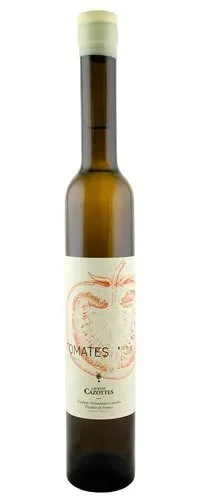
ne might reasonably wonder why it is that I’ve waited for summer to end to share the perfect tomato Martini recipe. Well, in part, I wanted to let the TikToks, the trend pieces, the Reddit threads—the hubbub over tomato Martinis—die down, because people need to hear this. But it’s also because the secret to my tomato Martini recipe is not beholden to the short, finite window of peak tomato season. In fact, it allows you to tap into the magic of that brief period whenever the mood strikes. That’s part of its beauty. It also delivers what no other tomato Martini can: 72 varieties of the fruit squeezed into a one-of-a-kind liqueur that takes this recipe to the next level. 

The liqueur in question is aptly named Tomates, and it comes from the obsessive brain of biodynamic distiller (and winemaker) Laurent Cazottes. After researching thousands of known tomato cultivars and planting a selection of heirloom varieties on his farm in southwestern France, Cazottes harvests 72 types to be used in this organic tomato liqueur. Picked by hand and left to dry to concentrate their flavor, the tomatoes have their peels, stems and seeds removed before macerating in Cazottes’ own folle noire grape distillate. This pomace is then pressed and redistilled, then combined with some of the original maceration before bottling. The result is an amazingly fresh, delicate liqueur with a hint of earthy tomato “funk.” In a Martini, the liqueur brings a welcome salinity that makes for the cleanest take on the dirty Martini, with just a subtle hint of umami and an underlying freshness.

The Best Tomato Martini

Thanks to tomato liqueur, this summer staple can be enjoyed year-round.

Before you balk at the price, know that I’ve done the math. A half-bottle (375 milliliters) of Tomates will run you a penny under $70. That’s 25 Martinis per bottle, or about $3 of the stuff per Martini. Combining it with navy-strength gin (my recommended base for the drink) and a classic dry vermouth, you should end up with a Martini that costs around $5. For the ability to conjure the best tomato Martini on a whim—even out of season—I’d say that’s a bargain.

Laurent Cazottes Tomates Organic Tomato Liqueur

French producer Laurent Cazottes is known for his preservationist approach when it comes to rare fruits, and this tomato liqueur puts his interests front and center. Formerly named 72 Tomates, and now known simply as Tomates, this unique liqueur marries 72 varieties of heirloom tomatoes—all cultivated by Cazottes at his farm—into a product that is equal parts fresh, funky and savory. With no comparison on the market, it’s a must-try, particularly in a tomato Martini where it outshines even fresh tomato water.

  • ABV:18%

https://punchdrink.com/articles/tomato-martini-tomates-liqueur/

Vinepair: The 50 Best Spirits of 2023

Best of, eau de vie, Mezcal, Cinco Sentidos, Cobrafire, Domaine d’EsperanceNicolas Palazzi

Dozens of categories considered, thousands of bottles tasted, and almost 12 months in the making, the publishing of VinePair’s 50 best spirits list marks a major milestone in our calendar and one of our favorite annual traditions.

Consider it not a bonafide buying guide — those can be found here — and instead a highlights reel of the best spirits that graced our palates this year. While we recommend picking up any and all you encounter, or ordering a pour from a bar list, the popularity of certain categories and brands, coupled with the limited nature of some of the releases, means the probability of being able to do so varies wildly from one bottle to another. One constant that links them all, however, and the reason each features on this list: It would be a spirited crime not to honor their existence.

So what made the cut? This year served us no end of imaginative and successful experiments; reminded us that stalwart go-tos carry such reputations for a reason; and encouraged us to look beyond the expected from various regions and nations. Prepare for “bog aged” oak, Mexican eau de vie, and countless representations of brown spirits from non-age-stated to cask strength, single-barrel, experimental finishings, and ultra old.

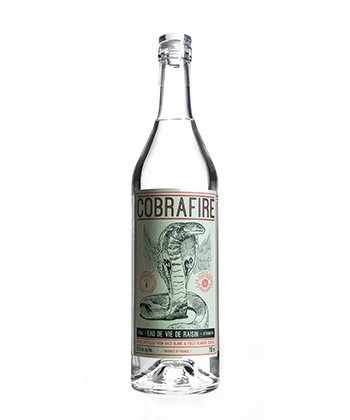
44. Cobrafire Eau de Vie de Raisin

Chances are, you probably missed the launch of the Blanche d’Armagnac (white Armagnac) appellation back in 2015, but you shouldn’t sleep on the products within the category. This 50.5 percent ABV offering from PM Spirits’ Cobrafire project dances between stone fruit brightness and umami-rich savoriness, and promises to leave a lasting impression.

34. Cinco Sentidos Espadín Capón Alberto Martinez

The “capón” technique referenced in this spirit’s name sees growers remove the sprouted stalks (quiotes) from agave, then leave the plants in the ground for extended periods to enhance sugar concentration. The wait is certainly worth it for this bright, fruity spirit, which shatters any notion that Espadín is a characterless, “workhorse” agave variety.

https://vinepair.com/buy-this-booze/best-spirits-2023/

Clear as a Bell

Bon Appétit, eau de vie, Laurent Cazottes, Cyril Zangs, Rum, clairinNicolas Palazzi

These elegant (but electric) digestifs are the perfect pick-me-up, nightcap, and grand finale—all in one glass

BY AMIEL STANEK PHOTOGRAPH BY ISA ZAPATA

Once the dessert forks have been surrendered and everyone swears they couldn’t possibly take even one more bite, a final pour of something special on Thanksgiving just feels right. While I can see the merits of trotting out a bottle of bark-bitter amaro or a mellow bourbon that’s seen a few years in oak, these days I take a different tack. When I want to round out a big meal in style, the choice is clear—a clear spirit, that is. I’m talking about things like eau-de-vie, grappa, mezcal, and clairin. Though these liquors are unique in terms of their geographic origin, composition, and production, they share a brazen character, making them ideal meal-enders. Instead of relying on extensive aging in wood to lend complexity, each spirit tastes unabashedly of the raw materials from which they were distilled and the places where they were made. Heirloom apples. Hand-harvested grapes. Pit-roasted agave. Wild-fermented sugarcane. These idiosyncratic products are as lively and expressive as the day they trickled out of the still; with no time spent in barrels to discipline their rougher edges, flavor has nowhere to hide. And at the end of a rich meal, one sharp sip immediately snaps you back to consciousness, like a cold plunge after a sweaty sauna session.

As is the case with all booze, spirits made with care by small, independent producers are going to be more compelling and often boast a price tag to match. But this is the most special of occasions, after all—when else are you going to break out the good stuff?

CYRIL ZANGS – DOUBLE ZÉRO EAU-DE-VIE DE CIDRE

This bright 100-proof apple brandy is a collaboration between culty Normandy cider maker Cyril Zangs and renowned distillery Calvados Roger Groult. It smells and tastes like a brisk fall stroll through an orchard: ripe fruit, a crisp breeze,

LAURENT CAZOTTES – GOUTTE DE REINE CLAUDE DORÉE

Laurent Cazottes’s eaux-de-vie are the stuff of legend, crafted from small parcels of his own lovingly tended trees and vines. To make this style, Cazottes painstakingly dries and hand-pits greengage plums before fermentation, which yields an extraordinarily concentrated elixir.

CLAIRIN VAVAL RUM

Traditional clairin, perhaps Haiti’s most revered spirit, is rum for mezcal nerds. Made from freshly pressed heritage sugarcane varietals and fermented with no added yeasts, each distillation is a unique expression of terroir. This one, from second-generation producer Fritz Vaval, is sunny and herbaceous, each sip gracefully ping-ponging between delicate flowers and salty funk.

https://www.bonappetit.com/