I've been telling you about my favorite apple brandy for years. Maybe during our Brat Summer you'll finally embrace it. Plus: 15 bottle recommendations!
JUN 27, 2024

About a decade ago, a research study was published suggesting that apple consumption improved women’s sex lives. Researchers divided study subjects (more than 700 Italian women aged 18 to 43) into two groups: Those who ate apples on a daily basis and those who averaged less than one apple per day. The daily apple eaters scored much higher on the Female Sexual Function Index, which measures factors including desire, arousal, and satisfaction. According to the study, there’s evidence that apple consumption could be “related to better sexual quality of life.”
I mention this study today because, for more than a decade, I have attempted to convince more people to try Calvados, the exquisite apple brandy from Normandy—with rather limited success. I first tried, in the late aughts, in the Washington Post (twice actually). In the mid-2010s, I made my pitch at Tales of the Cocktail. In 2018, I tried to elevate Calvados with my critical eye at a highbrow wine magazine. I even put in a good word for it in my 2019 book, The Cider Revival. Of course, I’ve held forth extensively on Calvados here at Everyday Drinking.
So far, if I’m being totally honest, none of it has really moved the needle for my beloved apple spirit. Everyone loves Calvados when I pour it for them, but in general, it still remains out of the mainstream.
Sex, on the other hand, sells. And so, I begin my annual pitch for Calvados by highlighting the scientifically studied apple-sex correlation. To wit, a bottle of Calvados is made from about 15 pounds of apples. I’m not saying you’ll want to rethink your date-night drink of choice. I’m simply confident that my readers are people who believe in science.
In any case, now would be a perfect time to dive into Calvados, especially at the top end. There’s honestly never been a more exciting time to be a fan of apple brandy from Normandy. Recently, the Interprofession de Appellations Cidricole (IDAC) launched an expensive “Drink Calvados” marketing campaign with an early aughts indie sleaze vibe that might fit with the hot, trashy Brat Summer aesthetic we’re now experiencing.
Over the past few months, I have tasted a string of very exciting Calvados expressions from benchmark producers such as Roger Groult (18-year-old single cask), Christian Drouin (17 year-old, finished in Caroni rhum barrel) and Domaine du Coquerel (24 year-old-single cask).
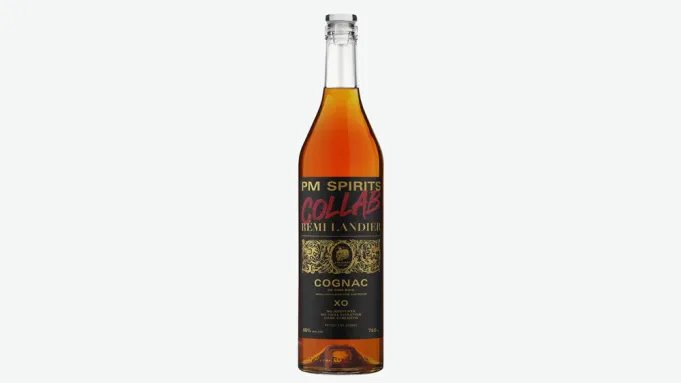
But perhaps the most-awaited new bottles come from a collaboration between French spirits expert Alexandre Vingtier and importer PM Spirits. Vingtier selected three exceptional Calvados casks, a 12-year-old from Domaine Olivier, a 26-year-old from Domaine du Coquerel, and a 45-year-old from Cave Normande.
Vingtier is publisher of French rum magazine, Rumporter, and he writes for La Revue du vin de France, the leading French wine magazine. On my last trip to Cognac this winter, Vingtier and I spent an evening at his home, tasting through more than 30 brandy samples, including a dozen Calvados cask selections—a preview of what’s to come in the near future.
Born in Normandy, Vingtier insists that his native brandy ticks all the boxes that contemporary spirits geeks desire. “It's a very unique spirit,” he says. “It’s mostly sourced from small farms and distilleries, with little to no artificial fertilizers, the fruit of a very well balanced ecosystem with cow and horses living next to the trees. It's kind of the French mezcal, as some production is commercial but still a lot is family-produced for personal consumption.”
He’s convinced that Calvados is ready to be discovered by a worldwide audience. “Think mezcal in the 1990s,” says Vingtier. “Most of Calvados is not released internationally. Most small producers sell directly to consumers on their farm. So many terroirs and expressions have almost never been released. Especially single casks and cask-strength. Have even a hundred Calvados ever been bottled as single cask or cask-strength so far? I doubt it.”

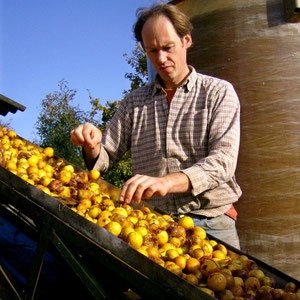

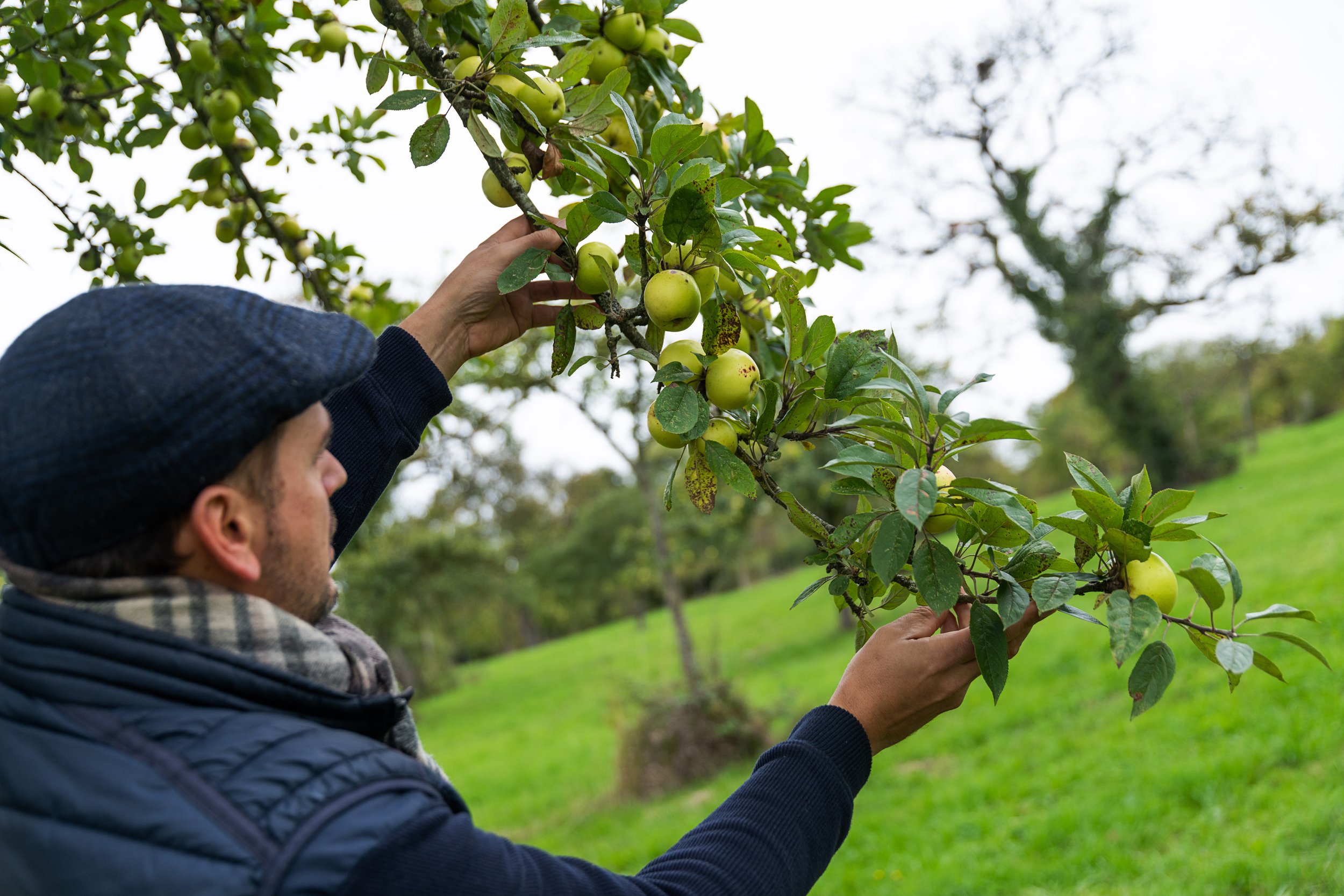

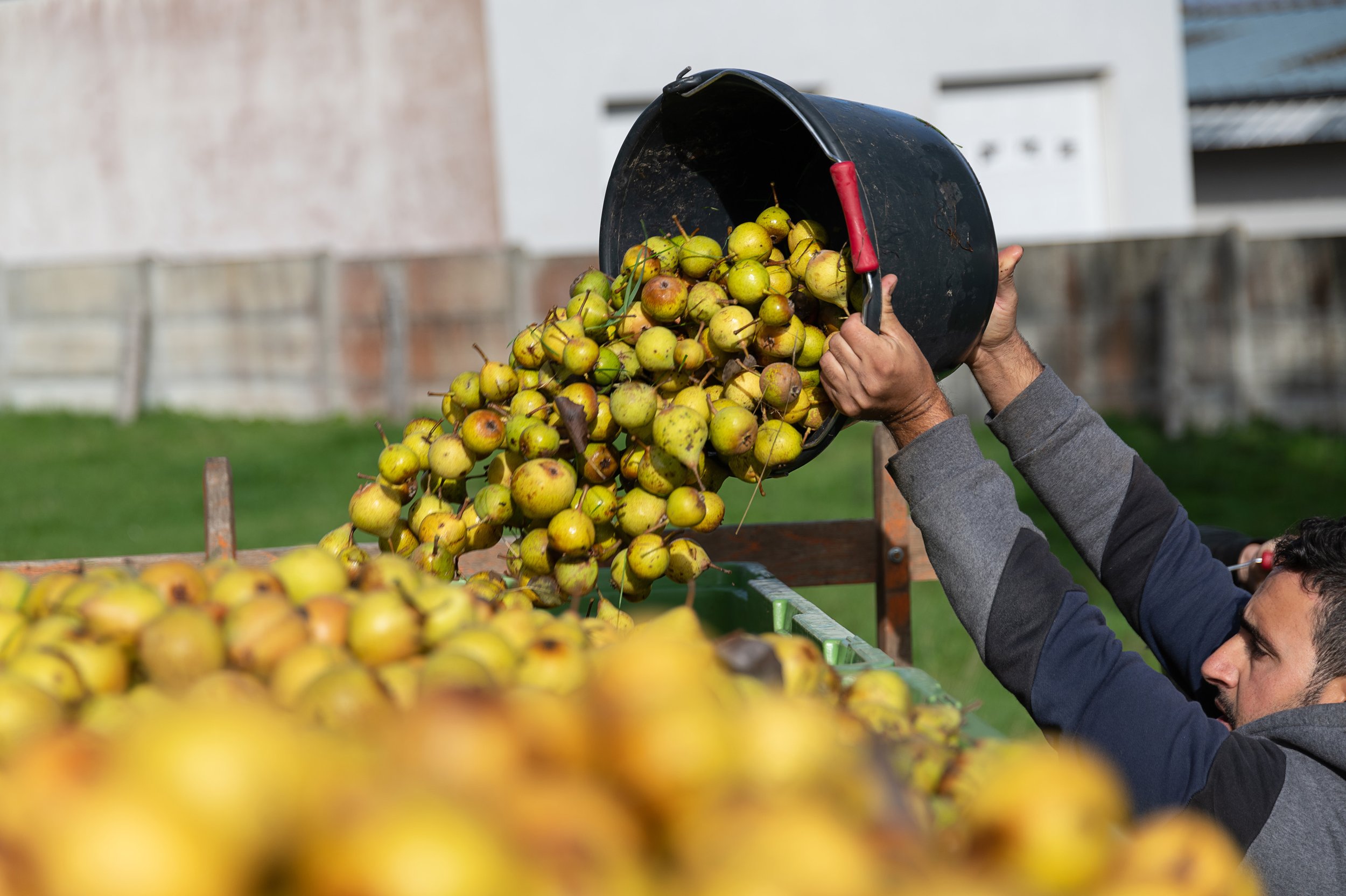
Clockwise from left: Alexandre Vingtier; PM Spirits Collab Calvados; Domaine du Coquerel; Still at Cave Normande; Domaine Olivier; In the orchard; Pears at Cave Normande.Palazzi of PM Spirits is a veteran of trying to sell expensive French brandy to Americans. But he sees something special in Calvados. “To me, Calvados is the last frontier of French brandy, as close as it gets to pure expression,” he says. “It talks to your ‘soul.’ It is not made to please anyone, it is not made to hit specific notes. It hasn't been altered by the large brands or conglomerates.”
Now is the time to jump on the Calvados bandwagon. Below are notes on nine top expressions, followed by a half-dozen value selections that are great introductions to the spirit.
Calvados Is Calling
PM Spirits Collab - Alexandre Vingtier Selections 12 year Calvados ($155)
Single cask distilled and aged at Domaine Olivier, a top producer in Domfrontais, known for its pear ciders and pear-based brandies. This 50/50 blend of apples and pears come from 30-year-old organic apple orchards and pear trees more then 200 years old. Aged 12 years in French barrique, and it delivers incredible complexity at such a young age. Dark amber, aromas of gingerbread, pineapple pastry, dark chocolate, molasses, and flavors of tropical fruit, membrillo, maple syrup, pepper, licorice, with a long nutty, balsamic, and kirsch-like finish. (47.9% abv)
PM Spirits Collab - Alexandre Vingtier Selections 26 year Calvados ($230)
Single cask distilled at Domaine du Coquerel from 95% apples and 5% pears from an orchard with 50-year-old trees. Complex nose of burnt orange peel, grilled apple, tobacco, hay, roasted nuts, with rich rancio notes throughout. On the palate it’s bold and fiery (bottled at 57.1% abv, super high for Calvados). Balanced by nuttiness and spice, as well dessert notes of tarte tatin, dates, and crème caramel, with unique, floral finish that lingers and lingers. Very distinct spirit that belies Calvados’ rustic roots.
PM Spirits Collab - Alexandre Vingtier Selections 45 year Calvados ($500)
Remarkably rare single-cask distilled at Cave Normande, made from a 50/50 blend of apple (15 varieties) and pears (12 varieties) from an orchard with trees ranging from 20 to 200 years. Nut brown in color, redolent of rancio: by turns sherry-like, rum-like, with beautiful aromas of antique furniture varnish, candied orange, and black tea. On the palate, there’s honeyed and dried fruit notes—fig, membrillo—spices and chocolate, and miles-long finish of grilled apple, almond paste, and cigar smoke. Imagine a Calvados with hair on its chest, wearing gold chain, and possibly driving a Corvette.
Roger Groult 18 Year Old ($100)
Show me an 18-year-old spirit, in any category, that offers better value than this. Expressive nose, at first full of carmelized apple, then candied citrus, then finally crisp apple peel, herbs, and autumn leaves. Silky and expansive in the mouth, balanced by juicy freshness, baking spice, and mouthwatering acidity at the midpalate. The long, earthy finish is a savory swirl of russeted apple skin, fruit leather, espresso, and wet stone that’s unique for a brandy of this age. (41% abv)
“Value” Picks Under $100
Everyone defines value differently. With prices continuing to rise, these days $60 is as low as I would go for quality Calvados—one that I would enjoy neat rather than use in a cocktail. Is $60 to $90 a value? I guess it all depends on your definition. When I look at categories like tequila, mezcal, rum, or whiskey, I’d say it’s comparable. Remember: An $80 bottle of spirits contains a little more than a dozen two-ounces pours. That’s roughly $6.67 per pour. How does that compare to what you pay for a middling spirit at your local bar?
Roger Groult 8 Year Old, Pays d’Auge, $80
This 8-year-old bottling is a reminder that Calvados doesn’t always need decades of aging. Intense nose, with baked apple, mulled spice, and sandalwood. But in the mouth it’s fresh and juicy, with ripe and crisp apple notes, and a creaminess at the midpalate. Notes of cardamom, cinnamon, and peppercorn throughout that slides into a long finish. Always a good, value introduction to Calvados. (41% abv)