PM Spirits

Provider of Geeky Spirits

Remi Landier,Ch,Château Arton

Robb Report: The 11 Best Cognacs to Buy Right Now

Best of, PM Spirits, Remi Landier, Cognac FrapinNicolas Palazzi

Cognac might not get as much attention as whiskey, particularly when it comes to bourbon or single malt scotch, but there’s a whole world of this French spirit to get familiar with and sample. There are a few rules to know—Cognac is a brandy made from grapes in the eponymous region or France that is aged in French oak barrels, either new or ones that have been used to age grape-based spirits. There are a few age designations to understand, from V.S. (at least two years old) to X.O. (minimum 10 years old). Cognac can be used to make a wide variety of cocktails, but is wonderful to sip on its own as well. We’ve put together a list of some of the best Cognacs in different categories to help you navigate this growing field, so happy hunting and santé.

Our Best Cognac Picks

Best X.O.
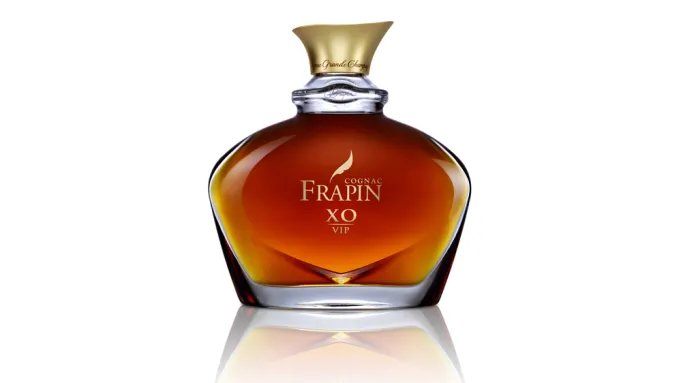
Frapin X.O. VIP

X.O. (“extra old”) is the next level of age in Cognac, a designation that means the eau-de-vie has been matured for a minimum of 10 years. X.O. is prime sipping Cognac, and one of the best in this category comes from Cognac Frapin. This is a single estate expression made from grapes grown in the Grande Champagne cru, and the eau-de-vie is aged in the humid cellars onsite. This is a thoroughly sophisticated sipper, with notes of caramel, chocolate, and dried fruit on the palate.


Best Single Cask
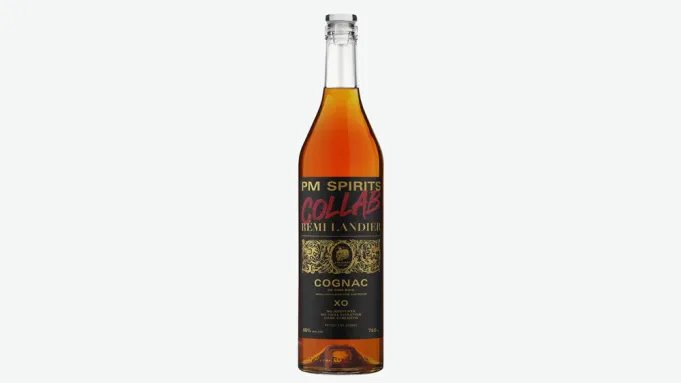
PM Spirits Rémi Landier XO Single Cask Collab

PM Spirits sources a wide array of spirits from different producers in various countries in all spirits categories. This Cognac is a small release that is worth tracking down, and it’s notable for being a single cask release as opposed to a blend of barrels. The producer is Remi Landier, a small family business that has been around since the 1970s. This particular Cognac was distilled in 1997, and is a blend of eau-de-vie from Fin Bois and Petite Champagne. If you’re looking to really expand your knowledge and palate in the world of Cognac, give this bottle a try.

https://robbreport.com/food-drink/spirits/best-cognac-brands-1235451298/

Everyday Drinking: Is Armagnac The New Bourbon? Or Is It The New Mezcal?

Armagnac, Brandy, Château Arton, Nicolas Palazzi, L'Encantada, DOMAINE D’AURENSEN, Domaine d’EsperanceNicolas Palazzi

An exercise in reading beyond the headline. Plus, my picks and tasting notes on 16 bottles for your holiday splurge.

People often ask me, “What’s the difference between Cognac and Armagnac?” (Yes, I exist in incredibly nerdy spaces). To be honest, there as many similarities as differences. They’re both brandies made from grapes, often the same grapes. They’re both made in southwest France, less than three hours drive from one another. At the top end, they’re both expensive. But there are key differences, both technical and cultural. Below, I’ve posted my Armagnac 101.

More than anything, Cognac is bigger than Armagnac. Much bigger. Cognac represents a $4 billion market global market, with 225 million bottles sold each year. Meanwhile, Armagnac sells around 5 million bottles in a year. That means you don’t have huge multinational players like Hennessy or Rémy Martin in Armagnac. Instead, it’s mostly smaller family estates. Most don’t even own stills, but rely on itinerant distillers going from house to house after harvest and fermentation. There simply isn’t as much Armagnac in the world.

That scarcity and local grassroots production is why people often make this analogy: Armagnac is to Cognac what mezcal is to tequila. In the craft spirits world—where mezcal has cool, trendy, insider buzz—that’s not a bad place for Armagnac to be.

That seems to be what some in the industry are banking on. For instance, in late 2021, the venerable brand Marquis de Montesquiou, one of Armagnac’s largest producers, was bought from Pernot Ricard by Alexander Stein, the entrepreneur who created Monkey 47 Gin—which Stein had previously sold to Pernod Ricard. “He thinks Armagnac is the new mezcal,” said Jean-Francois Bonnete, the president of BCI, which imports Marquis de Montesquiou. It will be interesting to see how the brand, which has slipped in quality, will evolve under Stein.

Meanwhile, Stein isn’t the only industry bigwig who’s invested in the region. And a some of the other players don’t see Armagnac as the new mezcal. Rather, they’re banking on it being the new bourbon.

A few years ago, Raj Bhakta, one of the founders of Whistle Pig whiskey, bought the entire stock of a traditional Armagnac house, Ryst Dupeyron. In 2021, Bhakta told me that he’d “transferred the majority of it to Vermont,” where it would be finished in Islay whisky barrels. He released the blends a barrel at a time. “Technically it is Armagnac, but I’m not calling it Armagnac,” Bhakta told me at the time. Still, all of his promotional material clearly mentions Armagnac as the spirit’s place of origin.

Bkakta is clearly trying to appeal to a certain kind of American whiskey drinker, to blow them away with a 50-year age statement on the label. “The American whiskey drinking is dying for something new. He just doesn’t know it yet,” he told me in 2021. But Bkakta made clear he has little intention of educating his bourbon bros on Armagnac when he declared: “Armagnac just doesn’t have much brand value.” I mean, that’s some serious hubris there. But I guess it’s no less arrogrant than taking something a family aged for five decades in the French countryside and sticking in a Islay whiskey barrel for a few months to, ahem, “finish” it.

I’ve written before about this whiskey-fication of Armagnac. I’m very clearly on the record as saying this is not a good thing.

Nicolas Palazzi of PM Spirits, which imports a number of top Armagnacs, summed up the current market like this:

“There’s more Armagnac being sold, but it’s a very specific kind of Armagnac sold to a specific kind of buyer. We’re talking about Armagnac that’s very extracted, heavier on the wood, more powerful, more vanilla. So it’s not very different than the whiskey that people are drinking. We’re selling a lot less classical Armagnac.”

In other words: Armagnac that tastes like bourbon. Still the big question for Armagnac in the U.S. is whether or not whiskey drinkers—tired of ridiculous bourbon prices—will embrace brandies they likely can’t pronounce.

When I think and talk about Armagnac, I am a million miles away from the whiskey market. Gascony is a rustic, agricultural place of small towns that’s famous (or infamous) for the ducks and geese raised for foie gras (more than once been I’ve been served a “salad” in Gascony that was literally all meat). I posted recently about my pilgrimage to some revered small estates. Armagnac is a fragile place, and there is legitimate worry about whether it can handle becoming the new bourbon or the new mezcal.

We love the allure of drinking from decades-old barrels that a négociant—a treasure hunter—has discovered and procured from an elderly grower, or a widow. But those barrels often represent the end of a multi-generational wine-growing family. The numbers don’t lie: In 50 years, the total vineyard area of Armagnac has shrunk from 10,000 to 2,000 hectares. “This tradition is dying,” says Lili de Montal, at Château Arton, with around 40 hectares in Haut-Armagnac. “It’s not an overstatement to say it’s a disaster.”

A few weeks ago, I went to a tasting of Château de Laubade in New York, hosted by Denis Lesgourgues, whose family has run the estate for three generations. It was a small group, mostly people from the trade, and I thought Lesgourgues’ presentation was a good model for how Armagnac might move forward into an uncharted market.

Among the samples, we tasted an experimental bottling made from the rare plant de graisse grape, as well as Laubade’s new 21-year-old expression. That age statement is itself not common. “You don’t see a lot of age statements in Armagnac,” Lesgourgues said, adding: “We’ve been thinking about whiskey drinkers. The price of 21-year-old whiskey is very high. So we feel this is a chance for whiskey drinkers to try a 21-year-old Armagnac.”

I’ve known Lesgourgues for about a decade, and back in 2021, he and I had a disagreement over a Armagnac he released that was finished in Bardstown bourbon barrels. His new 21-year-old feels like a much better approach to meet the whiskey drinker with an Armagnac that’s still got the classic profile. (I recommend it below in my bottle picks).

After the tasting, everyone in attendance split into groups and we blended our own Armagnac from the 2008 vintage from aged samples of four specific grapes: ugni blanc, baco, colombard, and plant de graisse. Besides being fun (my team of course made the best blend; I got an embossed certificate!) the exercise focused attention on the raw ingredients, the grapes and the wine. It drove home to the people in attendance just how different Armagnac is from nearly any other spirit.

Barrel Hunting in Cognac: Unearthing Hidden Treasures in Dusty Old Cellars

cognac, Cognac, PM Spirits, Cognac Frapin, L'Encantada, Remi LandierNicolas Palazzi

There’s a popular vision of Cognac that’s all blinged out and dripping: crystal decanters, tasting rooms that look like jewelry stores and five-figure bottlings. This image is dominated by a handful of huge brands everyone recognizes: Hennessy, Martell, Rémy Martin and Courvoisier—the so-called Big Four, which sell nearly 90% of the Cognac consumed worldwide, according to the International Wines and Spirits Record. But there is another side of Cognac, too. One that’s based more on the gritty agricultural reality of the region.

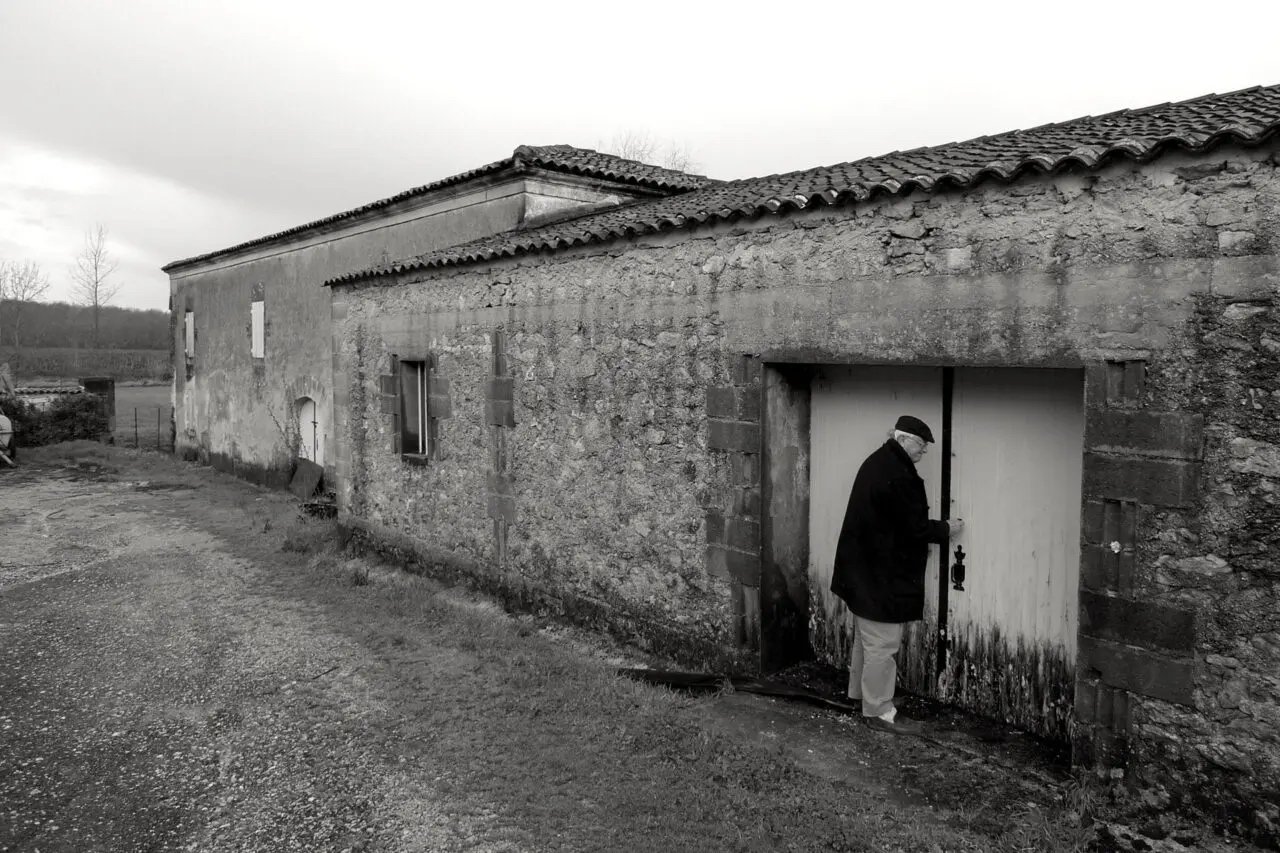
I saw it on a cold, gray day last winter at an unassuming farm in the small village of Verrières. This was probably the last place I’d expect to find pricey Cognac, but I was on a barrel hunt with Guilhem Grosperrin, among the new wave of négociants whose limited-edition releases are quickly becoming the most coveted bottles in Cognac. We visited one of the 150 small producers in his network, where Grosperrin crawls around old cellars looking for rare brandies.

When we arrived at the farm, four barking dogs rushed out to us, followed by a ruddy-faced septuagenarian who was still dressed from his boar hunt earlier in the day. Cognac is a secretive, rivalrous place and I was introduced to the man in hunting attire as only Marcel, no last name. Marcel eyed me suspiciously, then asked, “Well, does he like to drink?” Grosperrin chuckled and told Marcel that, yes, I liked to drink very much. With the ice broken, we stepped into his dark, dusty cellar to taste from his barrels, which had been aging since as early as the 1980s. “Sorry it’s dirty in here. I haven’t distilled since 2012,” Marcel said.

The nonstop luxury messaging from the Big Four makes people forget Cognac’s origin as wine. We sipped liquid from Marcel’s barrels that had begun as grapes in the family’s 10-hectare vineyard, which he picked, pressed, fermented and distilled. It’s a similar story for the roughly 4,300 winegrowers in Cognac, most of whom grow less than 20 hectares specifically for Cognac production. During his career, Marcel sold most of his stock to one Big Four house or another. But he always saved a few special barrels for himself. “What they keep is for pleasure, or patrimony, or as souvenirs, or for reasons that are not necessarily logical,” Grosperrin told me.

By age eight, Marcel was able to light the still, which he did in the morning while his father tended to the cows. Marcel remembers a wealthy neighbor who’d been a prisoner of war in Germany during World War II. That man wrote to his family from prison: “Cut down all the trees if you have to, but don’t stop distilling. Distill, distill, distill.” After the war, this guy’s cellar was full, and he became rich. Meanwhile, Marcel’s family had to rebuild its stocks. “The value of money is just in your head,” he said. “But the value of Cognac is solid, and you don’t lose it.”

To whiskey drinkers, single-cask offerings may seem like old hat. But it’s a relatively new phenomenon in brandy. Cognac is actually following a model that’s already been successful for Armagnac. Single-barrel Armagnac from négociants like L’Encantada are catching the fancy of American whiskey connoisseurs tired of paying whiskey prices. The problem in Armagnac is that the existing stock of barrels is small and shrinking.

That offers an opportunity for Cognac, where there is seemingly endless stock. Though, as Grosperrin points out, “It’s much more complicated to buy a cask here than in Armagnac. In Cognac, the producers are richer, and they don’t need small independent bottlers. They have contracts with the big houses.”

It’s still the early stages for the single-barrel Cognac revolution, and we’re just beginning to see these bottles in the U.S. La Maison du Whiskey’s “Through the Grapevine” series was one of the first to appear. PM Spirits has done several limited-edition bottlings, and this year has released rare single-cask offerings from renowned producers Frapin and Remi Landier. Last spring, Grosperrin released bottlings in the U.S. for the first time in several years. Importer Heavenly Spirits has released two single-barrel bottlings from the famed estate Jean Fillioux. Vallein-Tercinier and Jean-Luc Pasquet have plans to bring more of their single-cask offerings into the States.

To be clear, at the moment, single-barrel Cognac is still the domain of aficionados, with prices running more than $200 per bottle. But they’re still a fraction of something like Rémy Martin Louis XIII or Hennessy Paradis Imperial (both more than $3,000). Much of the price of those blingy brand names is wrapped up in specially designed decanters. The new wave of single-barrel offerings is something rarer and scarcer. “This is for people who want the unexpected. It’s a different philosophy. It’s outside of the current market,” said Vingtier.

https://www.wineenthusiast.com/culture/cognac-barrel-hunting/