PM Spirits

Provider of Geeky Spirits

Bloomberg,Imbibe,Imbibe,Imbibe,Imbibe

Imbibe: Passion Project Nicolas Palazzi and the art of selling to 50 people

Imbibe, Nicolas PalazziNicolas Palazzi

We’ve never had a market,” says Nicolas Paul-Marie Palazzi, Miami-based owner of PM Spirits. “Fifteen years ago there wasn’t a market, and there’s no market now.”

This seems an odd thing for the founder of a successful spirits-importing company to say. But it’s true in one way: Palazzi doesn’t really identify markets; he identifies bottles. He finds spirits he loves, brings them into the country, and then goes looking for the handful of people who will appreciate them, too.
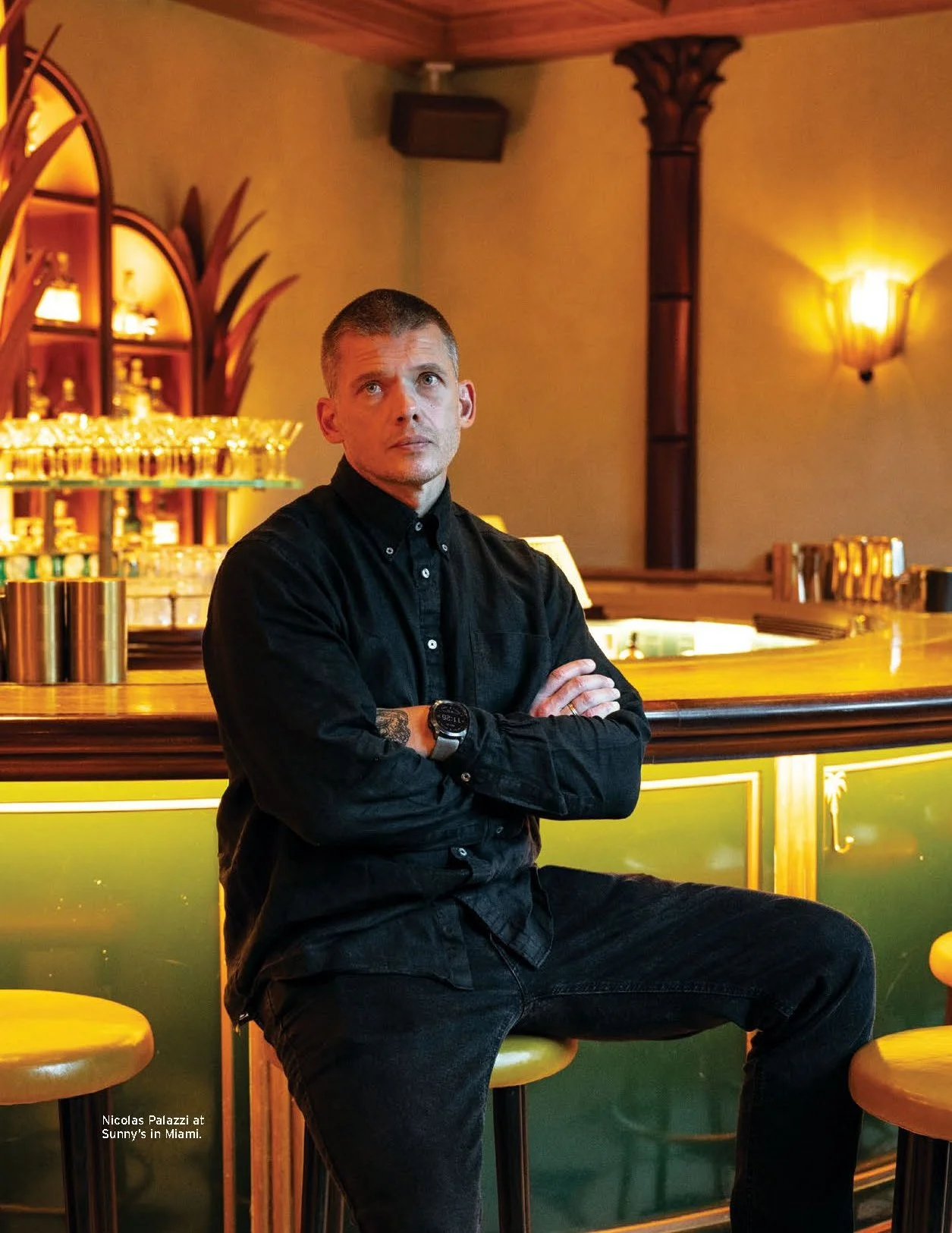
Photo by DAVID SALAZAR

Palazzi, who moved to New York from his native France in 2004, has emerged as one of the most admired spirits importers among aficionados and collectors, almost to the point of cultishness. His portfolio features outlier Cognacs, Armagnacs, single-malt whiskies, and big, funky rums. These include unicorns like Jacky Navarre Cognac, L’Encantada Armagnac, and Hampden Estate rums.

“The French are often the most traditional, and they like rules, whether it’s cheese or honey or spirits or whatever,” says Monique Huston, vice president of spirits portfolio at Winebow, an importer and distributor of wines and spirits. “Nicolas just kind of went anti-French.”

Palazzi was born and raised in Bordeaux, where familiarity with fine wines and brandy is all but mandatory. His mother’s family makes wine with their small business in Côtes de Bourg, and one of his grandfather’s closest friends was a well-regarded Cognac distiller. “At Sunday family lunches at my grandparents’ house,” Palazzi recalls, “we’d finish with Cognac made by this gentleman.” Palazzi wasn’t immediately drawn to the world of beverages. He left home to study engineering, and, after engineering school, worked several years as an environmental engineer for the French national electric utility company EDF. When a friend invited him to visit New York City, his life took a new trajectory. He left his unsatisfying job, moved across the Atlantic to join his friend (now his wife and mother to their two children), and found a new job managing a medical research lab. He had a respectable technical career but still didn’t feel content, and he eventually realized that he should build a life around something he actually cared about. “I would get up in the morning and just feel upset for no reason,” he says. “It wasn’t healthy.”

He considered his options. “My basic thoughts were, what are the things that I genuinely like to do?” he says. “And I liked wine and spirits.”

His interest led him first to hanging out, then working on weekends at Jean-Luc Le Du’s boutique wine shop in Manhattan’s West Village. He sharpened his knowledge of wine through seminars, blind-tasting groups, and connections with the sommeliers who patronized the shop.

New York impressed him with its wide diversity of available wines, especially compared to Bordeaux. He was particularly drawn to the bottles from smaller, family-run vineyards. But he found the spirits shelves lacked that depth and were dominated by larger, corporate brands. Palazzi’s instincts told him that New York would welcome curated, lesser-known spirits. So he quit his laboratory job and took his first, tentative steps into the beverage-importing business.

The standard advice for building a successful business is this: Identify demand in a market, then satisfy it. Palazzi didn’t follow that approach. His business model, if it can be called that, was to seek out spirits he liked—made as naturally and with as little intervention as possible—and then strike an import deal with the producer. Put the bottles on the store shelves, and assume fellow lovers of spirits would eventually find and buy them. While his plan was vague at best, he did have a short list of contacts, ranging from producers he knew in France to buyers he’d met at Le Du’s wine shop.

Palazzi flew home to France and visited his grandfather’s friend, the Cognac maker, who became a mentor. “His operation was super tiny, just one dude, but he was real artisanal and really good at what he did,” he said. “I approached him and said, ‘I like spirits. And I’m thinking that I would like to do something around it, and I don’t know anything about it, really.’”

With his mentor’s advice and introductions to a few other distillers, Palazzi launched PM Spirits, named to honor his father, Paul-Marie Palazzi. His first import was Guillon-Painturaud Hors d’Age, a Grande Champagne Cognac, provided by his family’s friend. Back in New York, he took to the streets with bottles in a bag, talking with restaurateurs and liquor shop owners one at a time, hoping to convince them to stock his product. One agreed, then another, and in time he sought out other spirits worthy of attention, including his second import, a Cognac from the house of Paul Beau.

He learned the mechanics of importing the hard way: by screwing up. He underpriced bottles and sold them at a loss. He bought inventory without understanding cash flow. He learned about duties, invoices, and the peculiar financial limbo in which an importer pays suppliers and the government long before customers pay him. “I’ve done a lot of things that did not work out,” he says. “But none of them were fatal.”

A central problem was finding someone to distribute these obscure bottles—a common lament among smaller importers. So Palazzi did what became a recurring feature of his career: When the conventional system didn’t work for him, he worked around it. He began distributing his own spirits in New York, selling bottles himself. To this day, PM Spirits consists of two businesses: a New York wholesale operation, in which his company self-distributes the products in the state, and an importing business that supplies distributors throughout much of the rest of the nation. (Palazzi and his family moved from Brooklyn to Miami in 2019.)

Bit by bit, drinkers started to pay attention. Palazzi returned to France and discovered Armagnacs and Calvados that he thought worthy of attention, and began importing those as well.

He visits each distillery to assure himself that it’s managed by artisans, not accountants. “We meet the people—we need to be like-minded individuals,” Palazzi says. It’s telling that his online directory of imported products often features pictures of the producers, not shots of stills or barrel houses. “It’s meaningful,” says Kate Perry, U.S. market manager for La Maison & Velier, who met Palazzi in 2014 and has partnered with him in importing and marketing his spirits in the U.S. “They’re real—real farmers, real people, real communities. A very personal thing, which is not often the case with spirits brands.”

His explorations have taken him far beyond French brandies, and his portfolio has expanded to include whiskies, rums, agave spirits, eau de vie, and liqueur—all ticking the boxes Palazzi has set out, foremost among them being that he likes drinking them. Palazzi has also partnered with likeminded others in collaborative ventures. “We see if we can work together and do something that’s cool and tastes very good, and that I can afford,” Palazzi says.

Perhaps the best known of his “collabs” is the partnership with Equipo Navazos, a boutique sherry producer in Spain. Palazzi came across this sherry at a wine dinner organized by Levi Dalton in New York, and later toured Spanish bodegas with co-founders Eduardo Ojeda and Jesus Barquin. Ojeda and Barquin took an approach to sherry similar to that embraced by Palazzi: find and market excellent, distinctive sherries crafted by independent producers.

The trio soon partnered on a line of spirits, starting with Spanish brandy that had been aged in sherry casks in hot, dry Spain—a process that transformed a middling brandy into something worthy of a snifter. They later applied the same method to other spirits, including gin, Spanish whiskey, and rum, all sold under the Navazos-Palazzi label. Their rum in particular attracted fans. A Caribbean rum aged five years in ex-bourbon casks and then further in oloroso sherry barrels for more than a decade, it was praised by critics for its notes of quince, walnut, and caramelized roasted meat. In one review, the taster concluded that the rum evokes a full, festive meal in a glass. Palazzi has also released his own branded line of PM Spirits, which includes Cobrafire, launched in 2016. It’s an unaged Armagnac, produced with Domaine d’Espérance, sold as an eau de vie de raisin.

A “drink less, drink better” ethos has spread in recent years, as spirits fans consume less but are willing to spend more on higher-caliber bottles. In some ways, the buying public has caught up with Palazzi, who has become an inadvertent avatar of this movement. There is something almost stubbornly old-fashioned about his approach. It’s not exactly a recipe for building a mass market. But that’s never really been the point. “I don’t have any marketing money,” Palazzi says with a shrug. Finding great spirits is easy, he says. Getting people to try them (and, importantly, buy them) is much harder. “So the only thing that I can do is put a product on the market that looks cool and tastes very good, then try and convince people it’s worth their attention and their money.”

“I think it’s gotten to the point that putting the PM Spirits stamp on something says Nick has tasted this,” says Huston, “and that means it’s really good quality. Maybe his audience is 50 people.” And she appreciates that Palazzi’s approach is essentially: “How about I bring this beautiful thing in for those 50 people?”
Bloomberg: Incredible Jamaican Rums That Truly Bring the Fruity Funk

Bloomberg, Hampden, PM Spirits, Best ofNicolas Palazzi

Summer rummin’

Last month, I finally had the opportunity to check off a box on my spirits-pro bucket list: experiencing a Jamaican dunder pit.

A Jamaican what pit? In brief, it’s a giant, mucky vat used by some rum makers in which leftovers—fibrous bits of sugar cane, yeast residue and other solids and liquids remaining in the still—are dumped and allowed to slowly ferment with wild yeast, like a sourdough starter on steroids. Sour mash bourbons also use a portion of spent grains after distillation to jump-start a new fermentation process, so this may sound familiar to whiskey fans.

The Hampden distillery, operating since 1753, is a hit among high-end rum collectors.Source: Hampden Estate Rums

Yet the dunder pit takes it to whole new level. I can see how rumors start about bat heads and other animal remains tossed into the muck—though I’m assured these are just tall tales.

Frankly, it’s not cute. The murky, ominous-looking sludge bubbles and foams like a cauldron, and exudes a wildly funky, aged-cheese-and-molasses-y stench that could knock you right off your barstool. But it was an absolute delight.

If only this image was scratch ’n’ sniff: Hampden’s dunder pit.Photographer: Kara Newman

That aroma represents the magic that gives Jamaican rum its signature “funk,” that overripe-banana-like tone that distillers refer to as “hogo.” It’s also an essential step for creating esters, organic compounds that contribute to a rum’s aromas and flavors—and, many rum lovers say, the more the better.

Jamaican rums in particular are often described as “high-ester rum,” and while that’s not universally true, or even unique to Jamaica (you’ll find great examples in Barbados, Martinique, etc.), that high-ester punch is easy to recognize. If you want to learn more, Cocktail Wonk’s Matt Pietrek has a great deep-dive explainer.

Because spirits can be presented in shiny bottles, it’s easy to forget that they’re agricultural products. But driving past Jamaica’s vast sugarcane fields and experiencing a dunder pit up close reminded me how important rum and sugar cane are to the island’s cultural and agricultural heritage as well as to its economy.

Right now, Jamaica is in the throes of an ongoing dispute about what can and cannot be called “Jamaican rum.” Of note, last year Jamaica’s Intellectual Property Office approved an amendment to the geographical indication (GI) designation, stating that rum distilled in Jamaica but aged elsewhere is no longer eligible to be recognized as Jamaican rum. However, parties who want to age Jamaican rum outside Jamaica are pushing back, and the legal battle continues.

Much of the furor boils down to transparency, explained Peppie Grant, manager of Hampden Estate, as he guided a tour of the distillery. His view: “As long as they’re not trying to claim that the flavor comes from aging outside Jamaica, it’s OK,” he said. After visiting the relatively small Hampden as well as rum giant Appleton Estate, and sampling countless other Jamaica rums, I can understand why producers would be so protective of one of their key cultural exports.

Returning home to New York after getting dunder-struck, I looked around and more fully felt the Caribbean-inspired cocktail moment we’re in. From the lauded daiquiris at Momofuku’s Bar Kabawa (celebrating all of the Caribbean, with a special hug to Barbados from chef Paul Carmichael) to the new Red Bar within the Printemps department store (focusing on Gregory Gourdet’s Haitian heritage and Caribbean/French spirits broadly) to Afro-Caribbean drinks at Tatiana by Kwame Onwuachi (where Bloomberg’s food editor is still dreaming about the mushrooms), it's exciting to see ingredients such as sorel and clairin—not to mention lots of Caribbean rum—claiming a long-overdue spotlight.

Jamaica’s rum inevitably finds a place among these drink menus, just as it’s finding a place among the cabinets of high-end spirits collectors. And when summer hits, it feels doubly right to pour.

So here are a few key bottles for those who want to experience a bit of hogo without hovering over an odoriferous dunder pit (unless that’s your kind of thing, of course—you’ll find no funk-shaming here). These rums are fruity and approachable, with just a whisper of Voldemort funk-that-shall-not-be-named.

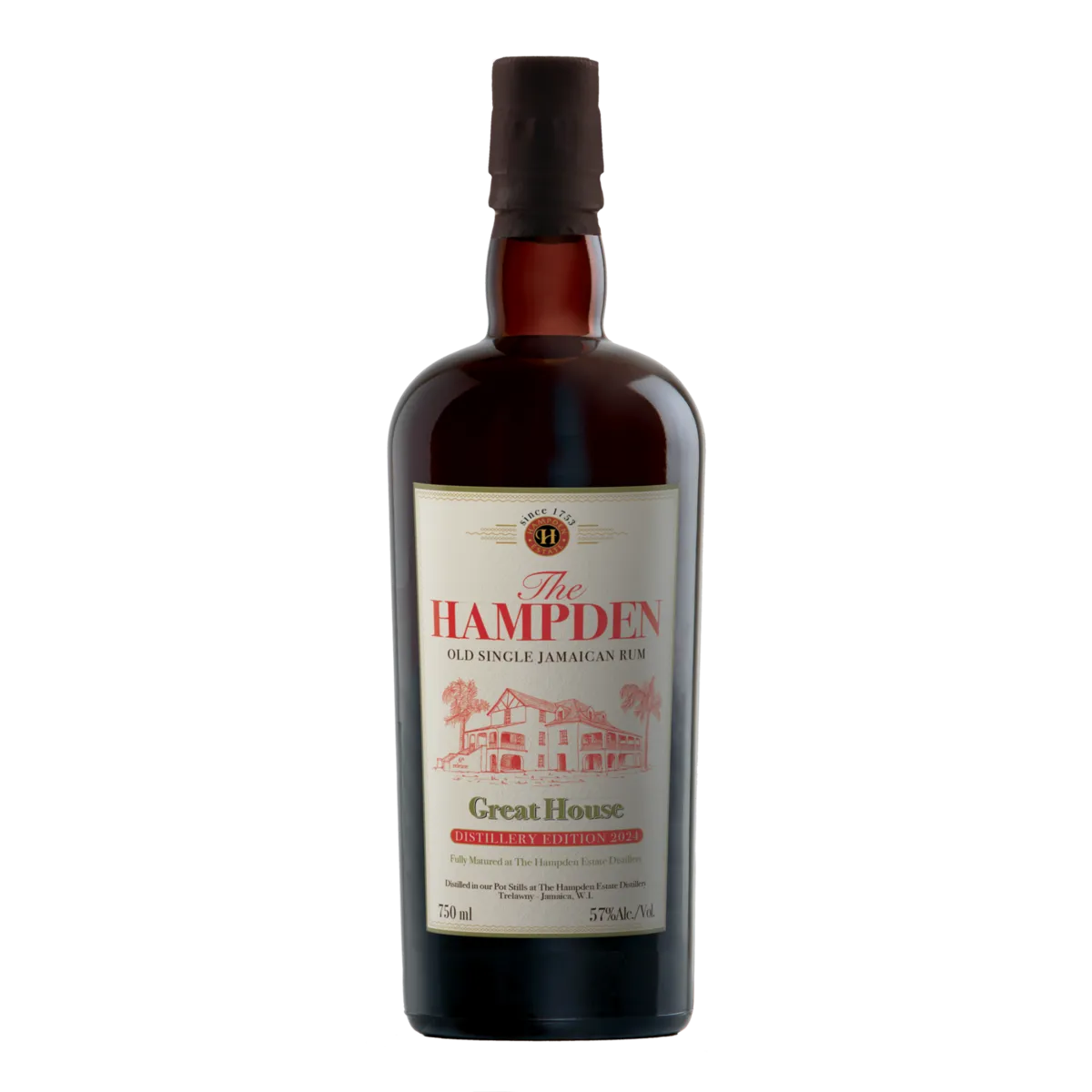
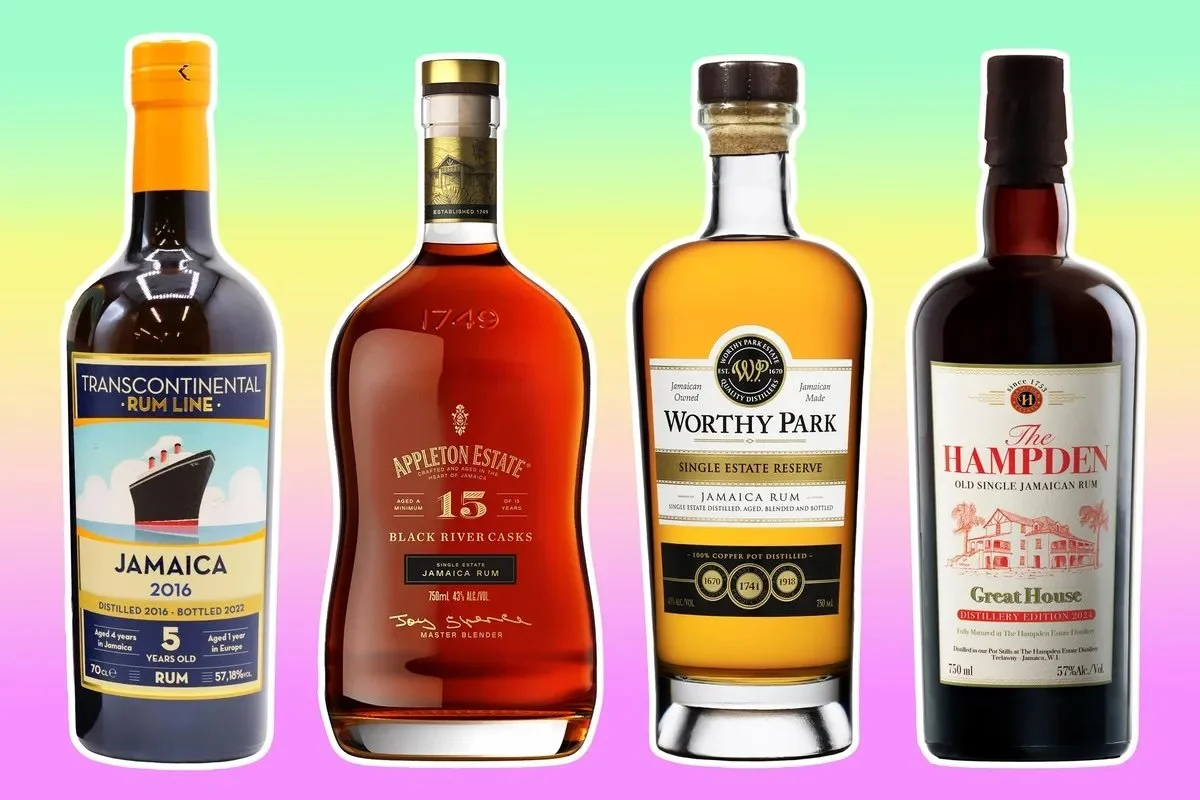
Hampden Estate Great House 2024 ($131)

It’s unabashedly intense and funky, with tons of tropical fruit (think coconut, mango) on nose and palate. Aging in emptied bourbon casks adds a fleeting hint of dark chocolate. While visiting the distillery, I had a chance to sample the forthcoming vintage 2025 bottling, which was newly pulled from the barrel. It tasted like bananas foster, but crisp and bone-dry. I’m looking forward to the day it makes its way stateside.

Transcontinental Rum Line: Jamaica 2016 ($66)

I tried this bottling, which is part of a lineup of world rums from independent bottler La Maison & Velier, at last year’s New York Rum Fest, and it put me in mind of caramelized banana and grilled pineapple with lots of fresh-ground black pepper. The seafaring graphics on the label definitely inspire a bit of wanderlust, but also speak to how it’s made on two continents: distilled and aged for four years in Jamaica, then matured one more year in Europe. Wherever it lands on the “Is it or isn’t it Jamaican?” GI-designation battle, it’s a memorable sip worth seeking out.

https://archive.is/Sy38S#selection-2095.0-2095.45

Bloomberg: The 15 Best New Bottles I Tried in 2024, From $26 to $26,000

Best of, Bloomberg, Hampden, Alambique Serrano, RumNicolas Palazzi

Season’s greetings, spirits sippers! It’s Brad Japhe, the resident expert on the subject, reporting for duty. As is customary this time of year, I’m presenting my annual list of the absolute best bottles I encountered over the past 12 months. The stable of contenders was crowded in 2024: Of some 322 new expressions sampled, I counted no less than three dozen deserving of effusive praise. Sadly, some of those offerings are just so painfully pricey and/or excruciatingly allocated that I couldn’t, in good conscience, include them here.

Instead, my choices embody a wide variety of liquid across all categories and price points. Make no mistake, you will see bottles fetching four- or even five-figure sums—entries are organized in order of increasing cost—but it’s all relatively available for purchase. You won’t need an estate planner to broker acquisition.

But before we get to the big reveal, let’s recap the year’s major headlines. Beyond spotlighting the shape of the industry in 2024, these news items hint at where we’re headed in the months ahead.

For one thing, people aren’t paying as much for rare whiskey. A recent report from the financial advisory firm Noble & Co. indicated that the value of auctioned scotch cratered by 40% in 2024. But that hasn’t slowed the trend of formerly shuttered “ghost” distilleries rising from the grave across the Scottish landscape, as I reported this summer.

Tariffs proposed by the incoming administration mean your favorite tequila could effectively become 25% more expensive in the year ahead. And a separate trade war with the UK could persuade domestic scotch consumers to experiment with single malts from emerging markets such as India or New Zealand.

Or, perhaps they’ll start exploring American single malt, since the category is finally going to be recognized by the Alcohol and Tobacco Tax and Trade Bureau, after more than eight years of lobbying efforts.

But enough speculating about what’s coming. Here are my best bottles of 2024.

Alambique Serrano Rum Blend #5 — $70.Source: Vendor

Alambique Serrano Rum Blend #5

There’s more than just mezcal coming out of the highlands of Oaxaca. This artisanal brand from the steep hillsides of Santa María Tlalixtac specializes in world-class rum. In fact, you’ll be hard-pressed to find sugarcane distillate anywhere drenched in as much complexity as this 65.9%-ABV spiced-banana bomb. It’s a 50-50 blend of column spirit, aged for 27 months in ex-bourbon casks, with pot still spirit aged for 19 months in new French oak. Cut it with a splash of water to extend a tobacco and toasted almond-toned finish. Or knock it back neat, if you dare. ($70)

Hampden Great House 2024 Jamaican Rum — $130.Source: Vendor

Jamaica’s holy house of funk never disappoints when it comes to full-bodied expressions, brimming with over-ripened fruit. Although the exact recipe of this annual limited release shifts each year, it invariably involves a blend of rums that epitomize the brand’s signature style. This time around it finds form in a 57%-ABV sipper that wows with an initial wave of marmalade and cranberry relish, revealing more tropical fruit undertones as it warms in the dram. ($130)

https://archive.is/ZQan2#selection-1759.0-1815.77

Bloomberg: Your Next Investment Bourbon Should Be a Brandy

Armagnac, Bloomberg, Brandy, cognac, Cognac, Cognac Frapin, L'Encantada, Nicolas Palazzi, PM SpiritsNicolas Palazzi

Illustration by Nico H. Brausch

By Christopher Ross

June 18, 2024 at 6:27 AM UTC

Bourbon collectors, I feel your pain. What was once a niche hobby for booze geeks has become a forbiddingly expensive and competitive endeavor, what with the annual Pappy Van Winkle lotteries (and heist) and secondary markets where a $2,000 bottle of 20-year Eagle Rare can leap to $14,000 in just five years.

Still, if you love the hunt for artisanal, rare spirits, have you considered pivoting from grains to grape? The warmth and woodsy flavors of single-barrel, full-strength cognac and Armagnac can closely resemble the taste of bourbon, at a more attainable price point.

“Folks who’ve had the opportunity to taste these bottles notice, wow, there’s that concentration, that similar profile of combining fruit and structure from the wood,” says Greg Faron, co-founder of new importer Bien Élevé in Washington, DC. Some vintage brandy can compare in flavor to glut-era bourbon, he says, referring to the 1970s-to-early-’90s period when distillers cleared out older, languishing whiskey stock under younger labels.

Bien Élevé joins established importers PM Spirits and Charles Neal Selections—plus upstarts such as Bhakta Spirits, from the founder of WhistlePig whiskey—as part of an expanding network of bottlers and retailers working with aficionados to build a ground floor for collecting these complex liquors.

Their biggest obstacle? The French.

See, when it comes to investment bourbon, what’s most sought-after are single-vintage bottles, ideally single-barrel, bottled at cask strength—offering a premium of intensity and purity and rarity, traceable to a specific location and point in time. But that’s exactly the opposite of how French brandy is traditionally produced.

Distillers at major cognac houses such as Hennessy and Courvoisier believe the beauty of their craft lies in artful blending; they lock up eaux-de-vie (unaged spirit distilled from grapes) from hundreds of growers to do so. There are strict brandy-making rules around grape varietals, distillation and minimum aging time in oak barrels, but blending isn’t actually a prerequisite.

“I’m French, so I can say this: The French feel they are the guardians of a tradition, which makes them not innovate whatsoever,” says PM Spirits founder Nicolas Palazzi, one of the first importers to bring unblended, collector-bait brandy to the US.

The Cognac region, Palazzi says, is particularly disincentivized to put out the kind of artisanal spirits that US buyers are clamoring for. If a producer decides to set aside a barrel for aging as a vintage cognac, a member of the Bureau National Interprofessionnel du Cognac (BNIC) must be present for its sealing. To open that cask for any reason, including if it’s leaking or damaged, they need to pay for another inspector to come out and oversee the breaking of the wax seal.

Moreover, Big Brandy doesn’t see much long-term strategy in single-barrel bottlings, as it’s only able to achieve its current sales volumes by blending spirit from different casks; the ultrapremium $4,000 Rémy Martin Louis XIII may contain as many as 1,200 eaux-de-vie, some as much as a century old. There are precious few growers in Cognac who don’t sell to the mass-market houses.

Steve Ury, a well-known former bourbon blogger, takes a cynical view of the Kentucky gold rush, so he turned his gaze toward France. He says his steadily growing Facebook group, Serious Brandy, now counts more than 3,000 members. He says American buyers have had to train smaller brandy producers to fill that desire gap between collectors and the conglomerates.

“Their first instinct was, you blend everything, you water it down to 40%—that’s what people want,” Ury says. “And we had to go and say, ‘No, that’s not what we want. We want to see those barrels. Just put ’em in a bottle. We don’t need you to do anything else.’ ”

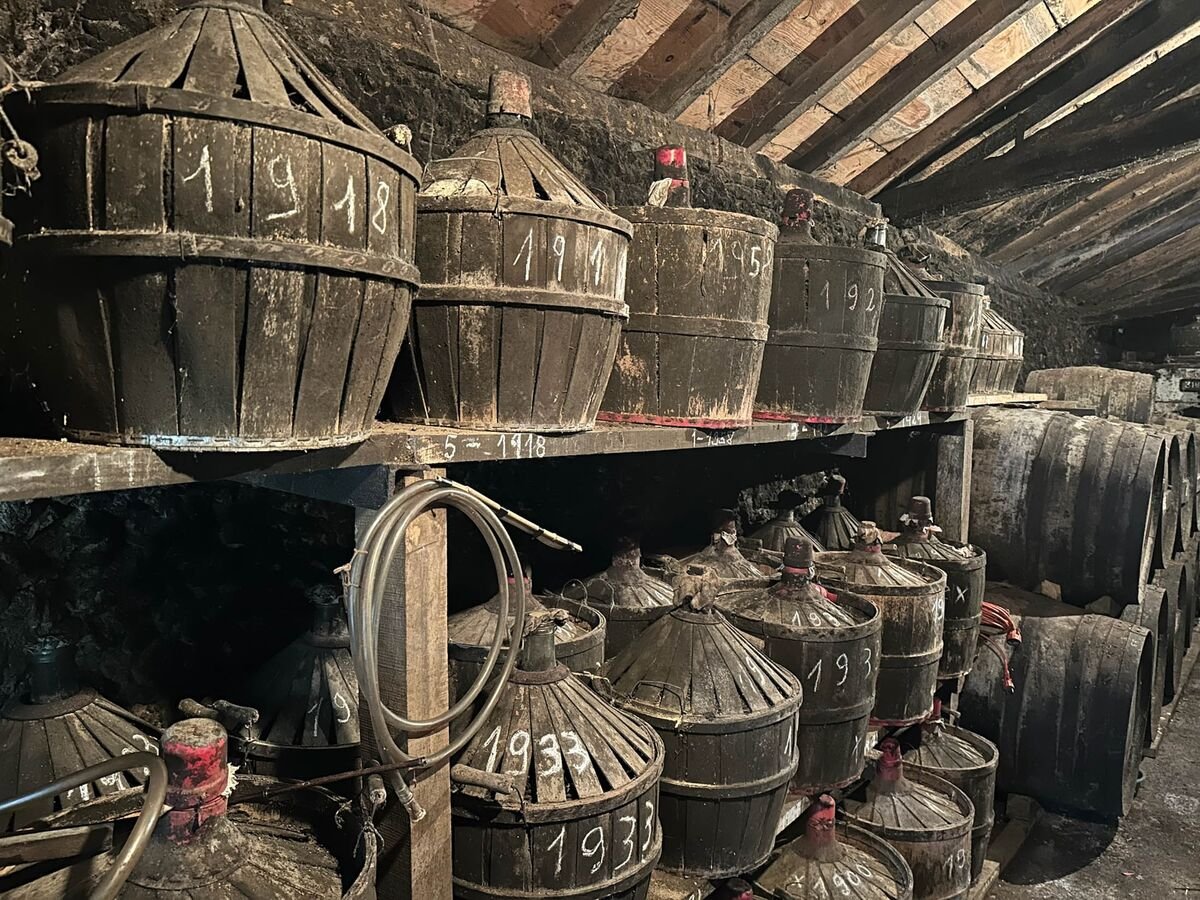
There’s casks all over the place, all over France, sitting in garages and sheds.

Cognac houses Pasquet and Grosperrin are among producers that have gotten the memo, as well as L’Encantada Armagnac, he says, which can be “very bourbon-like. It’s dark and oaky because they don’t do as much treatment to it, they just sort of leave it in the barrel.”

Reid Bechtle, a collector in Virginia, agrees. He was so enchanted when first tasting L’Encantada’s Armagnacs in 2015 that he and fellow members of his private whiskey club—1789b, which buys whole barrels of spirits—foresaw the untapped demand and purchased three on the spot. Now, he says, L’Encantada’s fame has grown, and its small-batch, orange-wax-topped bottles command such a cult following that it’s often impossible to find at retail. “What we used to buy for $60 is now $300.”

For your own collection, this month PM Spirits is releasing a L’Encantada discovery box ($211) featuring 200‑milliliter independent bottlings of brandy distilled by three different domaines over three different decades: 1999, 2001, 2012. Dozens of years in barrel reveal beautiful tertiary aromas of dried citrus, tobacco and resin.

Cognac Frapin, a family-owned producer founded in 1270, focuses mostly on traditional aged blends, but it, too, is coming around, with help from Palazzi. A 1994 vintage released in May is a first for the maison: single-estate, single-cask, full-proof. Balancing the richness of the wood with subtle orchard fruit, vanilla and leather, it costs $265. Only 500 bottles were made.

Similarly, Bien Élevé imported a single-cask 1967 Cognac Lheraud Bons Bois ($640), perfumed with exotic spice and dried figs and elegantly rounded on the palate. “It’s become more of a focus in France, finally, for single-barrel picks,” says Faron, the Bien Élevé co-founder. Just a dozen of the 132 bottles of the Lheraud Bons Bois were allocated to the US.

I wouldn’t be surprised if major producers started earmarking exceptional casks as well, given that collectible, traditional blends have stalled. The compound annual growth rate by volume of ultrapremium-and-above French brandy was down 2% globally from 2018 to 2023, compared with ultrapremium bourbon’s 22% growth, according to IWSR, a global beverage alcohol data specialist.

“With French brandy, the extraordinary and extensive histories—over 700 years for Armagnac alone—and the tremendous ageability of these spirits, arguably far greater than most whiskeys, should mean that the possibilities for finding great spirits are near endless,” says Nima Ansari, a buyer for Astor Wines & Spirits in New York who stocks about 20 bottles of boutique brandy. Cognac can age longer than bourbon or American rye because of a cooler climate and less char on what are usually older, larger barrels.

But the ultimate factor may be the love of the hunt. As in the early days of searching for bourbon “dusties” on liquor store shelves, there’s a sense of undiscovered treasure out there, if you know where to look and strike quickly when opportunities arise.

If a vineyard hasn’t presold all its grapes to a brandy house, some farmers might have their own spirits distilled for consumption among friends and family or as an investment. “Every farm is a potential producer,” Ury says. “There’s casks all over the place, all over France, sitting in garages and sheds.”

In other words, there’s a lot of potential boutique brandy out there—and it’s all rare. Consider: If an importer comes across the private stash of an elderly couple, buys it and releases 170 bottles, it might be all that family farm ever produces.

For collectors who get a thrill from acquiring a truly one-of-a-kind spirit, it’s tough to put a price on those bragging rights. At least for now, though, a couple hundred bucks ought to do it.

https://archive.is/Cf9Yi

The World Cup of Luxury Spirits: Best Booze of 2022

Best of, Bloomberg, Pierre Frapin, La Maison & Velier, Procera GinNicolas Palazzi

It’s a global matchup for the titles in best new whiskey, gin, rum, nonalcoholic spirit, digestif and more.

By Brad Japhe
December 16, 2022 at 7:00 AM EST

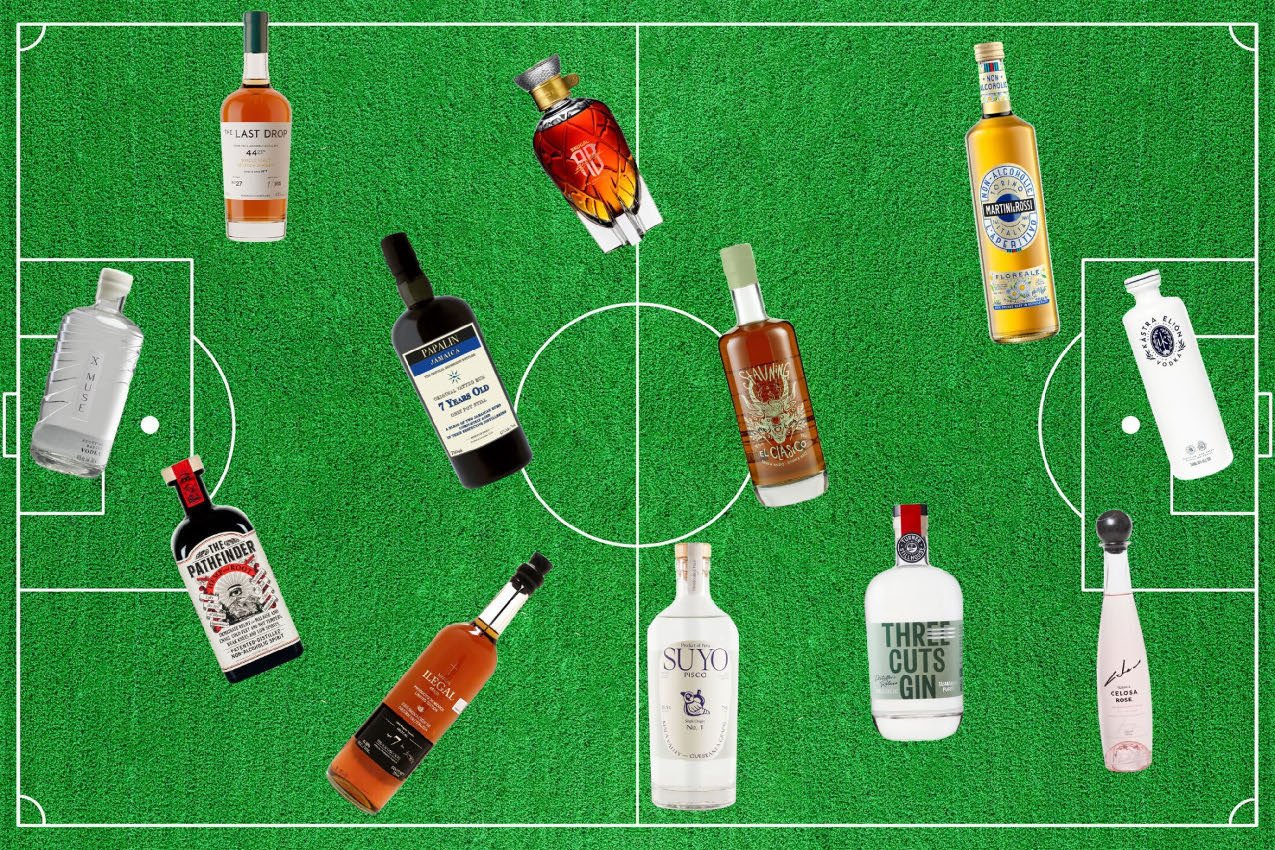
The World Cup is nearing its end—as is 2022. In service of such, we’re taking a moment to memorialize the best booze of the year. What does liquor have in common with soccer, you may ask? Not a whole lot if you’re watching it live in Qatar. But under usual circumstances, well-crafted spirit, just like the Beautiful Game, is a truly global phenomenon. And just as it’s been a particularly big year for soccer, it’s been for spirits, too, with a plethora of new releases kicking around bottle shops as of late. Over the past 12 months, I sipped my way through more than 150 expressions hailing from roughly 40 different countries. For those keeping score, that’s eight more entries than the total number of national teams qualifying for the World Cup.

For fans of high-end whiskeys, rums, vodkas, gins and more, there’s almost too much to cheer; according to the Distilled Spirits Council of the US, luxury brands increased by 23% in Q2 over that same quarter of 2021. All this is to say, the field is increasingly crowded. Upon careful deliberation and review, I’ve managed to whittle it down to one-on-one matchups for every primary category of spirit, including some zero-proof entrants. But in each draw, it’s up to you to decide which side walks away with the trophy. Let’s get the ball rolling....

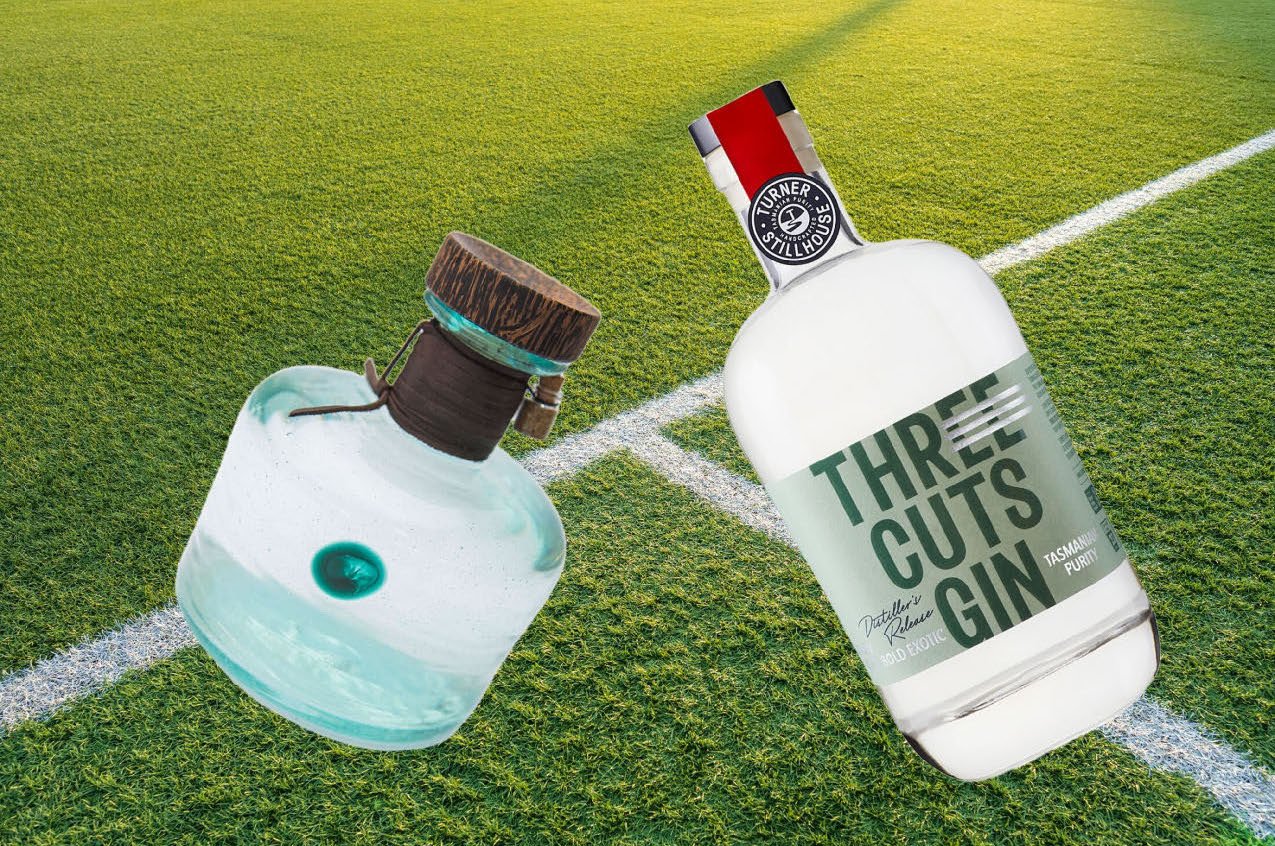
Group Gin: Procera Green Dot versus Three Cuts Distiller’s Release Bold Exotic.

Best Gin of 2022

Kenya versus Australia

Procera Green Dot ginWhereas most gins on the market today are made using dried juniper, this Nairobi-based distillery relies on fresh

berries from the native Juniperus procera. Its 94-proof Green Dot ($120) incorporates all parts of the treeincluding the foliage and bark. The resulting liquid offers a pine-forward nose, typical to the category, but itwarms the mouth with earthiness and a tickle of umami on the finish. It exists as that rarest of breeds: a sippinggin. Presented in a mouth-blown decanter of recycled glass, this gin exudes uniqueness inside and out.

Group Rum: Papalin Jamaica 7 Years Old versus Andrés Brugal.

Best Rum of 2022

Jamaica versus Dominican Republic

Papalin Jamaica 7 Years Old rumThis assertive banana-bomb from esteemed independent bottler Velier marks a melodious merger of twolegendary producers from opposite ends of the Caribbean island. High-ester rum from Hampden and Worthy

Park were pot-distilled and matured in their respective distilleries and warehouses before being combined into awhole greater than the sum of its parts, at about $60 a bottle. Ripened tropical fruit is on full display, and yet athoughtful balance to the blend precludes the finish from overplaying its funk.

Group Brandy: Pierre Frapin Cuvée Rabelais versus Suyo No. 1.

Best Brandy of 2022

France versus Peru

Pierre Frapin Cuvée Rabelais cognacThe Frapin family has been crafting cognac in the Charente Valley since the 13th century. Today their estateconsists of 600 acres worth of vines in the grande Champagne cru. Eau-de-vie distilled from this region is

especially well-suited for lengthy aging, as this collectible $13,000 release convincingly demonstrates. It containsliquids that are 100 years old, and yet the XO exerts a spry vitality, pirouetting across the tongue with brightcandied orange and stewed apricot. The mahogany liquid decants gracefully from a gold-necked vessel, craftedby the oldest glass manufacturer in France, Cristallerie Saint-Louis.

Radio Imbibe Episode 46: Nicolas Palazzi of PM Spirits

Armagnac, cognac, interview, Nicolas Palazzi, ImbibeNicolas Palazzi
Episode 46: Nicolas Palazzi
Radio Imbibe

The cover story of our March/April 2022 issue features brandy, and for this episode, we wrap up our coverage of the spirit with Nicolas Palazzi. Born in Bordeaux and now living in Brooklyn, Palazzi is the founder of PM Spirits, an importer and distributor of specialty spirits, including Cognac, Armagnac, and Calvados. For this episode, we talk with Palazzi about his search for memorable barrels of brandy, what he looks for in great brandies, and his work to bring these spirits to an American audience. 

Radio Imbibe is the audio home of Imbibe magazine. In each episode, we dive into liquid culture, exploring the people, places, and flavors of the drinkscape through conversations about cocktails, coffee, beer, spirits, and wine. Keep up with us on Instagram, Twitter, and Facebook. And if you’re not already a subscriber, we’d love to have you join us—click here to subscribe.  

https://imbibemagazine.com/podcast/radio-imbibe-episode-46-nicolas-palazzi-pm-spirits/

BRANDY - From Cognac to California, the historic spirit’s influence runs deep.

Interview, L'Encantada, Cognac Frapin, cognac, Cognac, Brandy, ImbibeNicolas Palazzi

JUICY FRUIT

From vineyard or orchard to bottle and bar, brandy’s influence runs deep.

Cognac, Armagnac, applejack, schnapps—in whichever form brandy is found, these spirits made from fruit have no parallel in the glass. While whisk(e)y, tequila, and rum get lots of love these days (deservedly so) from cocktail lovers and spirits drinkers, brandy is evolving and emerging on its own terms, slowly building a fan base to take this timeless spirit into the future.

We’re taking a closer look at today’s world of brandy—the ways it’s made and appreciated around the world, the details behind its complex production, and the reasons it should be the next bottle you reach for when cocktail hour rolls around.

Nicolas Palazzi

Bordeaux-born and Brooklyn based, Palazzi is the importer behind PM Spirits, specializing in independent spirits such as L’Encantada Armagnac, Cognac Frapin, and Cobrafire eau-de-vie de raisin.

“Something that’s really cool is when you’re in a brandy cellar, with 50, 60, 100 casks in front of you; even if they’re from the same batch of distillation, every cask is its own world. You could taste 15 casks distilled the same day, and you’ll find tremendous differences between them—whereas something like bourbon would be very consistent. There’s so much aroma and flavor profile available in brandy. If someone thinks Cognac is just one thing and it’s boring or they don’t like it, I assure you, I can find a single-cask Cognac that’ll blow your socks off. It’s a world that deserves to be discovered, for sure.”

https://www.dropbox.com/s/mel2ts24hjap0oq/MA22-Imbibe-Brandy.pdf?dl=0