PM Spirits

Provider of Geeky Spirits

PUNCH Drink,Imbibe,Imbibe

Imbibe: Passion Project Nicolas Palazzi and the art of selling to 50 people

Imbibe, Nicolas PalazziNicolas Palazzi

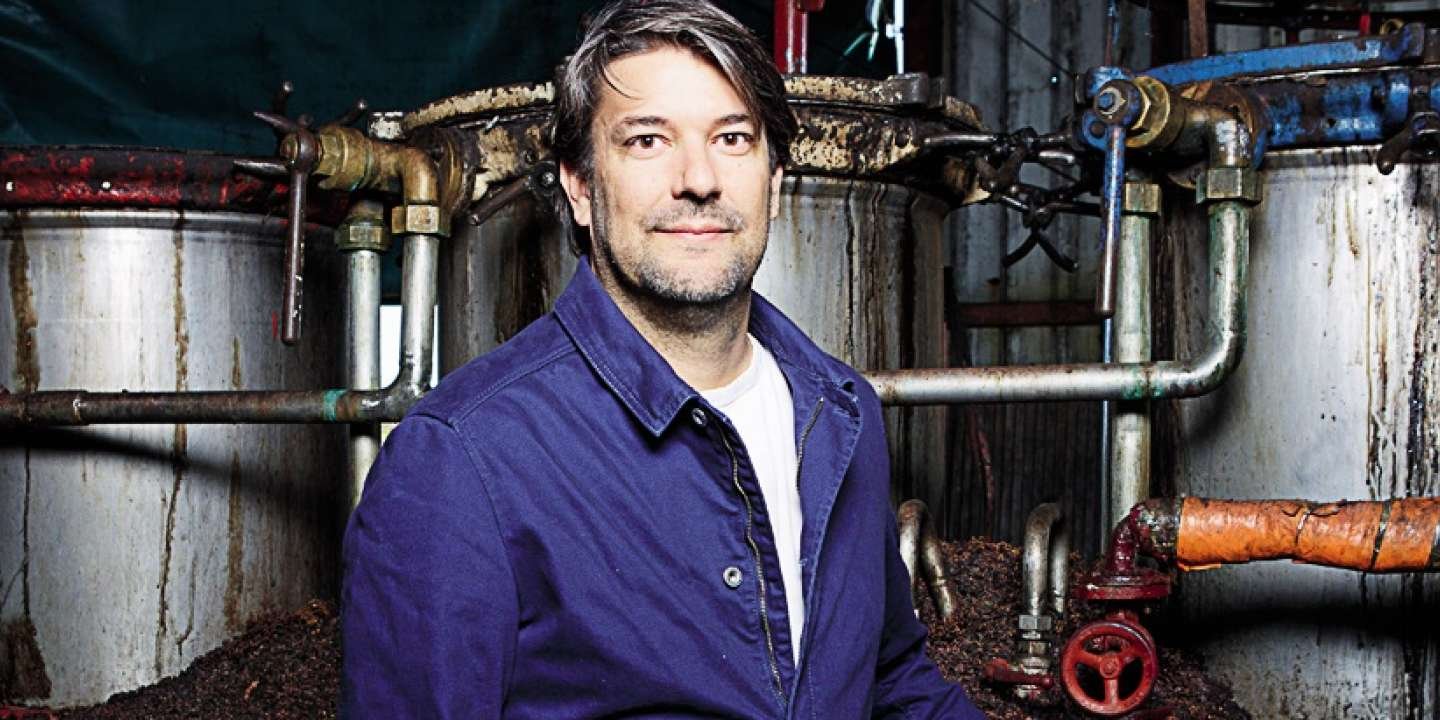
We’ve never had a market,” says Nicolas Paul-Marie Palazzi, Miami-based owner of PM Spirits. “Fifteen years ago there wasn’t a market, and there’s no market now.”

This seems an odd thing for the founder of a successful spirits-importing company to say. But it’s true in one way: Palazzi doesn’t really identify markets; he identifies bottles. He finds spirits he loves, brings them into the country, and then goes looking for the handful of people who will appreciate them, too.
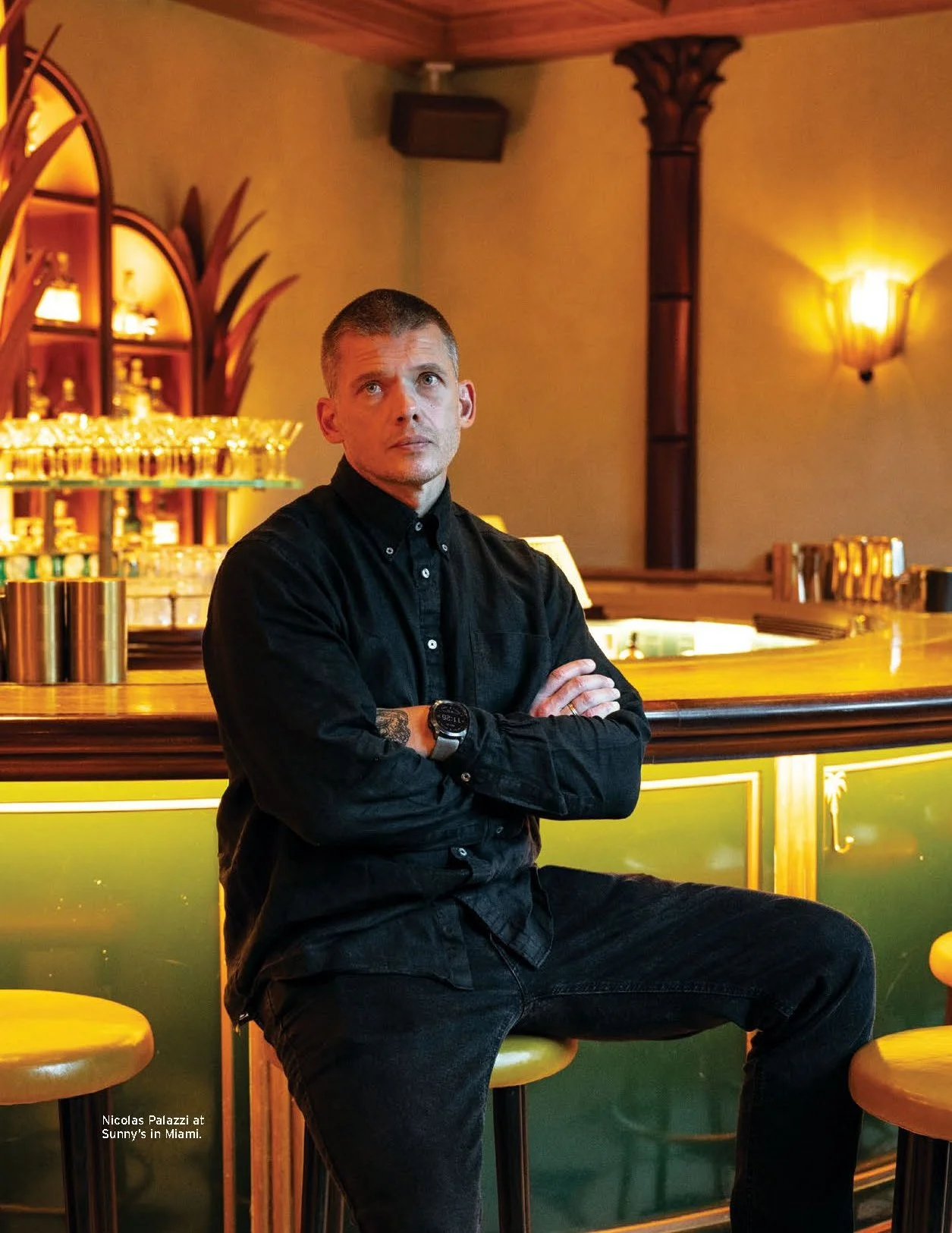
Photo by DAVID SALAZAR

Palazzi, who moved to New York from his native France in 2004, has emerged as one of the most admired spirits importers among aficionados and collectors, almost to the point of cultishness. His portfolio features outlier Cognacs, Armagnacs, single-malt whiskies, and big, funky rums. These include unicorns like Jacky Navarre Cognac, L’Encantada Armagnac, and Hampden Estate rums.

“The French are often the most traditional, and they like rules, whether it’s cheese or honey or spirits or whatever,” says Monique Huston, vice president of spirits portfolio at Winebow, an importer and distributor of wines and spirits. “Nicolas just kind of went anti-French.”

Palazzi was born and raised in Bordeaux, where familiarity with fine wines and brandy is all but mandatory. His mother’s family makes wine with their small business in Côtes de Bourg, and one of his grandfather’s closest friends was a well-regarded Cognac distiller. “At Sunday family lunches at my grandparents’ house,” Palazzi recalls, “we’d finish with Cognac made by this gentleman.” Palazzi wasn’t immediately drawn to the world of beverages. He left home to study engineering, and, after engineering school, worked several years as an environmental engineer for the French national electric utility company EDF. When a friend invited him to visit New York City, his life took a new trajectory. He left his unsatisfying job, moved across the Atlantic to join his friend (now his wife and mother to their two children), and found a new job managing a medical research lab. He had a respectable technical career but still didn’t feel content, and he eventually realized that he should build a life around something he actually cared about. “I would get up in the morning and just feel upset for no reason,” he says. “It wasn’t healthy.”

He considered his options. “My basic thoughts were, what are the things that I genuinely like to do?” he says. “And I liked wine and spirits.”

His interest led him first to hanging out, then working on weekends at Jean-Luc Le Du’s boutique wine shop in Manhattan’s West Village. He sharpened his knowledge of wine through seminars, blind-tasting groups, and connections with the sommeliers who patronized the shop.

New York impressed him with its wide diversity of available wines, especially compared to Bordeaux. He was particularly drawn to the bottles from smaller, family-run vineyards. But he found the spirits shelves lacked that depth and were dominated by larger, corporate brands. Palazzi’s instincts told him that New York would welcome curated, lesser-known spirits. So he quit his laboratory job and took his first, tentative steps into the beverage-importing business.

The standard advice for building a successful business is this: Identify demand in a market, then satisfy it. Palazzi didn’t follow that approach. His business model, if it can be called that, was to seek out spirits he liked—made as naturally and with as little intervention as possible—and then strike an import deal with the producer. Put the bottles on the store shelves, and assume fellow lovers of spirits would eventually find and buy them. While his plan was vague at best, he did have a short list of contacts, ranging from producers he knew in France to buyers he’d met at Le Du’s wine shop.

Palazzi flew home to France and visited his grandfather’s friend, the Cognac maker, who became a mentor. “His operation was super tiny, just one dude, but he was real artisanal and really good at what he did,” he said. “I approached him and said, ‘I like spirits. And I’m thinking that I would like to do something around it, and I don’t know anything about it, really.’”

With his mentor’s advice and introductions to a few other distillers, Palazzi launched PM Spirits, named to honor his father, Paul-Marie Palazzi. His first import was Guillon-Painturaud Hors d’Age, a Grande Champagne Cognac, provided by his family’s friend. Back in New York, he took to the streets with bottles in a bag, talking with restaurateurs and liquor shop owners one at a time, hoping to convince them to stock his product. One agreed, then another, and in time he sought out other spirits worthy of attention, including his second import, a Cognac from the house of Paul Beau.

He learned the mechanics of importing the hard way: by screwing up. He underpriced bottles and sold them at a loss. He bought inventory without understanding cash flow. He learned about duties, invoices, and the peculiar financial limbo in which an importer pays suppliers and the government long before customers pay him. “I’ve done a lot of things that did not work out,” he says. “But none of them were fatal.”

A central problem was finding someone to distribute these obscure bottles—a common lament among smaller importers. So Palazzi did what became a recurring feature of his career: When the conventional system didn’t work for him, he worked around it. He began distributing his own spirits in New York, selling bottles himself. To this day, PM Spirits consists of two businesses: a New York wholesale operation, in which his company self-distributes the products in the state, and an importing business that supplies distributors throughout much of the rest of the nation. (Palazzi and his family moved from Brooklyn to Miami in 2019.)

Bit by bit, drinkers started to pay attention. Palazzi returned to France and discovered Armagnacs and Calvados that he thought worthy of attention, and began importing those as well.

He visits each distillery to assure himself that it’s managed by artisans, not accountants. “We meet the people—we need to be like-minded individuals,” Palazzi says. It’s telling that his online directory of imported products often features pictures of the producers, not shots of stills or barrel houses. “It’s meaningful,” says Kate Perry, U.S. market manager for La Maison & Velier, who met Palazzi in 2014 and has partnered with him in importing and marketing his spirits in the U.S. “They’re real—real farmers, real people, real communities. A very personal thing, which is not often the case with spirits brands.”

His explorations have taken him far beyond French brandies, and his portfolio has expanded to include whiskies, rums, agave spirits, eau de vie, and liqueur—all ticking the boxes Palazzi has set out, foremost among them being that he likes drinking them. Palazzi has also partnered with likeminded others in collaborative ventures. “We see if we can work together and do something that’s cool and tastes very good, and that I can afford,” Palazzi says.

Perhaps the best known of his “collabs” is the partnership with Equipo Navazos, a boutique sherry producer in Spain. Palazzi came across this sherry at a wine dinner organized by Levi Dalton in New York, and later toured Spanish bodegas with co-founders Eduardo Ojeda and Jesus Barquin. Ojeda and Barquin took an approach to sherry similar to that embraced by Palazzi: find and market excellent, distinctive sherries crafted by independent producers.

The trio soon partnered on a line of spirits, starting with Spanish brandy that had been aged in sherry casks in hot, dry Spain—a process that transformed a middling brandy into something worthy of a snifter. They later applied the same method to other spirits, including gin, Spanish whiskey, and rum, all sold under the Navazos-Palazzi label. Their rum in particular attracted fans. A Caribbean rum aged five years in ex-bourbon casks and then further in oloroso sherry barrels for more than a decade, it was praised by critics for its notes of quince, walnut, and caramelized roasted meat. In one review, the taster concluded that the rum evokes a full, festive meal in a glass. Palazzi has also released his own branded line of PM Spirits, which includes Cobrafire, launched in 2016. It’s an unaged Armagnac, produced with Domaine d’Espérance, sold as an eau de vie de raisin.

A “drink less, drink better” ethos has spread in recent years, as spirits fans consume less but are willing to spend more on higher-caliber bottles. In some ways, the buying public has caught up with Palazzi, who has become an inadvertent avatar of this movement. There is something almost stubbornly old-fashioned about his approach. It’s not exactly a recipe for building a mass market. But that’s never really been the point. “I don’t have any marketing money,” Palazzi says with a shrug. Finding great spirits is easy, he says. Getting people to try them (and, importantly, buy them) is much harder. “So the only thing that I can do is put a product on the market that looks cool and tastes very good, then try and convince people it’s worth their attention and their money.”

“I think it’s gotten to the point that putting the PM Spirits stamp on something says Nick has tasted this,” says Huston, “and that means it’s really good quality. Maybe his audience is 50 people.” And she appreciates that Palazzi’s approach is essentially: “How about I bring this beautiful thing in for those 50 people?”

PUNCH: The Best Blanco Tequilas Under $50

agave, Best of, PUNCH Drink, PM Spirits, TequilaNicolas Palazzi

After tasting more than 20 expressions, here are five complex, affordable and additive-free bottles for sipping and mixing.

“Can you recommend a good tequila?” This is a simple question that just about anyone who has an interest in agave spirits likely gets asked by friends, colleagues and family members. But when it comes to modern tequila, it demands a follow-up question: Good how?

Nearly eight years ago, when we first compiled a list of blanco tequilas to taste, it was a month after George Clooney’s Casamigos brand became a unicorn, selling to Diageo for a whopping $1 billion. It seemed like the peak before an inevitable downturn of celebrity-backed tequila. Surely the market could bear only so many; surely this was an aberration. But each time we’ve gathered since, another handful of well-publicized celebrity tequilas have entered the market. Each new high-profile release has made that follow-up question—Good how?—as much a mainstream concern as an industry one. It’s no longer a question of transparency around who is actually making the spirit, but also How?, and Who actually benefits?

Luckily, there are not only more celebrity tequila brands on the market, but there’s also a greater selection of tequilas from artisanal brands who have made great farming, fair labor practices and the preservation of traditional methods their mission. What actually ends up in a bottle of tequila has also become more of a consumer concern than ever. (Spoiler: 70 percent of all tequila contains undisclosed additives, often used to alter flavor or mouthfeel.) The words “additive-free” are now increasingly common on labels from producers who proudly eschew these practices. So, yes, for every great bottle of blanco tequila, there are probably a dozen not-so-great ones, but there is still so much to love about this category, and at an affordable price point.

In searching for best-in-class blanco tequilas, we focused on value and bottlings that were singular without breaking from the qualities that have come to define what we love about the category: salinity, minerality, grassiness, earthiness and, above all, purity. For the tasting, Punch editors convened to taste 21 tequilas priced at $50 or less. As in previous tastings, at best the field showed the incredible range that blue Weber agave can express; at worst, there was unevenness in terms of quality, most often manifesting in spirits that were muted, or perhaps delivered on aromatics but struggled to have the kind of textural complexity and completeness of our top picks. But let’s focus on the positives, shall we? 

Without further ado, here are our favorite affordable tequilas for sipping and mixing.

Editor’s note: Because prices vary by market, certain bottles listed below may retail for slightly above $50.

Mi Casa Blanco Tequila

In 2000, Mi Casa, a family-owned operation, set out to be the best agave producers in the world, with no intention of making their own tequila. Five years later, they decided they’d rather control the process from start to finish, and another six years after that, Mi Casa tequila hit U.S. shores. Produced from naturally sugar-rich agave (with 32 percent Brix, compared to the industry standard of 26 to 28 percent) grown in the highlands of Michoacán at 6,500 feet, the resulting blanco tequila, which is rested in stainless steel, found favor with the tasters for its soft, clean and subtle earthiness, with no hint of the artificiality that plagues so many tequilas at this price point. While it can be found for under $50, this bottle does creep up by a few dollars depending on the retailer.

  • PRICE: $49 (750 milliliters)

  • ABV: 45.5%

Gran Agave Blanco Tequila

Gran Agave also hails from the highlands of Jalisco, and like Tequila Ocho, it’s produced using traditional methods: Hand-harvested blue Weber agave piñas are slow-roasted in brick ovens, fermented with wild yeast and distilled in copper pot stills. Destilería Santa Lucía, where Gran Agave (among other tequilas, including Costco’s Kirkland Signature brand) is made, is a family-owned operation that dates back to the 1940s, with a focus on heritage production. The resulting tequila is a rich, almost milky expression that manages to be both zippy and restrained, with a pleasant temple spice–like note on the nose. At less than $40 per liter, it’s one of the best values on the market.

  • PRICE:  $37 (1 liter)

  • ABV:  40%

Azul Force Blanco Tequila

This tequila is crafted at Agaves Selectos Corona in the town of Tonaya, Jalisco, a region known for its tequila heritage. What sets it apart is the blend of traditional practices, such as natural fermentation and using estate-grown blue Weber agave, with modern equipment. The agave is cooked in a 40-ton autoclave before resting with the autoclave door open for 24 hours to stabilize the sugars. Fermentation is entirely natural, relying on ambient wild yeast and lasting between three and seven days before the mixture is distilled in a column still. The result is a spirit that balances clean, high-efficiency distillation with rich, terroir-driven character. The tasting panel found this to be mellow, with layers of complexity that feel exceptionally integrated. A tannic finish makes you want another sip. This bottling is not yet on store shelves, but the importer, PM Spirits, expects it will be within the month; it’s worth seeking out as one of the better values on the market.

  • PRICE:  $32 (1 liter)

  • ABV:  40%

https://punchdrink.com/articles/best-affordable-blanco-tequila-2025/

PUNCH: The Best High-End Spirits for Cocktails

Best of, Clarin, clairin, Hampden, PUNCH Drink, Rhum, RumNicolas Palazzi

This year, we polled more than 25 bartenders across the country for their favorite high-end spirits to use in cocktails. While several of last year’s top-shelf picks are still highly favored, some exciting newcomers have emerged, along with a few trends: spirits that blur the line between categories (like Scotch aged in ex-rum barrels) seem to be on the rise, in addition to well-made flavored spirits (like a mezcal distilled with mango).

After sifting through the responses, we compiled the most popular choices in each category, plus some standout, impassioned recommendations. Here’s what surveyed bartenders had to say.

White Rum / Cane Spirit

Most popular: Clairins from The Spirit of Haiti

Recent years have seen a great white rum expansion, in which interesting, boldly flavored options have become more variable and more available stateside than ever before. Clairins from The Spirit of Haiti were most commonly mentioned here, particularly the Vaval, a floral and herbaceous bottling, and the Le Rocher, which Adler says is “similar to agricole-style rums, but with an increased funkiness and grassiness. The distillery also uses a percentage of dunder, the residual backwash in each batch, which makes it heavier on the palate with a light smokiness.” Also, these bottlings are still fairly affordable. “Like a lot of rums, some might not call these ‘top-shelf,’” notes David E. Yee, bar manager at Cobra in Columbus, Ohio, but that’s “because they’re radically underpriced.”

Aged Rum

Most popular: Hampden Estate

Tulloch sums it up: “Hampden Estate is high-octane, intense and makes a damn good Daiquiri.” While many surveyed bartenders recommend serving this spirit neat to fully appreciate it, Hampden Estate also shines in cocktails where it plays the starring role, like a rum Old-Fashioned. “I love a good high-ester Jamaican rum and this one ranks high on my list,” says Flowers. “Give me overripe banana, tropical fruit, terroir goodness!”

Overproof Rum

Most popular: Rivers Royale Grenadian Rum

Dennison and Flowers recommend this rum, especially in Daiquiris. “Rum, lime and sugar may sound simple, but with Rivers Royale Grenadian Rum, it is complex,” says Flowers. “It has the grassy, briny flavor of sugarcane juice rum that I love, but it also has herbaceous, tropical fruit notes that play exceptionally well in cocktails.” 

https://punchdrink.com/articles/best-top-shelf-high-end-liquor-spirits-2025/

PUNCH: Don’t Know Where to Start With Mezcal? Here Are 10 Producers to Know.

Best of, cinco sentidos, Mezcal, destilados, PUNCH DrinkNicolas Palazzi

In a category facing increased industrialization, these brands are fighting to preserve regional traditions.

In 2023, more than 400 brands of mezcal were exported from Mexico. That doesn’t include the increasing number of producers who are choosing not to certify their spirits, often labeling them “destilados de agave” (“distillates of agave”) instead. With so many options entering the market, figuring out which producers to seek out in order to support economic, environmental and social justice in a category facing increased industrialization (and the troublesome issues that come with it) can feel like an impossible task. 

To help, we’ve compiled a list of brands that are setting a strong example of best practices for others to follow. Many of them are producer-owned, while others source from a variety of producers but have initiatives in place to encourage positive environmental and economic practices and the preservation of regional customs. There are, of course, plenty of other great producers making incredible mezcal in this vein, but consider this list—most of which are widely available across the United States—a strong starting point.

Cinco Sentidos

What started as the house mezcal for El Destilado restaurant in Oaxaca City evolved into an export brand in 2017. Owner Jason Cox has cultivated long-standing relationships with a core lineup of producers in Oaxaca and Puebla during his time living in Mexico. With Cinco Sentidos, he pays above market price for batches and does not pressure producers to meet certain volume demands; it is entirely up to the producers how much they choose to make and sell. Cox also implemented a 10 percent profit-sharing program to help producers invest in everything from basic personal needs to land and distillery infrastructure.

https://punchdrink.com/articles/best-mezcal-brands-producers-distillers/

PUNCH: This Tomato Martini Transcends the Trend

eau de vie, Laurent Cazottes, PUNCH DrinkNicolas Palazzi

A tomato liqueur turns the internet’s favorite summer drink into a year-round staple.

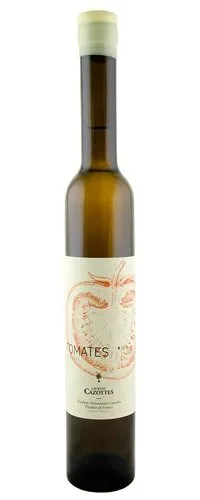
ne might reasonably wonder why it is that I’ve waited for summer to end to share the perfect tomato Martini recipe. Well, in part, I wanted to let the TikToks, the trend pieces, the Reddit threads—the hubbub over tomato Martinis—die down, because people need to hear this. But it’s also because the secret to my tomato Martini recipe is not beholden to the short, finite window of peak tomato season. In fact, it allows you to tap into the magic of that brief period whenever the mood strikes. That’s part of its beauty. It also delivers what no other tomato Martini can: 72 varieties of the fruit squeezed into a one-of-a-kind liqueur that takes this recipe to the next level. 

The liqueur in question is aptly named Tomates, and it comes from the obsessive brain of biodynamic distiller (and winemaker) Laurent Cazottes. After researching thousands of known tomato cultivars and planting a selection of heirloom varieties on his farm in southwestern France, Cazottes harvests 72 types to be used in this organic tomato liqueur. Picked by hand and left to dry to concentrate their flavor, the tomatoes have their peels, stems and seeds removed before macerating in Cazottes’ own folle noire grape distillate. This pomace is then pressed and redistilled, then combined with some of the original maceration before bottling. The result is an amazingly fresh, delicate liqueur with a hint of earthy tomato “funk.” In a Martini, the liqueur brings a welcome salinity that makes for the cleanest take on the dirty Martini, with just a subtle hint of umami and an underlying freshness.

The Best Tomato Martini

Thanks to tomato liqueur, this summer staple can be enjoyed year-round.

Before you balk at the price, know that I’ve done the math. A half-bottle (375 milliliters) of Tomates will run you a penny under $70. That’s 25 Martinis per bottle, or about $3 of the stuff per Martini. Combining it with navy-strength gin (my recommended base for the drink) and a classic dry vermouth, you should end up with a Martini that costs around $5. For the ability to conjure the best tomato Martini on a whim—even out of season—I’d say that’s a bargain.

Laurent Cazottes Tomates Organic Tomato Liqueur

French producer Laurent Cazottes is known for his preservationist approach when it comes to rare fruits, and this tomato liqueur puts his interests front and center. Formerly named 72 Tomates, and now known simply as Tomates, this unique liqueur marries 72 varieties of heirloom tomatoes—all cultivated by Cazottes at his farm—into a product that is equal parts fresh, funky and savory. With no comparison on the market, it’s a must-try, particularly in a tomato Martini where it outshines even fresh tomato water.

  • ABV:18%

https://punchdrink.com/articles/tomato-martini-tomates-liqueur/

Radio Imbibe Episode 46: Nicolas Palazzi of PM Spirits

Armagnac, cognac, interview, Nicolas Palazzi, ImbibeNicolas Palazzi
Episode 46: Nicolas Palazzi
Radio Imbibe

The cover story of our March/April 2022 issue features brandy, and for this episode, we wrap up our coverage of the spirit with Nicolas Palazzi. Born in Bordeaux and now living in Brooklyn, Palazzi is the founder of PM Spirits, an importer and distributor of specialty spirits, including Cognac, Armagnac, and Calvados. For this episode, we talk with Palazzi about his search for memorable barrels of brandy, what he looks for in great brandies, and his work to bring these spirits to an American audience. 

Radio Imbibe is the audio home of Imbibe magazine. In each episode, we dive into liquid culture, exploring the people, places, and flavors of the drinkscape through conversations about cocktails, coffee, beer, spirits, and wine. Keep up with us on Instagram, Twitter, and Facebook. And if you’re not already a subscriber, we’d love to have you join us—click here to subscribe.  

https://imbibemagazine.com/podcast/radio-imbibe-episode-46-nicolas-palazzi-pm-spirits/

BRANDY - From Cognac to California, the historic spirit’s influence runs deep.

Interview, L'Encantada, Cognac Frapin, cognac, Cognac, Brandy, ImbibeNicolas Palazzi

JUICY FRUIT

From vineyard or orchard to bottle and bar, brandy’s influence runs deep.

Cognac, Armagnac, applejack, schnapps—in whichever form brandy is found, these spirits made from fruit have no parallel in the glass. While whisk(e)y, tequila, and rum get lots of love these days (deservedly so) from cocktail lovers and spirits drinkers, brandy is evolving and emerging on its own terms, slowly building a fan base to take this timeless spirit into the future.

We’re taking a closer look at today’s world of brandy—the ways it’s made and appreciated around the world, the details behind its complex production, and the reasons it should be the next bottle you reach for when cocktail hour rolls around.

Nicolas Palazzi

Bordeaux-born and Brooklyn based, Palazzi is the importer behind PM Spirits, specializing in independent spirits such as L’Encantada Armagnac, Cognac Frapin, and Cobrafire eau-de-vie de raisin.

“Something that’s really cool is when you’re in a brandy cellar, with 50, 60, 100 casks in front of you; even if they’re from the same batch of distillation, every cask is its own world. You could taste 15 casks distilled the same day, and you’ll find tremendous differences between them—whereas something like bourbon would be very consistent. There’s so much aroma and flavor profile available in brandy. If someone thinks Cognac is just one thing and it’s boring or they don’t like it, I assure you, I can find a single-cask Cognac that’ll blow your socks off. It’s a world that deserves to be discovered, for sure.”

https://www.dropbox.com/s/mel2ts24hjap0oq/MA22-Imbibe-Brandy.pdf?dl=0

Your Sustainable Drinking Starter Pack

PM Spirits, NETA, PUNCH DrinkNicolas Palazzi
Screen Shot 2021-07-13 at 8.49.11 AM.png

Solving the sustainability problem that cocktails pose—or any consumption, for that matter—is no easy feat. But easing into it by introducing low-waste practices and thoughtful sourcing can go a long way. And, thanks to a growing crop of eco-minded spirit producers and drink-makers, there’s never been a better time to drink sustainably.

While there’s no one-size-fits-all approach, there are plenty of ways to lessen the footprint of your own home bar. It can start with a zero-waste approach to using citrus, in which flavor can be extracted from the peels, hulls and pith that might otherwise be discarded, or by seeking out spirits to stock your bar that promote biodiversity, source local crops and support farming communities.

Bottles to Try

Neta: The agave spirits bottler and exporter works with small, family-owned farms to bring their products to market at a profitable price point. As such, producers are able to maintain traditional mezcal practices and crops while avoiding overharvesting or the loss of agave biodiversity for the sake of meeting demand.

https://punchdrink.com/articles/your-sustainable-drinking-starter-pack-citrus-stock-good-vodka-matchbook-distilling/