PM Spirits

Provider of Geeky Spirits

eau de vie,destilados,destilados,destilados,destilados,destilados,destilados

bon appétit: How One Man’s Obsession with Fruit Created the UK’s Most Exquisite Spirits

Bon Appétit, Capreolus, eau de vie, PM SpiritsNicolas Palazzi

Barney Wilczak and his tiny distillery are bottling the wildness of the orchard.

BY OSAYI ENDOLYN

May 12, 2025

The fruit is coming.”

The urgent phone call that Barney Wilczak anticipates typically comes in the middle of the night. The caller is one of his local farmer partners who has just walked their orchards to touch, smell, and taste the fruit. The brief exchange notifies Wilczak that the quince, perry pears, blood oranges, raspberries, or damson plums destined for distillation are ready to harvest. A distiller of groundbreaking eaux de vie, Wilczak describes his work as being “in service to the fruit.” Part of that service is to represent the fruit at its highest level of flavor, to harness its essence. So the processing must begin right away. Wilczak takes the farmer’s call as his cue, rises in the early darkness, and prepares to receive by the truckload literal tons of fruit.

Wilczak built Capreolus Distillery in 2016, on the same property as his childhood home in Cotswold, southwest England. His eaux de vie have an almost unnerving ability to transport the drinker to those abundant fields. The region is known for its endemic fruits, many of which don’t appear in other parts of the world. The name Capreolus refers to the deer that frequent Wilczak’s garden. “They’re the most beautiful native deer we have and they’re so ephemeral,” he says. “You see them and then they disappear. It felt apt, as we try to capture things that only last for moments.”

That late night/early morning phone call from Wilczak’s farmer collaborator wouldn’t have been a surprise. Wilczak firmly believes that production revolves entirely around the wisdom of the trees and the people who cultivate them, not marketing drives or quarterly sales targets. Every piece of fruit that arrives at the distillery is hand-sorted to check for outliers of “too much softness or spring,” before it is hand-pressed and guided through distillation and bottling.

Hand-sorting gooseberries at Capreolus. Photograph By Barney Wilczak

You might say that Wilczak practices a type of conservation: His farming supports much-needed biodiversity, and drinkers around the world can experience hyperlocal plants they wouldn’t otherwise have access to. The quince evokes notes of cinnamon, fig, and dark cherry. It tastes of earth yet bright twig and leaf—to drink these eaux de vie is to be situated in terrain.

“Last year we spent 7.5 hours sorting 700,000 individual raspberries. That’s 3.6 tons,” Wilczak says, with a look of bewilderment. All that fruit, time, and effort across a team of four people, yielded roughly three hundred 375-ml bottles. With a sense of pride and maybe surrender, he adds, “It’s ridiculous.”

Wilczak has fans, if not acolytes, of his so-called ridiculousness. Among them, famed cocktail bartender Ryan Chetiyawardana, professionally known as Mr. Lyan, who features Capreolus eaux de vie at Seed Library in London’s Shoreditch, Washington D.C. bar Silver Lyan, and Super Lyan in Amsterdam. He credits Dawn Davies of The Whisky Exchange for introducing him to the spirit. “It was revolutionary to try an eau de vie that represents my favorite fruits as a UK native,” Chetiyawardana says. “Barney sees the whole essence of the plant as not just a biological creature, but what it stands for. I was flabbergasted.”

A view of the orchard

Preserving nature in the bottle

Wilczak found distilling through his love of nature. As a student he thrived in botany and biology, but couldn’t make sense of working nonstop in a lab. He pivoted to study photography and specialized in conservation. In brief, he became a plant photojournalist. “I was photographing habitat restoration on six continents, building media libraries for botanic gardens in 118 countries.” Alongside his studies, he developed a hobby for making ciders, exploring the technicalities of distillation and méthode traditionnelle, a style of winemaking that involves a secondary fermentation in the bottle. The leap to distilling was not a huge jump. “It all comes down to a love for plants.”

As he approached age 30, Wilczak experienced “a bit of a life crisis.” He didn’t want to only document plants for visual archives. He wanted to promote the growth and appreciation of those plants for others. “I realized that people are obsessed with varietal differences in wine, but it’s also true of every single fruit.”

When Wilczak launched Capreolus, his bank account was overdraft by eight pounds, but supported by his partner Hannah Morrison, whose taste became imperative to Wilczak’s process. Everything was once done by hand and muscle, though he’s since acquiesced to buying a mill. He committed to work with farmers within a fifty-mile radius of his home-distillery, and just recently purchased meadowland to plant quince trees, which will soon bring that particular eau de vie production within range (it was previously the lone outlier).

His focus on local farmers came down to pay equity. “Early on I was talking to someone in Finland about wild-picked cranberries and they said, ‘We’ll get them to you for 2 euros per kilo.’ I knew that was really really cheap for wild-picked fruit,” he explains. The fruit would be picked in Russia. “What are the labor laws there? What are people getting paid?” Wilczak wanted to work with people he could meet, with operations he could see. “We wanted to pay people a proper wage, focused on farming well,” he says, a nod to the price point of his lineup, which can range from about $90 to $185.

With his local focus, he learned that there was not “a single piece of overlap in flavor or aroma.” The realization inspired him to learn how these individual expressions manifested. He spent about seven years studying fruit distillation practices in epicenters of Austria, Germany, Italy, and France, and translating non-English books on the subject.

After distilling perry pears from 200-year-old 45-foot trees, Wilczak was shocked. The distillation didn’t smell like fruit. “It smelled like sun-warmed bark, ripe and unripe wood, autumnal leaves, and almost like the grass around the trees,” he says. “My self-guided education had a huge focus on a technological, yield-driven way of working, but that robbed the eau de vie of complexity and organic structure,” he continues. “I became interested in making eaux de vie that are truly organic and expressive of where they come from.” That meant becoming dogmatic about respecting the inherent knowledge of the trees and the ecosystems that allowed them to produce such varied fruit. “Suddenly, the eaux de vie started to smell like the orchards.”

Black currant eau de vie in progress. Photograph By Barney Wilczak

Around the world with eaux de vie

In New York City, Jorge Riera, wine director at Frenchette, Le Roc, and the newly revamped Le Veau d’Or, features Capreolus eaux de vie as the finishing touch on leisurely, decadent meals. “It’s mind-blowing,” Riera says. “The delicacy, the finesse, the floral notes that Barney gets out of it. I was blown away.”

Riera first tasted the lineup in 2018 in Vienna, Austria, at Karakterre, a 14-year-old natural wine conference celebrating producers primarily from central and eastern Europe (the festival now has a NYC iteration going into its fourth year). Riera immediately called his importer, PM Spirits, to see about getting Capreolus to the States. “With the raspberry eau de vie, you feel the fuzz of the fruit in the nose,” he goes on. “They work with nature and it’s beautiful. But for me, I see the result at the dining table. I see the emotions from people immediately.”

One of the more evocative eaux de vie is the damson plum, a quintessential British fruit. “Old recipes of distilling damson take on this slightly jammy, tart note,” Chetiyawardana says. “Barney manages to capture the smell of the blossoms as you walk past the bush. It has that white flower elegance. The purple fruit notes encapsulate the tartness of the skin and the yield of the flesh. It pulls through to this wonderful fresh almond note from the kernel.”

For this writer, Capreolus eaux de vie feels like falling into a safe, warm memory you didn’t know you had. The damson plum is an example of Wilczak’s conservation ideology: “No one knows what to do with a cooking plum; it’s something we’ve lost from our vocabulary. We can let these things slip away. But if we want those genetics as a resource given changing climate, we have to give a justification for them to be grown.” His exquisite bottles make for a compelling reason. The only experience better than sipping Capreolus is to share it with someone as willing to be moved as you.

https://www.bonappetit.com/story/capreolus-distillery-united-kingdom-most-exquisite-spirit-eau-de-vie

BBC: 'Is it for a day or four years?' Tariff uncertainty spooks small businesses

destilados, Mezcal Mal Bien, Nicolas Palazzi, TequilaNicolas Palazzi

Donald Trump's talk of applying new tariffs to goods from America's biggest trade partners has sparked months of uncertainty for business owners.

On Saturday, the president made good on his threats, ordering a new 25% tax on shipments from Mexico and Canada and raising existing tariffs on goods from China by 10%.

But that has not stopped the questions.

"Is it for a day, is it a political flex or is it something that will last for four years?" asked Nicolas Palazzi, the founder of Brooklyn-based PM Spirits. He runs a 21-person business that imports and sells wine and spirits, about 20% of which come from Mexico.

Trump's orders set in motion threats that the president has discussed for months, striking at shipments from America's top three trade partners, which together account for more than 40% of the roughly $3tn goods the US imports each year.

Canadian oil and other "energy resources" will face a lower 10% rate. But otherwise, there will be no exceptions, the White House said.

Trump said the tariffs were intended to hold Canada and Mexico accountable for promises to address illegal immigration and drug trafficking.

The measures go into effect on 4 February and are to remain in place "until the crisis is alleviated," according to the orders.

If the plans were not a surprise, they still presented a potentially stunning blow to many businesses, especially for those in North America. The three countries have become tightly linked economically after decades of free trade under a treaty signed in the 1990s, known then as Nafta and updated and renamed under the Trump administration to USMCA.

The growth of mezcal in the US, brought in by businesses like Palazzi's, has been part of this shift.

Since 2003, consumption of tequila and mezcal has roughly tripled, increasing at a rate of more than 7% each year, according to Distilled Spirits Council, a trade group.

Overall since the 1990s, trade in spirits between the US and Mexico has surged by more than 4,000% percent, said the organisation, which issued a statement after the president's announcement warning that the tariffs would "significantly harm all three countries".

For months, Palazzi has been fielding nervous questions from his suppliers in Mexico, who are typically small, family owned businesses and may not survive if the tariffs are prolonged.

If it sticks, he said the 25% tax on the bottles of mezcal, tequila and rum he brings in will push up prices - and sales will drop.

"Definitely this is going to impact the business negatively. But can you really plan? No," he said. "Our strategy is roll-with-the-punches, wait and see and adapt to whatever craziness is going to unfold."

Economists say the hit from the tariffs could push the economies of Mexico and Canada into recession.

Ahead of the announcement, Dan Kelly, president of the Canadian Federation of Independent Businesses, described the looming tariffs from the US, and expected retaliation, as "existential" for many of his members.

"Look, we get that the government has got to respond in some fashion …. But at the same time we urge the government to use caution," he said, comparing tariffs on imports to chemotherapy: "It poisons your own people in order to try and fight the disease."

"It's going to have an effect everywhere," said Sophie Avernin, director of De Grandes Viñedos de Francia in Mexico, noting that many Americans own Mexican alcohol brands and Modelo beer is actually owned by a Belgian company.

Trump, who has embraced tariffs as a tool to address issues far removed from trade, has dismissed concerns about any collateral damage to the economy in the US.

But analysts have warned the measures will weigh on growth, raise prices and cost the economy jobs - roughly 286,000, according to estimates by the Tax Foundation, not including retaliation.

Those in the alcohol business said the industry had already been struggling to emerge from the shadow of the pandemic and its after-shocks, including inflation, which has prompted many Americans to cut back on dining out and drinking.

Smaller firms, who typically have less financial cushion and ability to swallow a sudden 25% jump in cost, will bear the brunt of the disruption.

"I'm pretty frustrated," said California-based importer Ben Scott, whose nine-person business Pueblo de Sabor brings in brands from Mexico such as Mal Bien and Lalocura.

"There's just a huge cost that's going to affect so many people in ways other than they're paying a couple bucks more for a cocktail, which doesn't sound like a tragedy."

Fred Sanchez has spent years pushing to expand his business, Bad Hombre Importing, a small California-based importer and distributor of Mexican agave-based spirits like Agua del Sol, and was recently working on deals in New York and Illinois.

But his potential partners started hesitating as Trump's tariff talk ramped up last year.

Now, instead of expanding, he is contemplating selling off his stock of liquor and possibly shutting down. He said he had little capacity to absorb the jump in costs and saw little scope for raising prices in the current economy.

"25% is just not something that we can realistically pass onto the consumer," he said.

Sanchez said he believed that Trump might be using tariffs as a negotiating tactic, and the tax could be short-lived. Still, for his business, damage is already done.

https://www.bbc.com/news/articles/c1kmp99431mo

PUNCH: Don’t Know Where to Start With Mezcal? Here Are 10 Producers to Know.

Best of, cinco sentidos, Mezcal, destilados, PUNCH DrinkNicolas Palazzi

In a category facing increased industrialization, these brands are fighting to preserve regional traditions.

In 2023, more than 400 brands of mezcal were exported from Mexico. That doesn’t include the increasing number of producers who are choosing not to certify their spirits, often labeling them “destilados de agave” (“distillates of agave”) instead. With so many options entering the market, figuring out which producers to seek out in order to support economic, environmental and social justice in a category facing increased industrialization (and the troublesome issues that come with it) can feel like an impossible task. 

To help, we’ve compiled a list of brands that are setting a strong example of best practices for others to follow. Many of them are producer-owned, while others source from a variety of producers but have initiatives in place to encourage positive environmental and economic practices and the preservation of regional customs. There are, of course, plenty of other great producers making incredible mezcal in this vein, but consider this list—most of which are widely available across the United States—a strong starting point.

Cinco Sentidos

What started as the house mezcal for El Destilado restaurant in Oaxaca City evolved into an export brand in 2017. Owner Jason Cox has cultivated long-standing relationships with a core lineup of producers in Oaxaca and Puebla during his time living in Mexico. With Cinco Sentidos, he pays above market price for batches and does not pressure producers to meet certain volume demands; it is entirely up to the producers how much they choose to make and sell. Cox also implemented a 10 percent profit-sharing program to help producers invest in everything from basic personal needs to land and distillery infrastructure.

https://punchdrink.com/articles/best-mezcal-brands-producers-distillers/

PUNCH: This Tomato Martini Transcends the Trend

eau de vie, Laurent Cazottes, PUNCH DrinkNicolas Palazzi

A tomato liqueur turns the internet’s favorite summer drink into a year-round staple.

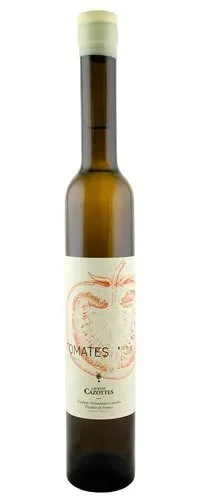
ne might reasonably wonder why it is that I’ve waited for summer to end to share the perfect tomato Martini recipe. Well, in part, I wanted to let the TikToks, the trend pieces, the Reddit threads—the hubbub over tomato Martinis—die down, because people need to hear this. But it’s also because the secret to my tomato Martini recipe is not beholden to the short, finite window of peak tomato season. In fact, it allows you to tap into the magic of that brief period whenever the mood strikes. That’s part of its beauty. It also delivers what no other tomato Martini can: 72 varieties of the fruit squeezed into a one-of-a-kind liqueur that takes this recipe to the next level. 

The liqueur in question is aptly named Tomates, and it comes from the obsessive brain of biodynamic distiller (and winemaker) Laurent Cazottes. After researching thousands of known tomato cultivars and planting a selection of heirloom varieties on his farm in southwestern France, Cazottes harvests 72 types to be used in this organic tomato liqueur. Picked by hand and left to dry to concentrate their flavor, the tomatoes have their peels, stems and seeds removed before macerating in Cazottes’ own folle noire grape distillate. This pomace is then pressed and redistilled, then combined with some of the original maceration before bottling. The result is an amazingly fresh, delicate liqueur with a hint of earthy tomato “funk.” In a Martini, the liqueur brings a welcome salinity that makes for the cleanest take on the dirty Martini, with just a subtle hint of umami and an underlying freshness.

The Best Tomato Martini

Thanks to tomato liqueur, this summer staple can be enjoyed year-round.

Before you balk at the price, know that I’ve done the math. A half-bottle (375 milliliters) of Tomates will run you a penny under $70. That’s 25 Martinis per bottle, or about $3 of the stuff per Martini. Combining it with navy-strength gin (my recommended base for the drink) and a classic dry vermouth, you should end up with a Martini that costs around $5. For the ability to conjure the best tomato Martini on a whim—even out of season—I’d say that’s a bargain.

Laurent Cazottes Tomates Organic Tomato Liqueur

French producer Laurent Cazottes is known for his preservationist approach when it comes to rare fruits, and this tomato liqueur puts his interests front and center. Formerly named 72 Tomates, and now known simply as Tomates, this unique liqueur marries 72 varieties of heirloom tomatoes—all cultivated by Cazottes at his farm—into a product that is equal parts fresh, funky and savory. With no comparison on the market, it’s a must-try, particularly in a tomato Martini where it outshines even fresh tomato water.

  • ABV:18%

https://punchdrink.com/articles/tomato-martini-tomates-liqueur/

Vinepair: The 50 Best Spirits of 2023

Best of, eau de vie, Mezcal, Cinco Sentidos, Cobrafire, Domaine d’EsperanceNicolas Palazzi

Dozens of categories considered, thousands of bottles tasted, and almost 12 months in the making, the publishing of VinePair’s 50 best spirits list marks a major milestone in our calendar and one of our favorite annual traditions.

Consider it not a bonafide buying guide — those can be found here — and instead a highlights reel of the best spirits that graced our palates this year. While we recommend picking up any and all you encounter, or ordering a pour from a bar list, the popularity of certain categories and brands, coupled with the limited nature of some of the releases, means the probability of being able to do so varies wildly from one bottle to another. One constant that links them all, however, and the reason each features on this list: It would be a spirited crime not to honor their existence.

So what made the cut? This year served us no end of imaginative and successful experiments; reminded us that stalwart go-tos carry such reputations for a reason; and encouraged us to look beyond the expected from various regions and nations. Prepare for “bog aged” oak, Mexican eau de vie, and countless representations of brown spirits from non-age-stated to cask strength, single-barrel, experimental finishings, and ultra old.

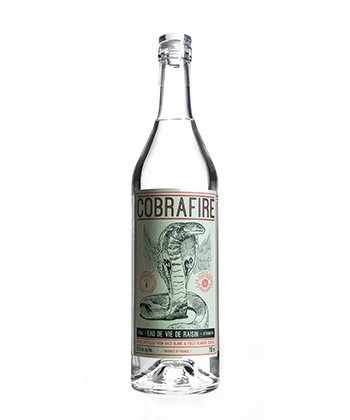
44. Cobrafire Eau de Vie de Raisin

Chances are, you probably missed the launch of the Blanche d’Armagnac (white Armagnac) appellation back in 2015, but you shouldn’t sleep on the products within the category. This 50.5 percent ABV offering from PM Spirits’ Cobrafire project dances between stone fruit brightness and umami-rich savoriness, and promises to leave a lasting impression.

34. Cinco Sentidos Espadín Capón Alberto Martinez

The “capón” technique referenced in this spirit’s name sees growers remove the sprouted stalks (quiotes) from agave, then leave the plants in the ground for extended periods to enhance sugar concentration. The wait is certainly worth it for this bright, fruity spirit, which shatters any notion that Espadín is a characterless, “workhorse” agave variety.

https://vinepair.com/buy-this-booze/best-spirits-2023/

Clear as a Bell

Bon Appétit, eau de vie, Laurent Cazottes, Cyril Zangs, Rum, clairinNicolas Palazzi

These elegant (but electric) digestifs are the perfect pick-me-up, nightcap, and grand finale—all in one glass

BY AMIEL STANEK PHOTOGRAPH BY ISA ZAPATA

Once the dessert forks have been surrendered and everyone swears they couldn’t possibly take even one more bite, a final pour of something special on Thanksgiving just feels right. While I can see the merits of trotting out a bottle of bark-bitter amaro or a mellow bourbon that’s seen a few years in oak, these days I take a different tack. When I want to round out a big meal in style, the choice is clear—a clear spirit, that is. I’m talking about things like eau-de-vie, grappa, mezcal, and clairin. Though these liquors are unique in terms of their geographic origin, composition, and production, they share a brazen character, making them ideal meal-enders. Instead of relying on extensive aging in wood to lend complexity, each spirit tastes unabashedly of the raw materials from which they were distilled and the places where they were made. Heirloom apples. Hand-harvested grapes. Pit-roasted agave. Wild-fermented sugarcane. These idiosyncratic products are as lively and expressive as the day they trickled out of the still; with no time spent in barrels to discipline their rougher edges, flavor has nowhere to hide. And at the end of a rich meal, one sharp sip immediately snaps you back to consciousness, like a cold plunge after a sweaty sauna session.

As is the case with all booze, spirits made with care by small, independent producers are going to be more compelling and often boast a price tag to match. But this is the most special of occasions, after all—when else are you going to break out the good stuff?

CYRIL ZANGS – DOUBLE ZÉRO EAU-DE-VIE DE CIDRE

This bright 100-proof apple brandy is a collaboration between culty Normandy cider maker Cyril Zangs and renowned distillery Calvados Roger Groult. It smells and tastes like a brisk fall stroll through an orchard: ripe fruit, a crisp breeze,

LAURENT CAZOTTES – GOUTTE DE REINE CLAUDE DORÉE

Laurent Cazottes’s eaux-de-vie are the stuff of legend, crafted from small parcels of his own lovingly tended trees and vines. To make this style, Cazottes painstakingly dries and hand-pits greengage plums before fermentation, which yields an extraordinarily concentrated elixir.

CLAIRIN VAVAL RUM

Traditional clairin, perhaps Haiti’s most revered spirit, is rum for mezcal nerds. Made from freshly pressed heritage sugarcane varietals and fermented with no added yeasts, each distillation is a unique expression of terroir. This one, from second-generation producer Fritz Vaval, is sunny and herbaceous, each sip gracefully ping-ponging between delicate flowers and salty funk.

https://www.bonappetit.com/

The Great Mezcal Heist

destilados, agave, MezcalNicolas Palazzi

For centuries, Indigenous Mexicans have been distilling agave as mezcal, but strict modern certification requirements are pushing more and more ancestral producers to ditch the term to preserve their culture  

by Emma Janzen Feb 15, 2022, 9:00am EST
Photography by Juan de Dios Garza Vela

In the small Oaxacan village of Santa María Ixcatlán, Amando Alvarado Álvarez makes mezcal by channeling the secrets of seven generations of family members that came before him.

Situated on a hilly natural reserve in the northern part of the Cañada region, just three and a half hours northwest of Oaxaca City, Ixcatlán has a population of fewer than 600 people, who call themselves Xuani or Xula in their native language. The village maintains two deep-rooted customs: palm weaving and distilling mezcal (which they call ixcateco) from the hearts of papalome and espadilla agaves. Both traditions serve as a means of keeping Ixcatlán’s cultural heartbeat alive while generating income for the village. Sometimes the two practices intertwine. “Mezcal from Ixcatlán always has a bit of the flavor of the palm,” Alvarado Álvarez explains, because the papery, fan-like fronds are used as a tool during multiple stages of the mezcal-making process.

Underneath the palm-thatched roof of his family palenque, or distillery, which dates back to the early 1900s but was relocated by his grandparents to its current location in 1992, 30-year-old Alvarado Álvarez creates spirits the same way the Xuani people have for centuries. He learned from his father, who learned from his father: harvest the papalome agaves during the dry season when the plants have the right sugar content; shave the spiky leaves off, then cook the hearts of the plant (piña) for several days in an earthen pit over smoldering coals; chop the cooked agave with a machete and then pound it into a pulp with a hand-carved wooden mallet; ferment in bull leather, twisted over a quartet of posts so it cradles the agave fibers and water as they transform into alcohol; then distill twice in fragile clay pot stills that sit over an open flame.

Diversity in agave species, distilling technique, and terroir lead to each mezcal’s unique fingerprint.

Alvarado Álvarez sells his mezcal mostly to members of his community, and his label Ixcateco made its stateside debut earlier this year. (He also previously sent small one-off batches to brands like Cinco Sentidos and Balancan to distribute under their own labels). His process generates only about 1,200 liters every year, a drop in the bucket compared with what some of the larger brands churn out. The orchestration demands around-the-clock care, arduous physical labor, and a reliance on intuition and muscle memory instead of hi-tech machinery — think of it as the Slow Food of the spirits world. But when you’ve been making mezcal the way your father has since you were 15, the methodologies come as second nature. And as a result, Alvarado Álvarez creates mezcal that tastes singular to his family’s style — profoundly savory, with hints of bitter cacao and sweet wet clay.

Many other mezcaleros take a similar path to making agave spirits in Mexico, tapping into veins of heirloom knowledge to create unique expressions that communicate everything from the flavor of the agave varieties that grow in the area, to the materials used to ferment and distill, to the sentiments and quirks of the spirit’s makers. This is one of the reasons Oaxacan mezcal from the village of Ejutla tastes different from one made to the northeast, in San Cristóbal Lachirioag, or to the southwest, in Sola de Vega, for example. And why mezcal from Oaxaca will bear a different personality from mezcal made in the state of Puebla. This diversity is part of what makes the mezcal category an endless wellspring of distinctive and beautiful discoveries.

Yet in many cases, according to Mexican law, these producers cannot always legally sell their distillates using the name “mezcal.” To call it mezcal, distilleries are required to meet specific criteria that the Mexican government established in 1994 as part of the official denominación de origen (DO) for the spirit — that is, a protected geographical status with requirements that dictate virtually every element of where and how it is made. Any liquid that does not meet these standards is often packaged and shipped to the United States under the label “spirit distilled from agave,” or “destilados de agave.”

Machetes are used to chop the spines from the piña of the agave plants.

This situation is not uncommon. In fact, a growing number of producers are embracing the liminal space of “spirits distilled from agave,” exporting liquor to the U.S. that is mezcal in essence but not in name. Several prominent brands, including NETA, Cinco Sentidos, Mezcalosfera, MelateMezonteRezpiral, and Pal’alma, have never certified their mezcal for the market. In Santa Catarina Minas, industry leaders Real Minero and Lalocura both recently opted to abandon the certification process altogether. And still others, like Mezcal Vago, plan to straddle the line with future releases, sending most batches through as mezcal, peppered with the occasional uncertified batch.

The terminology that ends up on a bottle label might seem like an insignificant detail for the casual enthusiast — it’s all distilled agave — but for the people who have a historic connection to this spirit, what is at stake runs much deeper and is far more complicated than simple nomenclature. The decision about whether to certify is oftentimes muddled by the murky intersection of tradition, economics, and politics. That’s why, as notable mezcaleros and brands start to speak up against the DO, all sides of the industry are starting to ask: Who gets to tell mezcal producers what to call their spirit when their practices are inextricable from their heritage?

Ancestral mezcal utilizes ancient tools like stone wheels pulled by horses or mules.

Today the world has come to know this beverage as mezcal, but the precise language used to describe the spirit in Mexico has shifted over time. Scholars such as Ana G. Valenzuela-Zapata and Gary Paul Nabhan have explained that the modern word mezcal is a Hispanicized version of the name the Aztecs used for chewed agave fibers: “mexcalli,” a combination of “metl” and “ixcalli,” which, when combined, means “oven-cooked agave.” By the mid-17th century, these agave spirits were known colloquially as vinos de mezcal, made by families in villages all over Mexico for community celebrations like funerals, births, and marriages. “Mezcal wine” is an apt descriptor for the agave spirits that proliferated during this time — just as tempranillo and pinot noir taste radically different from each other, no two mezcals made in an artisanal manner will ever taste exactly alike because every area has a different climate and terroir, different agave varieties, and different ancestral traditions.

This dynamic landscape of vinos de mezcal endured until the 20th century, when legal protections started to emerge to distinguish regional styles from one another. The first spirit to formalize in Mexico was vinos de mezcal de tequila, which received a denomination of origin (notably the first outside of Europe to do so) in 1974. As Tequila snowballed into a full-fledged category with international recognition, it brought great economic wealth back to Mexico, a success that prompted the government to build similar parameters for mezcal two decades later.

“The only thing clear to us today is that the denomination of origin has hijacked the word mezcal from the people who produce it.”

By 1997, a certification body called the El Consejo Mexicano Regulador de la Calidad del Mezcal, A.C. (COMERCAM — formerly known as the Consejo Regulador del Mezcal, or CRM) was formed to oversee, interpret, and enforce the regulations, which are called the Norma Oficial Mexicana, or NOM. According to the regulations, mezcal must be made from 100 percent agave in one of 10 states (Oaxaca, Durango, Guerrero, Guanajuato, Michoacán, Puebla, Zacatecas, Tamaulipas, San Luis Potosí, or Sinaloa). It is categorized in one of three classes based on how it’s made — ancestral, artisanal, or mezcal (which is usually an indication of industrial processes) — and the liquid must meet chemical levels the Mexican government has deemed safe for consumption. Namely, it must clock in between 35 percent and 55 percent alcohol by volume (abv), with 30 parts per million to 300 parts per million (ppm) of methanol, among other scientific details.

The first goal of this standardization of the spirit was to alchemize mezcal’s somewhat dodgy reputation (a lingering effect of Prohibition) so the world would know it as a respectable liquor that is unique to Mexico. Like prosciutto di Parma, Gruyere, or cognac, with a unified boilerplate for production, mezcal would once again be considered a spirit of reliable quality and character on the global stage. The regulations also would ensure that mezcal’s name would always be tied to Mexico and not to other countries where agave is grown and distilled, like Venezuela, South Africa, or Australia. “Anyone could produce a drink very similar to Champagne anywhere in the world, but they could not call it Champagne, even if it tasted identical. The same goes for mezcal,” says Alberto Esteban Marina, the former director general of the NOMs. “The international treaty that protects DOs aims to safeguard and give a distinctive status to products, culture, processes, traditions, and, of course, to guarantee these characteristics to consumers.”

The NOM also cements a baseline for traceability and transparency regarding the processes used to create mezcal, an important point considering how mezcal’s bad rap in the ’90s in part also stemmed from sketchy producers selling adulterated liquid throughout Oaxaca. “Nowadays the most important thing about the certification is that you have someone who is checking that the product is actually what you are selling,” says Oaxacan-born chemist Karina Abad Rojas, who is now the head of production and master distiller at Los Danzantes (called Las Nahuales in the U.S. due to trademark issues), and also works with the brand Alipus, both of which export certified mezcal. “There are a lot of honest producers out there, but the market is also full of people who lie, producers who say there are no chemicals or sugars added, when if you were to make a proper lab analysis of what they are making, you will see there is a difference in what they are saying and what is in the liquid.”

Before the DO came along, making a living as a mezcalero — producing only small batches primarily for local consumption — was not lucrative. That prompted many producers to diversify sources of income with other jobs like farming or construction, or leave the country altogether to find more viable economic opportunities. So for Abad Rojas, who also served as one of the first certifying agents for the CRM in the early aughts, another primary benefit to certification is economic. “I wanted producers to become certified because they could then have more opportunities to sell their mezcal on the commercial market. They could sell in bigger cities like Mexico City and Guadalajara, and be available to export,” she says.

Lupita Leyva, a former member of the then CRM (now COMERCAM) who is now working for El Clúster Mezcal de Oaxaca, emphasizes that certification also keeps those jobs and economic opportunities in Mexico. “Sometimes the agave distillates are being bought from small producers and being sent out of Mexico, not even being bottled here. They just pay for the liquid and take those jobs away from the people here. They are skipping our law,” she says. “You cannot go to Champagne and buy bulk Champagne and bottle in Mexico for a reason. We at the CRM, our purpose was to protect those jobs.”

For the first few decades after the DO was established, many brands were eager and willing to adhere to the laws set for certification, which kick-started an infrastructure robust enough to bring expats back to Mexico to reignite the family mezcal business. By the numbers, Mexico produced 1 million liters of mezcal in 2011 — nine years later that figure reached almost 8 million liters, with more than half that volume sent to the international market. While the commercial figures haven’t quite caught up to the impact of tequila yet (in 2021, the tequila industry generated more than 500 million liters), the mezcal category is still well on the path to stardom, thanks in large part to the creation of the denomination of origin.

In the village of Santa Catarina Minas, one of the hallmarks of the native mezcal culture is distillation in clay pot stills, called olla de barro. Typically “glued” together with mud and clay, these hand-built stills crack easily and must be replaced often. The mezcal often bears a delectable mineral quality from its time spent in contact with the clay. This custom has been carried down through the generations at most palenques in the area, including at Real Minero, where Graciela Angeles Carreño and her family have been making mezcal since the 1800s and started making certified mezcal under the label Real Minero in 2004.

“We decided to certify in the beginning because we didn’t want to repeat the history of our grandparents and their grandparents — during their lives as producers, they had to sell mezcal on the sly because production was illegal in Mexico. We decided to abide by the rules so we could legally sell what the family produced,” she explains.

But in the last few years, a series of interactions with COMERCAM left Angeles Carreño feeling as though they were unjustly harassing the brand, which drove her to denounce certification. The last straw came about in May 2018 via a disagreement regarding the use of regional names for agave varieties. In many parts of Mexico, local names differ by village, so when the COMERCAM told Real Minero that the plant they have always called Cuishe had to be labeled as Mexicano and that they could not use the name Coyota anymore — despite that the certification body had previously authorized use of that vernacular — Angeles Carreño believed the organization had reached too far outside its normal purview: “The only thing clear to us today is that the denomination of origin has hijacked the word mezcal from the people who produce it. We cannot use the word, and we cannot freely express our opinions.”

“Real Minero leaving the DO is a bellwether,” says educator and Experience Agave founder Clayton Szczech. “The CRM [now COMERCAM] was not allowing them to put the traditional names of their magueys on their label, so you have this regulatory body telling the practitioners and guardians of their culture that they are wrong about their culture.” He adds, “These authorities are actually becoming gatekeepers toward standardization or a particular idea of what is going to sell rather than being the facilitators they are supposed to be for these special products.”

In many cases, the difference between making mezcal that qualifies for certification or not can lie within a few degrees of proof, or a few parts per million of methanol or acidity. Seemingly small details, but ones that would force mezcaleros to change their customs in favor of creating a more homogenized version of mezcal. For example, the spirits made by Amando Alvarado Álvarez in Ixcatlán sometimes register a few degrees above the methanol cap of 300 ppm. “If we want to hit that parameter, we would have to make our cuts at a higher proof and then bring them down with water,” he explains. “For those of us who live to make mezcal in Ixcatlán, it is a sin to add water. It is against our tradition, which is why I won’t adjust to the parameters.”

On a more practical level, much of the debate around certification also comes down to money: Most rural producers who make spirits using time-intensive, pre-industrial methods simply cannot afford the cost, which some say in the past have ranged anywhere from $3,000 to $10,000. The exact expenses today fluctuate depending on which state the mezcal is produced in and which certification body oversees the process, but in many cases the brand owners take on the financial burden — the majority of mezcal brands sold in the U.S. today are not mezcalero-owned — baking the figure into the cost of the final bottle. When funds are not available for that, the responsibility lands on the mezcaleros, many of whom don’t have paved floors or electricity, let alone the money to certify their spirits.

Producers and brand owners from both certified and uncertified brands alike agree that the rigid parameters of the DO could use an overhaul to better protect the soul of the category. Max Rosenstock of NETA, another uncertified brand now available in the States, puts a global perspective on the matter. “Mexico is one of the most biodiverse places in the world, and Oaxaca is in the center of all that. The idea that there’s just one denomination covering all of this is just absurd. In Italy there are over 300 DOs for their wine varietals, so what are we doing here in Mexico with one denomination of origin for the entire country? It doesn’t protect, it doesn’t regulate.”

“Regardless of whether or not we use the word mezcal, the process, the tradition, in the production of our drink is still the same as our grandparents used.”

There is also the issue of the way certification is conducted. With the COMERCAM as the primary organization in charge of interpreting and enforcing the NOM for many years, some of the COMERCAM’s behaviors have prompted concern and stoked resentment among producers. In late 2020, the secretary of economy for Mexico fined the regulatory body for deceptive and abusive practices. Last spring, allegations of misconduct surfaced against then-president Hipócrates Nolasco Cancino, with reports ranging from intimidation to allegations that he’d demanded sexual favors in exchange for certification. Shortly after, internal struggles over leadership led to the division of the COMERCAM into several new entities, which are currently sorting out how to move ahead into the future.

For the average fan, certification might seem inconsequential because it has no real bearing on the inherent quality of the mezcal itself. “There are fantastic products on both sides,” says spirits importer Nicholas Palazzi, who works with brands including Cinco Sentidos, NETA, and Ixcateco, which will make its stateside debut this year. “To me, it has to do with what the producer wants to make. If the producer is doing things that check the boxes of the denomination to be certified as cognac or mezcal, if it’s doable and the producer can afford it, and he or she doesn’t have to adapt to what they have been doing for seven generations to get a piece of paper being put together by people in a suit working out of a conference room in Mexico City, that’s cool! Let’s certify the stuff.” But even then, he adds, “I don’t see the point in changing the way that something has been made for generations just to check boxes.”

When you talk to brand owners, distributors, importers, and other industry types, tucked into the folds of this narrative lies an instinct to assign value to one camp versus the other. Pro-certification people shout: Certified agave spirits are more trustworthy than uncertified ones! Anti-certification proponents stand by the idea that the destilados de agave route better preserves the spirit of the spirit. Regardless of which side you’re on, it will be interesting to see how the chasm between the two evolves, especially as the industry navigates a new world led by multiple regulatory agencies instead of a single unified organization.

At the end of the day, for mezcaleros and legacy producers like Graciela Angeles Carreño, the issue is ultimately about agency. About who can currently use the name mezcal and who should be able to use the name mezcal. “Agave distillates are produced throughout the national territory, so there should not have to be authorization for a person to make use of the word mezcal,” she says. “That is a situation that, seen from our perspective, is a way of stripping the producers of something that is our property, because it is our culture.”

She says that many people have questioned her decision to stop certifying Real Minero as mezcal, but she does not feel any regret. “Regardless of whether or not we use the word mezcal, the process, the tradition, in the production of our drink is still the same as our grandparents used; the certainty that we give you is that we still have the records, the traceability in our process, and we have a respect for tradition,” she says. “Mezcal belongs to all Mexicans, and as long as there are producers that respect and preserve our distillate and are willing to defend the origin of our drink, the world will continue to taste great agave spirits.” 

https://www.eater.com/22929882/mezcal-destilado-de-agave-distilling-indigenous-culture-oaxaca