PM Spirits

Provider of Geeky Spirits

equipo navazos

Imbibe: Passion Project Nicolas Palazzi and the art of selling to 50 people

Imbibe, Nicolas PalazziNicolas Palazzi

We’ve never had a market,” says Nicolas Paul-Marie Palazzi, Miami-based owner of PM Spirits. “Fifteen years ago there wasn’t a market, and there’s no market now.”

This seems an odd thing for the founder of a successful spirits-importing company to say. But it’s true in one way: Palazzi doesn’t really identify markets; he identifies bottles. He finds spirits he loves, brings them into the country, and then goes looking for the handful of people who will appreciate them, too.
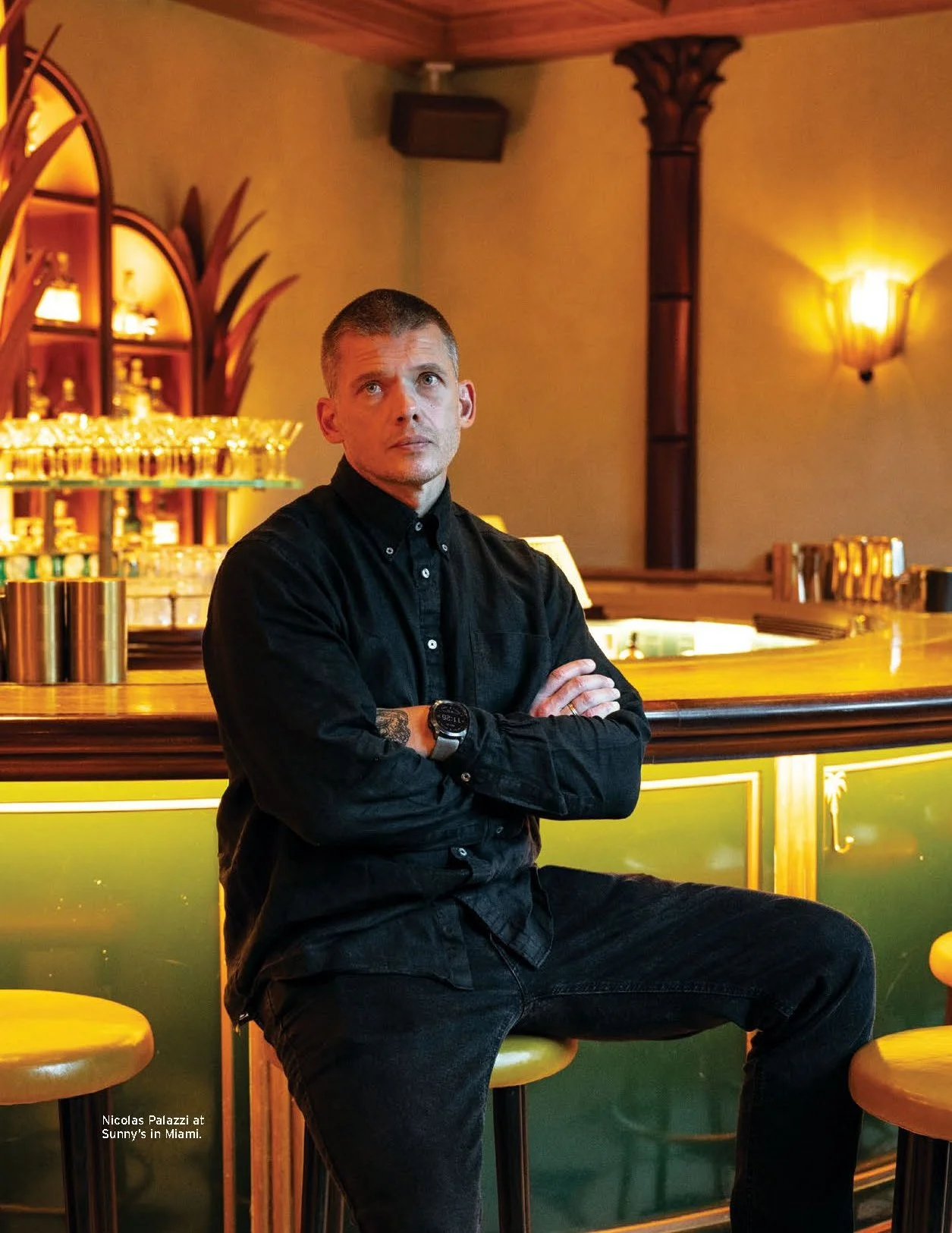
Photo by DAVID SALAZAR

Palazzi, who moved to New York from his native France in 2004, has emerged as one of the most admired spirits importers among aficionados and collectors, almost to the point of cultishness. His portfolio features outlier Cognacs, Armagnacs, single-malt whiskies, and big, funky rums. These include unicorns like Jacky Navarre Cognac, L’Encantada Armagnac, and Hampden Estate rums.

“The French are often the most traditional, and they like rules, whether it’s cheese or honey or spirits or whatever,” says Monique Huston, vice president of spirits portfolio at Winebow, an importer and distributor of wines and spirits. “Nicolas just kind of went anti-French.”

Palazzi was born and raised in Bordeaux, where familiarity with fine wines and brandy is all but mandatory. His mother’s family makes wine with their small business in Côtes de Bourg, and one of his grandfather’s closest friends was a well-regarded Cognac distiller. “At Sunday family lunches at my grandparents’ house,” Palazzi recalls, “we’d finish with Cognac made by this gentleman.” Palazzi wasn’t immediately drawn to the world of beverages. He left home to study engineering, and, after engineering school, worked several years as an environmental engineer for the French national electric utility company EDF. When a friend invited him to visit New York City, his life took a new trajectory. He left his unsatisfying job, moved across the Atlantic to join his friend (now his wife and mother to their two children), and found a new job managing a medical research lab. He had a respectable technical career but still didn’t feel content, and he eventually realized that he should build a life around something he actually cared about. “I would get up in the morning and just feel upset for no reason,” he says. “It wasn’t healthy.”

He considered his options. “My basic thoughts were, what are the things that I genuinely like to do?” he says. “And I liked wine and spirits.”

His interest led him first to hanging out, then working on weekends at Jean-Luc Le Du’s boutique wine shop in Manhattan’s West Village. He sharpened his knowledge of wine through seminars, blind-tasting groups, and connections with the sommeliers who patronized the shop.

New York impressed him with its wide diversity of available wines, especially compared to Bordeaux. He was particularly drawn to the bottles from smaller, family-run vineyards. But he found the spirits shelves lacked that depth and were dominated by larger, corporate brands. Palazzi’s instincts told him that New York would welcome curated, lesser-known spirits. So he quit his laboratory job and took his first, tentative steps into the beverage-importing business.

The standard advice for building a successful business is this: Identify demand in a market, then satisfy it. Palazzi didn’t follow that approach. His business model, if it can be called that, was to seek out spirits he liked—made as naturally and with as little intervention as possible—and then strike an import deal with the producer. Put the bottles on the store shelves, and assume fellow lovers of spirits would eventually find and buy them. While his plan was vague at best, he did have a short list of contacts, ranging from producers he knew in France to buyers he’d met at Le Du’s wine shop.

Palazzi flew home to France and visited his grandfather’s friend, the Cognac maker, who became a mentor. “His operation was super tiny, just one dude, but he was real artisanal and really good at what he did,” he said. “I approached him and said, ‘I like spirits. And I’m thinking that I would like to do something around it, and I don’t know anything about it, really.’”

With his mentor’s advice and introductions to a few other distillers, Palazzi launched PM Spirits, named to honor his father, Paul-Marie Palazzi. His first import was Guillon-Painturaud Hors d’Age, a Grande Champagne Cognac, provided by his family’s friend. Back in New York, he took to the streets with bottles in a bag, talking with restaurateurs and liquor shop owners one at a time, hoping to convince them to stock his product. One agreed, then another, and in time he sought out other spirits worthy of attention, including his second import, a Cognac from the house of Paul Beau.

He learned the mechanics of importing the hard way: by screwing up. He underpriced bottles and sold them at a loss. He bought inventory without understanding cash flow. He learned about duties, invoices, and the peculiar financial limbo in which an importer pays suppliers and the government long before customers pay him. “I’ve done a lot of things that did not work out,” he says. “But none of them were fatal.”

A central problem was finding someone to distribute these obscure bottles—a common lament among smaller importers. So Palazzi did what became a recurring feature of his career: When the conventional system didn’t work for him, he worked around it. He began distributing his own spirits in New York, selling bottles himself. To this day, PM Spirits consists of two businesses: a New York wholesale operation, in which his company self-distributes the products in the state, and an importing business that supplies distributors throughout much of the rest of the nation. (Palazzi and his family moved from Brooklyn to Miami in 2019.)

Bit by bit, drinkers started to pay attention. Palazzi returned to France and discovered Armagnacs and Calvados that he thought worthy of attention, and began importing those as well.

He visits each distillery to assure himself that it’s managed by artisans, not accountants. “We meet the people—we need to be like-minded individuals,” Palazzi says. It’s telling that his online directory of imported products often features pictures of the producers, not shots of stills or barrel houses. “It’s meaningful,” says Kate Perry, U.S. market manager for La Maison & Velier, who met Palazzi in 2014 and has partnered with him in importing and marketing his spirits in the U.S. “They’re real—real farmers, real people, real communities. A very personal thing, which is not often the case with spirits brands.”

His explorations have taken him far beyond French brandies, and his portfolio has expanded to include whiskies, rums, agave spirits, eau de vie, and liqueur—all ticking the boxes Palazzi has set out, foremost among them being that he likes drinking them. Palazzi has also partnered with likeminded others in collaborative ventures. “We see if we can work together and do something that’s cool and tastes very good, and that I can afford,” Palazzi says.

Perhaps the best known of his “collabs” is the partnership with Equipo Navazos, a boutique sherry producer in Spain. Palazzi came across this sherry at a wine dinner organized by Levi Dalton in New York, and later toured Spanish bodegas with co-founders Eduardo Ojeda and Jesus Barquin. Ojeda and Barquin took an approach to sherry similar to that embraced by Palazzi: find and market excellent, distinctive sherries crafted by independent producers.

The trio soon partnered on a line of spirits, starting with Spanish brandy that had been aged in sherry casks in hot, dry Spain—a process that transformed a middling brandy into something worthy of a snifter. They later applied the same method to other spirits, including gin, Spanish whiskey, and rum, all sold under the Navazos-Palazzi label. Their rum in particular attracted fans. A Caribbean rum aged five years in ex-bourbon casks and then further in oloroso sherry barrels for more than a decade, it was praised by critics for its notes of quince, walnut, and caramelized roasted meat. In one review, the taster concluded that the rum evokes a full, festive meal in a glass. Palazzi has also released his own branded line of PM Spirits, which includes Cobrafire, launched in 2016. It’s an unaged Armagnac, produced with Domaine d’Espérance, sold as an eau de vie de raisin.

A “drink less, drink better” ethos has spread in recent years, as spirits fans consume less but are willing to spend more on higher-caliber bottles. In some ways, the buying public has caught up with Palazzi, who has become an inadvertent avatar of this movement. There is something almost stubbornly old-fashioned about his approach. It’s not exactly a recipe for building a mass market. But that’s never really been the point. “I don’t have any marketing money,” Palazzi says with a shrug. Finding great spirits is easy, he says. Getting people to try them (and, importantly, buy them) is much harder. “So the only thing that I can do is put a product on the market that looks cool and tastes very good, then try and convince people it’s worth their attention and their money.”

“I think it’s gotten to the point that putting the PM Spirits stamp on something says Nick has tasted this,” says Huston, “and that means it’s really good quality. Maybe his audience is 50 people.” And she appreciates that Palazzi’s approach is essentially: “How about I bring this beautiful thing in for those 50 people?”

Seven Fifty Daily: The 9 Best World Whiskeys, According to Beverage Pros

Equipo Navazos, Nicolas Palazzi, Seven Fifty DailyNicolas Palazzi

Beverage directors and bartenders pick their favorite whiskey from lesser-known whiskey-producing countries, from a Taiwanese gold standard to a hard-to-find, small batch Spanish single malt

The map of world whiskey has been steadily expanding. In the 2024 World Whisky Awards, over 40 countries competed—twice as many as a decade ago—with entries from Sweden to South Africa. 

Investment has followed. The Diageo-backed drinks business accelerator Distill Ventures took on Australia’s Starward in 2015 and invested $10 million in Denmark’s Stauning Whisky, which launched stateside last year and is fast gaining cult recognition. 

The number of world whiskey cases sold is a fraction of what the big whiskey players produce. In the U.S. alone, 31 million nine-liter cases of American whiskey were sold in 2023; comparably, Taiwan, which produces Kavalan, arguably the leading world whiskey on the market, is home to just two distilleries. But for a contingent of whiskey aficionados, a dram from one of these lesser-known whiskey-producing regions offers an unparalleled sense of discovery—and they could be catalysts for change. 

“As more world whiskeys enter the U.S. market, they will challenge the dominance of traditional categories like bourbon and Scotch by offering distinct alternatives,” says Scott Milne, the director of marketing for Stauning. “The influx of brands signals a coming consumer shift.”

Producers utilize the unique conditions of their home country to innovate, whether that’s in the use of local grains or native wood, or working around weather conditions that are often radically different than in Scotland or Kentucky. And this in turn inspires traditional producers, says whiskey educator and consultant Tracie Franklin. “Not only do we have these unusual countries producing whiskeys that are very much attuned to their climate, agriculture, and their particular flavors, we also have these amazing whiskies that now have the freedom to be more experimental with their production process because the world whiskeys are coming out and blowing flavors through the roof.” 

SevenFifty Daily reached out to bartenders, beverage directors, and whiskey specialists to ask which bottles from lesser-known whiskey-producing countries are worth stocking up on right now. (All whiskeys are listed with suggested retail price per bottle).  

Navazos-Palazzi Malt Whisky ‘Bota Punta,’ Spain; $125

Selected by Neal Bodenheimer, owner and partner, Cure, New Orleans 

“I absolutely love the texture of this Spanish malt whisky,” says Neal Bodenheimer, the owner and partner of New Orleans cocktail bar Cure. “When you combine the texture of a delicate malt whisky with a quality oloroso sherry cask finishing from the sherry whisperers at Equipo Navazos, well, it’s absolutely peerless.” 

Navazos-Palazzi is a partnership between Jesús Barquín and Eduardo Ojeda of Spain’s Equipo Navazos—passionate bottlers of sherry wines—and Nicolas Palazzi’s PM Spirits in Brooklyn. The most recent release is the Bota Punta, a 15-year-old bottling, using casks that were bota punta—at the end of the bottom row of barrels in a solera—and therefore subjected to more air, light, and aeration. With just 900 bottles, it’s highly sought after. “Everyone on the team is super passionate about it,” says Bodenheimer. “It can be hard to get a traditional malt drinker to take a chance on a relatively pricey dram of Spanish malt. But for an exceedingly hard bottle to find it’s a really great deal.” 

https://daily.sevenfifty.com/the-9-best-world-whiskeys-according-to-beverage-pros/

Liquor.com: The 11 Best Vermouths for a Negroni, According to Bartenders

Best of, vermouth, Equipo Navazos, PM SpiritsNicolas Palazzi

Take the guesswork out of your vermouth choice with these expert recommendations.

ermouth is frequently a forgotten cocktail ingredient. When it comes to classic Martinis or Manhattans, it’s often overshadowed by the base spirit.

However, if you consider that the Negroni consists of equal parts gin, vermouth, and aperitivo, your choice of vermouth suddenly becomes more important.

“Vermouth is the often-overlooked instrument in the symphony of a well-crafted Negroni,” says Stevan Miller, the bar lead at Michelin-starred Esmé in Chicago. “It orchestrates a delicate dance between the boldness of the base spirit and the bitterness of your chosen aperitivo. Vermouth is a diplomat. It harmonizes the diverse elements at play.”

We consulted bar pros from around the country to share their preferred sweet vermouths to use in a Negroni. Try one of these recommended bottles for your next cocktail hour.

Best for a Dry Negroni: Navazos Palazzi Vermut Rojo

Robby Dow, bar director of Olivero in Wilmington, North Carolina, is excited by the emergence of sherry-based vermouths. This particular bottling, a favorite of his, is a collaboration between Nicolas Palazzi of PM Spirits and sherry broker Equipos Navazo.

“The duo serve as a guiding light for sourcing and importing some of the best products from around the globe,” says Dow. “This vermouth is no different.”

It’s a great choice for those who may have grown weary of the juicy, vanilla-forward Italian styles of vermouth, he says. “Navazos Palazzi Vermut Rojo comes across much drier and more savory with notes of juniper, anise, and coriander, with a subtle off-dry sweetness from the oloroso sherry,” says Dow. “These savory elements are a perfect marriage when stacked up next to Campari and a nice bold London dry gin.”

https://www.liquor.com/best-vermouths-for-negronis-8559332?utm_campaign=liquor&utm_content=likeshop&utm_medium=social&utm_source=instagram

Wine Enthusiast: Why Spanish Brandy Needs a Rebrand

Brandy, Equipo Navazos, Navazos Palazzi, PM Spirits, Nicolas PalazziNicolas Palazzi

There are many garish bottles on liquor store shelves, but none do more peacocking than Brandy de Jerez. Surely, you’ve noticed the bottles I’m talking about—even if, like most people, you’ve never bought one. Most Spanish brandies boast crimson or gold labels. One dons a pretty ribbon, while a rival sports an intricate faux-gilded pattern. Some are affixed with regal wax seals, while others announce their presence in fancy Renaissance-Faire-ish fonts. Then there are the courtly names themselves: Carlos I, Cardenal Mendoza, Gran Duque d’Alba.

“Subtlety isn’t the middle name of Jerez’s brandy men,” once wrote spirits critic F. Paul Pacult in his encyclopedic guide, Kindred Spirits.

In the past, I’ve described Brandy de Jerez as that buddy who tries just a bit too hard—the one with the flashy watch, the giant belt buckle, the ridiculous gold chain or too much cologne. Sometimes, when I open a bottle, I feel as though I should be wearing a ruffled collar, like a courtier of Philip IV. Regardless, I happen to enjoy Brandy de Jerez. I believe, for instance, that it works better in many classic brandy cocktails than Cognac. But I often feel like the odd one out with this opinion.

My big takeaway? Spanish brandy is in desperate need of a rebrand, and there has mercifully been a small movement toward change in the right direction. But before I get into the signs of hope for Spanish brandy, it’s important to consider the larger state of affairs.

Last year, François Monti, a drinks writer based in Madrid, called out Spanish brandy in his industry newsletter, Jaibol. The rant was prompted by Monti’s outrage over a historic Brandy de Jerez brand’s attempt to reinvent itself as a drink to be mixed with Coca-Cola. Brandy de Jerez, Monti writes, is an appellation “not very clear about where it is going.”

It remains a fact that fewer and fewer people drink Brandy de Jerez. Since 2008, total sales have dropped from 45 million liters to around nine million liters, with consumption dropping 30 percent between 2012 and 2016 alone. During the last decade, exports fell an additional 15%, and things continue to trend downward. Spanish brandy’s largest export markets are now the Philippines and Equatorial Guinea—the latter consuming six times more Brandy de Jerez than the U.S.

Why is this? In his newsletter, Monti minces no words. “Brandy de Jerez does not stand for the quality of its raw material,” he writes. Terroir also means little: “It is very complicated to talk about the terroir of Brandy de Jerez… the vast majority of the raw material comes from outside the [Sherry] triangle,” the historic region bounded by the city of Jerez on the east and to the northwest and southwest respectively, the ports of Sanlúcar de Barrameda and El Puerto de Santa Maria.

It’s hard to say what terroir (or transparency) even means for Brandy de Jerez. The name itself invokes the city in Andalucía that’s famous for Sherry. But the grape mostly used for the brandy is not Palomino (as with Sherry) but Airen, an insipid neutral grape said to be the most planted in the world, grown mostly on agribusiness vineyards in La Mancha. Most of the brandy is distilled outside of the Sherry triangle, what the regulatory council calls the “processing zone,” before it comes to age in the vast solera cellars back in Jerez. By law, Brandy de Jerez must age in Sherry barrels, but there’s little differentiation between brands.

Then there are Spanish brandy’s elevated sugar levels: Up to 35 grams of sugar per liter is allowed. This sweetness goes against the current consumer demands for drier spirits.

Finally, Monti called out the dated, stodgy brand image:

“Emperors, cardinals, aristocrats, great battles of Catholicism: the names and image of some of the brands are an obstacle for a more modern consumer. Carlos I, a brand that has made a great effort to modernize its image and that has a clear strategy of going towards the premium segment, still mentions on its website ‘Spirit of Conquest.’ ¡Ay!”

It adds up to a spirit that the younger generation in Spain sees as hopelessly old-fashioned, the drink of their grandfathers—with a cringe-y legacy of being cosa de hombres (“a man thing”) as this television ad for Soberano from the 1960s suggests. (Even darker was this horrible ad.)

All of this is a shame. I have been a big advocate for Spanish brandy over the years. Back in 2015, Monti and I actually presented a panel on the spirit at Tales of the Cocktail. Even then, we spoke about the same challenges that Brandy de Jerez faces today, which tells you how little has changed in the past eight years.

At the time, we implored brands to re-evaluate the high sugar content and additives in a world that wants products that are dry and additive free. We bemoaned the low level of alcohol by volume. Most of it is imported into the U.S. at just 40%, but much of what’s sold in Spain and elsewhere falls below even that, down to 36% abv. We even wore ruffled collars to underscore silliness and outdatedness of the category’s imagery.

In Monti’s article, the last straw for him was the suggestion of combining brandy with Coca-Cola, pushed by one big brand’s marketing department. He pointed out a similarly misguided marketing attempt a decade ago by the producers of Calvados, a similarly troubled spirit, who tried to push something called the Calvados Tonic. In France, Calvados Tonic was an unmitigated failure as a marketing campaign. The Spanish-brandy-and-cola, I believe, will meet the same fate. “One of the most uncomfortable truths in the spirits industry is that hardly any recent trends have been created by brands,” Monti notes.

The real challenge for Brandy de Jerez is to understand what premium spirits drinkers really want. But there are signs of hope in a growing number of smaller producers who are more transparent about origin and aging.

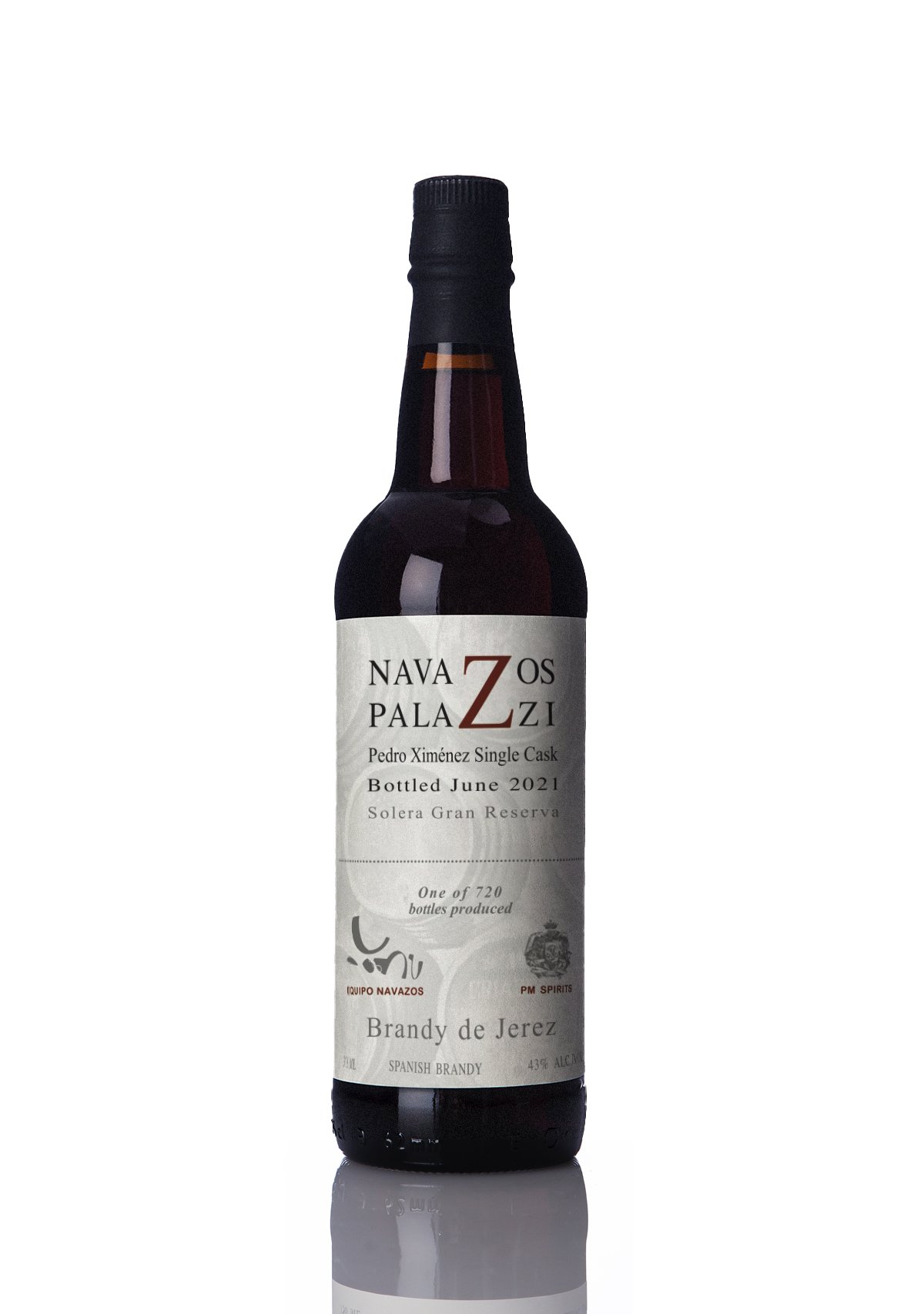
Among them is a project by Sherry negociant Equipo Navazos, which has partnered with importer Nicolas Palazzi of PM Spirits to release a series of single-cask brandies, all without additives and bottled at cask strength.

On several occasions, I’ve tasted these brandies from the barrel with Eduardo Oreja of Equipo Navazos. These are racy, elegant, dry brandies that still retain the rich, dried fruit and full-bodied characteristics of classic Brandy de Jerez. This is revolutionary stuff.

“I had always associated Spanish brandy with some subpar version of Henny VS, some dark syrupy crap that makes the floor sticky if you drop some,” says Palazzi. That was before he tasted Equipo Navazos’ casks. “My mind was blown. I realized that at its core the additive-free product can be magnificent.”

I love the Navazos Palazzi 7-year-old aged in amontillado cask. This unique brandy was made from 100% Pardina (an obscure grape I didn’t know) and bottled at cask strength, 42.5% abv. You can find it here and here for $80. There are also still a few rare bottles of the stunning Navazos Palazzi fino Sherry cask floating around (such as here), also for around $80. For a premium brandy, something like this under $100 is well worth grabbing.

Navazos Palazzi’s most recent brandy release is aged in Pedro Ximenéz casks (bottled at 43% abv) is delicious, rounder and darker than the amontillado or fino casks. Though the cask is part of a classic solera, the average age of the brandy is at least 35 years old. It’s slightly pricier, at around $130 per bottle.

While those single-cask selections may represent the zenith of Brandy de Jerez production, I still also recommend checking out a few of the classic expressions for comparison. I’ve always liked Lepanto Solera Gran Reserva, which at under $50 is a very good value, and relatively easy to find. Instead of Airen, Lepanto uses the same Palomino grape from which Sherry is made. The result is a brighter, nuttier and more complex brandy than most in the category.

And if I ever want to remind myself what old-school Spanish brandy is like (complete with garish label and packaging) I go for the Gran Duque d’Alba. The Duke brings all that big sweet, ripe, creamy, molasses flavor, though you can still feel the attractive notes of the Sherry cask. For $40, it’s a solid cocktail pour.

Mix it in the classic brandy cocktails we talked about a few weeks ago and see for yourself. My personal favorite is a drink I call the Little Madrid (recipe below). With all apologies to my colleague Monti in Madrid, you might also even enjoy it with a Coca-Cola.


https://www.wineenthusiast.com/culture/spirits/spanish-brandy-rebranding/

In Praise of La Hora del Vermut, Spain’s Cherished Vermouth Hour Tradition

Best of, vermouth, PM Spirits, Nicolas Palazzi, Equipo NavazosNicolas Palazzi

I’ve been missing Barcelona lately—where not long ago, I explored wine bars in search of new-wave Spanish wines—so on a recent afternoon I made a visit to Jose Andres’s Mercato Little Spain at Hudson Yard in Manhattan. Specifically, I longed for the days I spent drinking in the city’s vermuterias. So I went to Mercato Little Spain’s vermuteria with the cheeky name, Bar Celona. (Get it?) I ordered a Yzaguirre Rojo, a classic Catalan red, and was immediately transported back to a sunny la hora del vermut.

Vermouth hour is a sacred time of day in Barcelona. Originally, it meant sometime around noon or 1 pm, when you grabbed a vermouth and a snack to tide you over until lunch. But these days, the vermouth hour can be any time before a meal, though it usually means day drinking. A vermouth over ice, with maybe a slice of citrus and an olive, along with potato chips, some kind of tinned fish, and gilda (skewers of olive, pepper, and anchovy) is one of the loveliest ways to pass an afternoon.

Spanish vermut generally has a different taste than its Italian counterpart. It’s more citrusy, brighter and less bitter, meant to be drunk not in cocktails but on the rocks with food. To be perfectly honest, Spanish vermouth is not meant to be a complex drink you spend a lot time pondering over.

Because Barcelona had one of the largest communities of Italian immigrants when Italian vermouth was becoming widely exported during the late 19th century, vermouth soon became popular in the city. The local Martini vermouth importer even created a bar that was designed by famed Catalan architect Antoni Gaudí. This is when vermouth became the drink of choice in Catalonia, often taken by families after church and before lunch on Sundays. But by the late 20th century, vermouth languished as an old man’s drink.

Then, about a decade ago, a younger generation of trendsetters in Barcelona set off a vermouth renaissance. Part of it was a new wave of local vermouth brands, such as Casa Mariol and Morro Fi. Part was also a sense of pride in local products as Catalan nationalism grew.

These days, while much of the vermouth production happens in Catalonia, the drink has become wildly popular all over Spain. In Jerez, where Sherry is becoming a harder and harder sell, several well-known Sherry houses have started making quality vermouth.

Still, Barcelona is the vermuteria capital. As I sat at Bar Celona, I thought about some favorite vermuterias: the century-old Bar Electricat, in the old port neighborhood of La Barceloneta, where you drink vermouth from an unmarked bottle, which the waiter measures to calculate your bill; cozy, local Cala del Vermut Celler, near the Gothic cathedral, where you can eat fantastic tortilla and jamón with your vermut; the more posh Quimet & Quimet in the Poble Sec neighborhood, with an amazing array of tinned fish and montaditos.

I couldn’t necessarily tell you the brands of vermouth I drank in those places. But it doesn’t really matter. In the end, Spanish vermouth is all about a vibe.


7 Spanish Vermouths to Try

Barcelona was the spot where Spain’s vermouth renaissance started, and so Catalonia remains a source of great vermouth. But there are growing number of vermouth brands now coming from Jerez, as Sherry houses look to diversify their offerings.


Navazos-Palazzi Vermut Rojo

This offering from famed Sherry negociant Equipo Navazos and importer PM Spirits comes from Jerez. Bright, citrusy and super floral, with notes of lavender and chamomile on the nose and tea-like notes on the palate. Great on ice or in cocktails.

https://www.wineenthusiast.com/culture/spirits/spanish-vermouth/

Good vermouth makes a great aperitif, fueling a delightful transitional moment before a meal.

vermouth, Navazos Palazzi, Nicolas PalazziNicolas Palazzi

Navazos Palazzi Vermut Rojo Jerez de la Frontera, 17.5 percent

This excellent vermouth is a collaboration between Equipo Navazos, a boutique sherry négociant that has been instrumental in the revival of sherry over the last 20 years, and Nicolas Palazzi of PM Spirits, which imports small batches of extraordinary spirits. The stamp of oloroso is clear on this lightly sweet blend. It is infused with spices and herbs to create a mellow, complex vermouth that refreshes as well as intrigues.

…PM Spirits, which imports small batches of extraordinary spirits.

https://www.nytimes.com/2023/07/20/dining/drinks/vermouth.html

Wine & Spirits Magazine 90 Points, PM Spirits - Palo Cortado

sherry, PM Spirits, Best ofNicolas Palazzi

90pts | PM Spirits

Jerez-Xérès-Sherry Palo Cortado Saca de Junio de 2021

Nicolas Palazzi and the team at PM Spirits worked with Eduardo Ojeda– chief winemaker at Valdespino and a co-owner of Equipo Navazos—to blend their own propriety brand of Sherries. This one is a selection from several criaderas, the wines an average age of 15 years. It still holds a brisk, salty memory of its time as a Fino, even as the flavors broaden out into saturated richness of barrel age. Serve it with bolitas de bacalao.

—J.G.   PM Spirits, Wilmington, DE

https://www.wineandspiritsmagazine.com/

Sherry’s Indie Moment

sherry, Equipo Navazos, PM Spirits, Nicolas PalazziNicolas Palazzi

A growing number of independent bottlers is aiming to showcase a more nuanced, variable side to fino, manzanilla and more.

There’s no single origin point for the modern sherry renaissance, but the aged cask of amontillado that Eduardo Ojeda and Jesús Barquín of Equipo Navazos bottled in December 2005 would be a solid place to start.

Like so many examples of its kind, the wine had been forgotten for decades in a dusty bodega, where it would have continued to slumber if not for the private club of investors, organized by Ojeda and Barquín, who pooled together the funds to rescue it from oblivion. Titled “La Bota de Amontillado” (after the Edgar Allen Poe story) and shared exclusively among club members, that initial release gave birth to a series of chronologically numbered editions. Hype quickly followed, and in April 2007 the project released its first commercial effort: La Bota de Palo Cortado No. 6.

It may come as a surprise that one of the driving forces behind the current sherry revival basically started off as a Kickstarter campaign. But according to Peter Liem, sherry expert and co-author (along with Barquín) of Sherry, Manzanilla & Montilla: A Guide to the Traditional Wines of Andalucía, few were interested in purchasing, let alone marketing, these wines. “The only reason that all these old wines still existed is that nobody wanted them,” he explains, citing the economic collapse and fall from relevance that decimated the sherry industry toward the end of the 20th century.

More than 100 “Botas” later (as of 2022, the library consists of 107), the project has redefined sherry for many U.S. drinkers. As Liem puts it, “They opened our eyes to the fact that something completely different existed in this region, which nobody was talking about.” That alone would have been enough to secure Equipo Navazos’ lasting place in the zeitgeist. But in recent years, their success has paved the way for a new set of independent bottlers who are following a similar playbook, sourcing minuscule quantities of wine from bodegas across the Sherry Triangle.

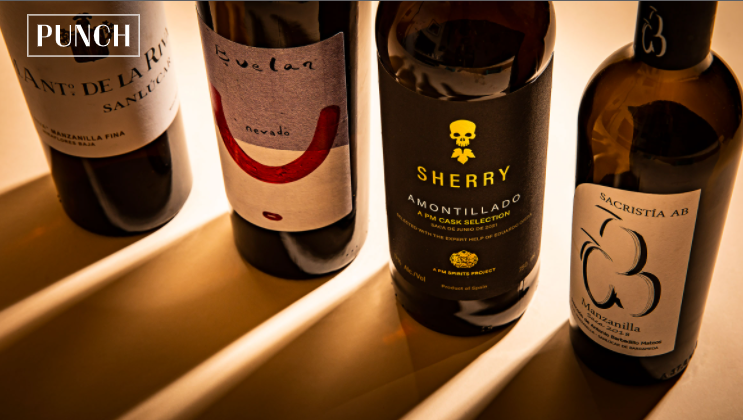
Some are Jerez natives, such as Antonio Barbadillo Mateos of the Sacristía AB project, and Ramiro Ibáñez and Willy Pérez, the duo behind the resurrected M. Antonio de la Riva label. Others, including Nicolas Palazzi of PM Spirits and Buelan Compañía de Sacas’ Nick Africano, operate out of the United States. They are united not only in their rejection of sherry as a standardized, industrial wine, but also in their desire to carve out a more intimate model for the region.

…

For Nicolas Palazzi, owner of rare spirits distributor PM Spirits, the collection of sherries he released late last year signaled a case study in sherry’s diversity. Since 2012, Palazzi has partnered with Equipo Navazos to bottle a series of highly-coveted single-cask Spanish brandy, whisky and rum under their Navazos Palazzi label. Even as someone who makes his living importing small-batch spirits, Palazzi was struck by the enormous variation between barrels in a single sherry solera system. “When you’re sampling different casks of spirits, a lot of the time you will find some small differences, but if it’s the same run, put in the same type of cask and aged in the same place for the same amount of time, the stuff you get is going to be pretty similar,” he explains. “But with sherry, it’s mind-bending. You can taste four different casks of the same exact wine and they’re all vastly different.”

“I saw a gap in the market for serious wines from this region, since everyone thought of manzanilla as something cheap, relatively young and accessible.”

In a typical bottling process, the solera would absorb and assimilate the individual profiles of these casks, rounding out their wayward edges into a smooth and seamless whole. At the scale that Palazzi describes, however, the goal is to capture the unique personality of a single barrel, or the distinctions that exist from one barrel to the next. “It sounds like a cliché, but these casks are living things,” Palazzi says.

New bottlers like Palazzi have arrived in Jerez at an inflection point. For all the recent talk of a renaissance, sherry remains a niche category. And while the cult model adopted by Equipo Navazos and its descendants has ushered in a new era of critical appreciation for the region’s finest wines, that’s not enough to sustain an entire wine industry. The question on everyone’s minds, then, is: What’s next?

INDIE SHERRIES TO TRY

PM Spirits Amontillado

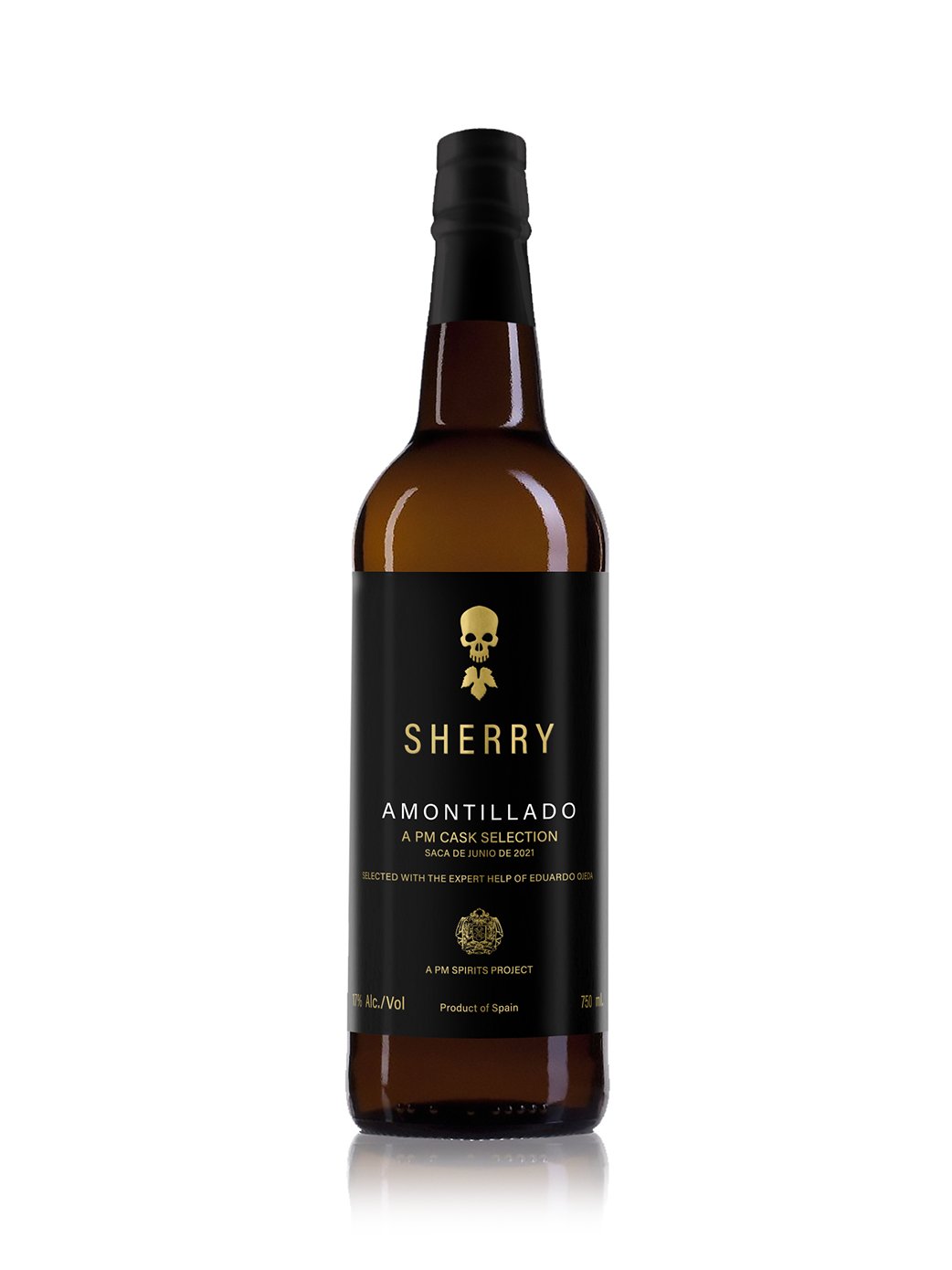
“Selected with the expert help of Eduardo Ojeda,” as its label proudly declares, the PM Spirits amontillado drinks noticeably brighter and fresher than many examples of the genre, happily embracing its inner fino with a pronounced flor character. Although the packaging doesn’t mention where it was sourced, Palazzi notes that the wine came from several casks belonging to a prominent bodega with roots in the late 19th century. Light amber in the glass, it’s energetic and lively, especially for the style—as close to easy-drinking as amontillado gets.

https://punchdrink.com/articles/fino-manzanilla-amontillado-sherry-indie-moment/