Is Cognac getting more popular? No (at least, not yet). But the global BRANDS that happen to be in the cognac game are.
There always has been a misunderstanding about "Cognac":
We hear the "Cognac" this, or the "Cognac market" that, read about a brand and assume it tells something about a category. I don't think this is accurate.
There is a Hennessy market and a Remy market and a Courvoisier market etc... much like there is a Ford, Supreme or Krispy Kreme market. There is a market for global cognac BRANDS, individual markets based on specific brand recognition.
The more successful/known they become, the less they tend to talk about the product and orient communication towards partnerships, experiences etc...
From labeling to wording on the companies’ website the BRAND is front center while the mention "cognac" seems to take the back seat.
For every artisan distiller/brand owner/negotiant who has not achieved brand notoriety at scale, there is no "market" per se. It is an every day fight to tell a story, get anyone who accepts to taste the product to understand what is Cognac, demystify, get rid of the baggage the word comes with and do one’s best to explain within that framework why one is different.
What the label does not tell you
The vast majority of distillate bottles in the appellation have had a combination of some or all of these additives added to them mainly to:
make a young cognac look darker than it naturally is,
make a young cognac taste less harsh (“smoother”),
make a cognac smell and taste like it spent more time aging in a barrel than it actually did.
These three additives are fairly ubiquitous in brandy. Not everybody use them, but a lot do. And when used, no one tells you.
Caramel is an additive that is often used in spirits. It does not have to be disclosed on the label and the need for it can be debated. Because caramel is more or less dark it is used as a tool to adjust the color of the liquid.
Caramel coloring is widely used, though not many distilleries are really open about it.
Adding caramel to spirits can be seen as a way to return the booze to its original color post chill-filtration which inevitably removes some of the tannins from the wood that confer the booze its darker color. The thinking behind this often is that many customers might not fully understand the process, leading to confusion over why a spirit might be yellow or why the color might not be consistent from one batch to the next. Brands using caramel coloring tend to aim at maintaining a consistent appearance for their products.
Now let’s distinguish the above from using caramel coloring to introduce a color that wasn't there to begin with as a way to trick customers into thinking a product is older/spent more time aging in casks than it actually did.
This is straight up deceptive.
Cognac takes time. Time can't be hacked.
Why consistency costs something
Large Cognac brands are the reason why the region and its people survive economically, between direct and indirect jobs that the Cognac economy generates.
Without the main players, there would be none of the artisanal smaller guys. When one runs a large business, one's finance department's mission is to limit costs and maximize profits.
As large brands are buying their stock in bulk from hundreds of small makers, the variety is immense.
Some cognacs may have been distilled better than others. Some might have evolved quicker and more gracefully than others. Terroirs are different, some have been distilled at the estate in relatively small stills, others by professional distillers or coops in larger computer-run alembics.
To bring these various eaux-de-vies together under a brand/age designation that fits the company’s flavor profile, additives can't be done without.
it appears logical that in a volume game, one will have incentives towards:
In that context, the great equalizers are caramel, sugar, and boisé.
The aim is to have “consistent products” which the larger brands that make up most cognac sales have based their business on.
Nothing wrong here: it makes sense that a bottle of a worldwide available VS, VSOP, or XO has a somewhat consistent color/taste profile wherever it can be found on the globe.
Note that the argument for consistency is itself not as straightforward as it may seem. Some brands tend to look at markets/countries by flavor profiles, and it is possible that a VSOP might be darker or woodier or sweeter in one market versus another to fit with market research and what has been defined as the “palate” of a specific population.
Additives are not the enemy. The intent is.
I don't want to have a binary conversation about additives.
There is both an art and a science behind the use of additives.
Cognacs to which additives are added over a long period of time for better integration turn out better than those to which additives are dumped into 24hr before bottling. The better additives are married to the compounds that make up the cognac, the more pleasant the drinking experience might be.
Cognac to which additives are added last minute, close to the bottling date: like oil and vinegar, the different molecules are not binding, the nose is flat, the palate disjointed. These are the poorly made products that give the appellation a bad rap.
In some cellars, one can find the following:
sugar + water + cognac, the mixture at around 20% alc in a barrel,
boisé + water + cognac, the mixture at around 20% alc in a barrel,
water + cognac, the mixture at around 20% alc in a barrel.
This practice is rare as it's not improving the bottom line nor efficiency. To the contrary, it takes a LOT of cellar floor space and barrels to store lower proof 20% liquid than its 72% equivalent. It means cellars are filled with additives patiently aging in casks.
Some of these cognacs can be magnificent.
Hence when used with the mindset of cutting corners, additives are likely not to improve the inherent qualities of a cognac much.
Inherently, additives are not bad. It is the intent with which they are used on most occasions that makes them so.
We don’t do “smooth”
Smooth to me is the absence of personality.
We don’t do “smooth.” Usually, “smooth” just means one thing: the stuff has no soul (aka blah). The purpose of artisan spirits is to reflect a terroir and a sense of craftsmanship. Good artisan spirits are “balanced.” They are never “smooth.”
What to look for instead
Having that context allows you to understand why that stuff was $35 when that other thing in the same category that you were debating getting instead was three times as much. Maybe one was made by a négociant and bottled with additives at 40% alc when the other was made by a family, without corners cut, and at cask strength? (Again, marketing has been around for a long time; pricier does NOT necessarily mean better or older or more artisanal.)
The family in that sentence has a name in Cognac: the bouilleur de cru.
Pelletan quickly became a name that was desired by the best bouilleurs de crus (artisanal distillers, the cognac equivalent of the Récoltant Manipulant - RM - in Champagne) who were looking for barrels of utmost quality. Uncompromising distillers who aimed at making the best possible Cognac were customers of Pelletan.
Each appellation tends to have its top artisanal cooper, the dude who works on his own or close to it, takes more time, pays more attention, puts out fewer barrels than the bigger outfits and is naturally supplying a lot of the small distillers who put a lot of care in all aspects of their work.
His cooperage had gained the reputation in the cognac region of being the Rolls-Royce of hand-made casks, producing 4 barrels a day on the best days while larger companies produce up to 200.
Imagine a chef who is truly passionate and has a vision: she will want to work with the best tomato producers, and the best cheese mongers etc... always in search for like-minded people who are putting their hearts into their products. A good number of bouilleurs de crus who put their pride in putting out the best cognacs they could were customers of the Pelletan.
In this spirit (pun intended), we are drawn to single-cask bottlings. Their distinct imprint of time and place is what we seek to capture in every glass.
How PM decides what to import
There has never been a plan nor a method. The very first distillates (Cognacs) were brought just because they really tasted great. Initially, I did not want to bother with the inexpensive and had decided against bringing the VS and VSOPs, focusing solely on the old eaux-de-vies.
But like everything, as one keeps on doing something, one might start seeing a pattern; in the case of PM, the initial one was:
1- Smell / taste -> Does one’s brain go WOW? Does that product have a personality? Would we want to drink it more than once?
2- Ask detailed questions about who/how/why -> Are corners cut? Does it feel artisanal vs. industrial? Is there a sense of place and/or tradition?
Over the years, a third principle appeared important:
3- Are the people good humans -> Does it click? Is there a genuine human connection? Are these people we would want to see/talk to/interact with?
As the business expanded to countries where the workforce might not be naturally well protected by the laws of their land:
4- Are the people who are part of the chain that makes the product fairly treated and compensated?
We have never negotiated pricing; we assume that the people we deal with have established a price that is fair for their work, which we respect.
We never used brokers to gather samples because we were looking to fill a category or a price point.
We never thought about whether the stuff would sell or not: if we get excited about it, we decide we will do our utmost to share that excitement and work hard to try and succeed.
Our guiding principle? If we wouldn’t drink it, we won’t sell it.
The cognacs PM Spirits imports
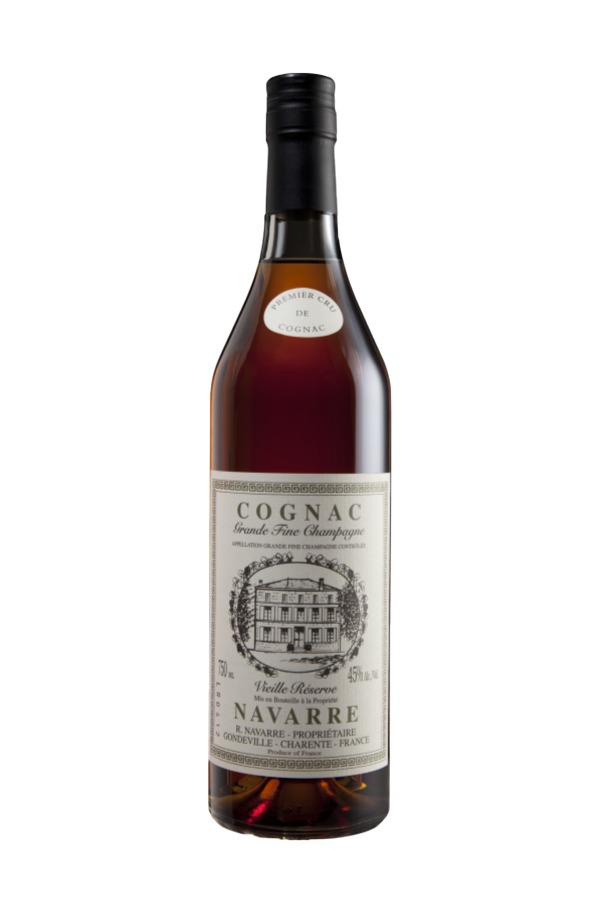
Jacky Navarre
Jean-Noel Pelletan, the cooper above, made the introduction.
The first person JNP drove me to was no other than Jacky Navarre.
The world of the best artisanal distillers in cognac opened up along with extremely insightful conversations with these people who all share the same passion and a tremendous amount of experience.
Vieille Reserve at 45%, Souvenir Imperial at 40%, La Cravache d’Or at 45%, all 750ml. Also the Pineau des Charentes, Rose and Vieux, at 17%.
More on the Jacky Navarre page.
Remi Landier, PM Spirits collaboration
I don't have any marketing money. So the only thing that I can do is put a product on the market that looks cool and tastes very good, then try and convince people it's worth their attention and their money.
Special Pale VSOP at 45%, and an XO Single Cask at 64%. Both 750ml.
PM Spirits Project
During COVID, since we were as scared as bored AND I happened to own a small but unique collection of casks and demi-johns in a cellar in Cognac, France, I decided to release these things, leading to a larger PM Project release.
These were not just products; they were special, something that resonated with the ethos of PM - good people with good intentions making good juice.
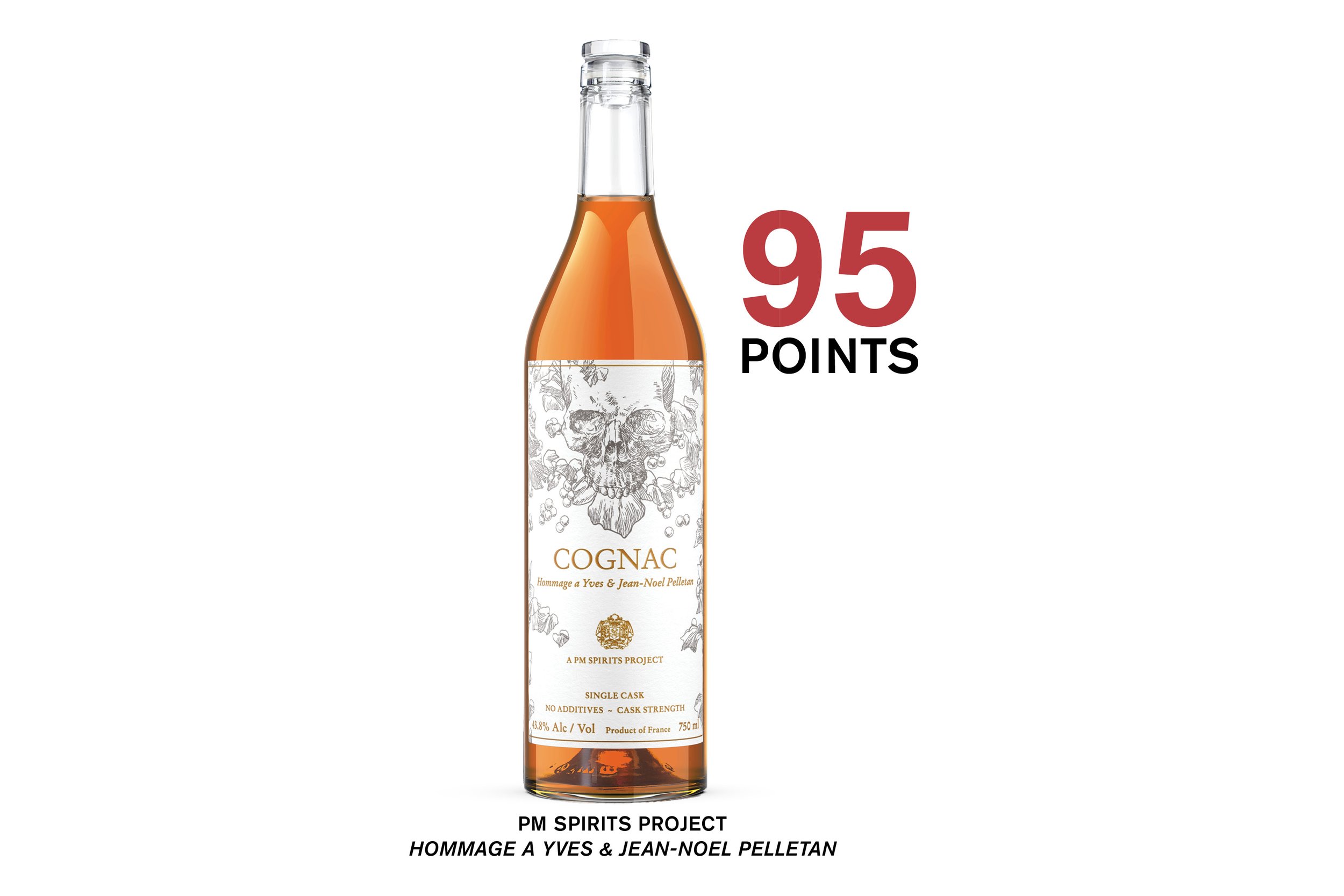
Grande Champagne XO at 42.6%, and Hommage, a Grande Champagne at 52%. Both 750ml.
More on the PM Spirits Project page.
Through The Grapevine
Single lots, bought cask by cask and bottled without reduction. Jean-Luc Pasquet Lot 63 at 51.3%, Merlet Lot 84 at 50.2%, Francois Voyer Lot 89/92 at 43.5%, Maxime Trijol 2003 at 46.5% and Fradon Lot 70 at 46.6%, all 750ml. Camus Ile de Re 11 year at 49%, 700ml.
Where to start
Brandy isn't about grand labels or super pricey bottles. It's first and foremost about having a good time and making social connections while drinking something that tastes good to you. Then, one can, if one feels like it, make it an exploration, a discovery.
Lots of drinkers are coming to brandy from another category (often whiskey) and might not know "where to start." I believe the answer is "just start somewhere." Don't obsess about the stuff, don't over-research, and don't freak out as to whether this first bottle of Armagnac or Calvados is good enough or if it is too cheap and you should spend more.
First off, some of the most memorable spirits I've encountered weren't the most expensive ones.
When I am drinking anything really (besides water), the main thing I pay attention to is: "does this liquid have a personality?". I don't want to think too much about it; I don't want to contemplate the beverage for hours. I want to see if that liquid naturally made a positive impression on my brain. If the answer is "yes," often I do want to go deeper, but it is not a prerequisite.
I am just not interested in ingesting something boring.
I'm selling alcohol, but I'm by no means saying that alcohol is great and the more alcohol one drinks the better. I'm very much advocating drink less, drink better stuff.
Where to buy
For wholesale orders, email info@pmspirits.com or call 347 689 4414. Out of state wholesalers can go straight to our US Market Manager, Meryl Cocuzza, at meryl@pmspirits.com. All the ways to reach us are on the contact page.
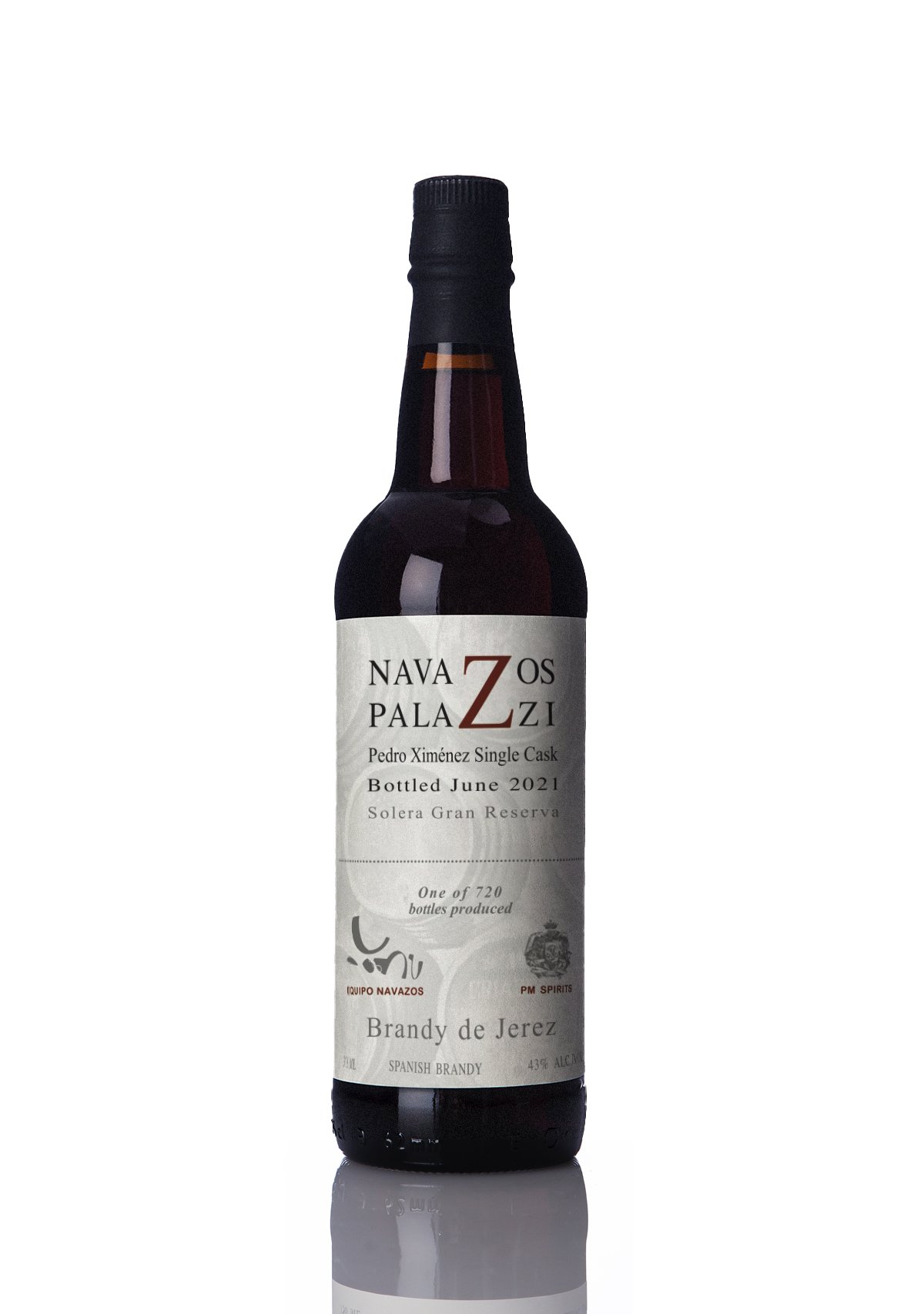
The full list of what we bring into the United States is on the PM Spirits national import portfolio, chosen by Nicolas Palazzi.