PM Spirits

Provider of Geeky Spirits

Remi Landier,Bon Appétit

bon appétit: How One Man’s Obsession with Fruit Created the UK’s Most Exquisite Spirits

Bon Appétit, Capreolus, eau de vie, PM SpiritsNicolas Palazzi

Barney Wilczak and his tiny distillery are bottling the wildness of the orchard.

BY OSAYI ENDOLYN

May 12, 2025

The fruit is coming.”

The urgent phone call that Barney Wilczak anticipates typically comes in the middle of the night. The caller is one of his local farmer partners who has just walked their orchards to touch, smell, and taste the fruit. The brief exchange notifies Wilczak that the quince, perry pears, blood oranges, raspberries, or damson plums destined for distillation are ready to harvest. A distiller of groundbreaking eaux de vie, Wilczak describes his work as being “in service to the fruit.” Part of that service is to represent the fruit at its highest level of flavor, to harness its essence. So the processing must begin right away. Wilczak takes the farmer’s call as his cue, rises in the early darkness, and prepares to receive by the truckload literal tons of fruit.

Wilczak built Capreolus Distillery in 2016, on the same property as his childhood home in Cotswold, southwest England. His eaux de vie have an almost unnerving ability to transport the drinker to those abundant fields. The region is known for its endemic fruits, many of which don’t appear in other parts of the world. The name Capreolus refers to the deer that frequent Wilczak’s garden. “They’re the most beautiful native deer we have and they’re so ephemeral,” he says. “You see them and then they disappear. It felt apt, as we try to capture things that only last for moments.”

That late night/early morning phone call from Wilczak’s farmer collaborator wouldn’t have been a surprise. Wilczak firmly believes that production revolves entirely around the wisdom of the trees and the people who cultivate them, not marketing drives or quarterly sales targets. Every piece of fruit that arrives at the distillery is hand-sorted to check for outliers of “too much softness or spring,” before it is hand-pressed and guided through distillation and bottling.

Hand-sorting gooseberries at Capreolus. Photograph By Barney Wilczak

You might say that Wilczak practices a type of conservation: His farming supports much-needed biodiversity, and drinkers around the world can experience hyperlocal plants they wouldn’t otherwise have access to. The quince evokes notes of cinnamon, fig, and dark cherry. It tastes of earth yet bright twig and leaf—to drink these eaux de vie is to be situated in terrain.

“Last year we spent 7.5 hours sorting 700,000 individual raspberries. That’s 3.6 tons,” Wilczak says, with a look of bewilderment. All that fruit, time, and effort across a team of four people, yielded roughly three hundred 375-ml bottles. With a sense of pride and maybe surrender, he adds, “It’s ridiculous.”

Wilczak has fans, if not acolytes, of his so-called ridiculousness. Among them, famed cocktail bartender Ryan Chetiyawardana, professionally known as Mr. Lyan, who features Capreolus eaux de vie at Seed Library in London’s Shoreditch, Washington D.C. bar Silver Lyan, and Super Lyan in Amsterdam. He credits Dawn Davies of The Whisky Exchange for introducing him to the spirit. “It was revolutionary to try an eau de vie that represents my favorite fruits as a UK native,” Chetiyawardana says. “Barney sees the whole essence of the plant as not just a biological creature, but what it stands for. I was flabbergasted.”

A view of the orchard

Preserving nature in the bottle

Wilczak found distilling through his love of nature. As a student he thrived in botany and biology, but couldn’t make sense of working nonstop in a lab. He pivoted to study photography and specialized in conservation. In brief, he became a plant photojournalist. “I was photographing habitat restoration on six continents, building media libraries for botanic gardens in 118 countries.” Alongside his studies, he developed a hobby for making ciders, exploring the technicalities of distillation and méthode traditionnelle, a style of winemaking that involves a secondary fermentation in the bottle. The leap to distilling was not a huge jump. “It all comes down to a love for plants.”

As he approached age 30, Wilczak experienced “a bit of a life crisis.” He didn’t want to only document plants for visual archives. He wanted to promote the growth and appreciation of those plants for others. “I realized that people are obsessed with varietal differences in wine, but it’s also true of every single fruit.”

When Wilczak launched Capreolus, his bank account was overdraft by eight pounds, but supported by his partner Hannah Morrison, whose taste became imperative to Wilczak’s process. Everything was once done by hand and muscle, though he’s since acquiesced to buying a mill. He committed to work with farmers within a fifty-mile radius of his home-distillery, and just recently purchased meadowland to plant quince trees, which will soon bring that particular eau de vie production within range (it was previously the lone outlier).

His focus on local farmers came down to pay equity. “Early on I was talking to someone in Finland about wild-picked cranberries and they said, ‘We’ll get them to you for 2 euros per kilo.’ I knew that was really really cheap for wild-picked fruit,” he explains. The fruit would be picked in Russia. “What are the labor laws there? What are people getting paid?” Wilczak wanted to work with people he could meet, with operations he could see. “We wanted to pay people a proper wage, focused on farming well,” he says, a nod to the price point of his lineup, which can range from about $90 to $185.

With his local focus, he learned that there was not “a single piece of overlap in flavor or aroma.” The realization inspired him to learn how these individual expressions manifested. He spent about seven years studying fruit distillation practices in epicenters of Austria, Germany, Italy, and France, and translating non-English books on the subject.

After distilling perry pears from 200-year-old 45-foot trees, Wilczak was shocked. The distillation didn’t smell like fruit. “It smelled like sun-warmed bark, ripe and unripe wood, autumnal leaves, and almost like the grass around the trees,” he says. “My self-guided education had a huge focus on a technological, yield-driven way of working, but that robbed the eau de vie of complexity and organic structure,” he continues. “I became interested in making eaux de vie that are truly organic and expressive of where they come from.” That meant becoming dogmatic about respecting the inherent knowledge of the trees and the ecosystems that allowed them to produce such varied fruit. “Suddenly, the eaux de vie started to smell like the orchards.”

Black currant eau de vie in progress. Photograph By Barney Wilczak

Around the world with eaux de vie

In New York City, Jorge Riera, wine director at Frenchette, Le Roc, and the newly revamped Le Veau d’Or, features Capreolus eaux de vie as the finishing touch on leisurely, decadent meals. “It’s mind-blowing,” Riera says. “The delicacy, the finesse, the floral notes that Barney gets out of it. I was blown away.”

Riera first tasted the lineup in 2018 in Vienna, Austria, at Karakterre, a 14-year-old natural wine conference celebrating producers primarily from central and eastern Europe (the festival now has a NYC iteration going into its fourth year). Riera immediately called his importer, PM Spirits, to see about getting Capreolus to the States. “With the raspberry eau de vie, you feel the fuzz of the fruit in the nose,” he goes on. “They work with nature and it’s beautiful. But for me, I see the result at the dining table. I see the emotions from people immediately.”

One of the more evocative eaux de vie is the damson plum, a quintessential British fruit. “Old recipes of distilling damson take on this slightly jammy, tart note,” Chetiyawardana says. “Barney manages to capture the smell of the blossoms as you walk past the bush. It has that white flower elegance. The purple fruit notes encapsulate the tartness of the skin and the yield of the flesh. It pulls through to this wonderful fresh almond note from the kernel.”

For this writer, Capreolus eaux de vie feels like falling into a safe, warm memory you didn’t know you had. The damson plum is an example of Wilczak’s conservation ideology: “No one knows what to do with a cooking plum; it’s something we’ve lost from our vocabulary. We can let these things slip away. But if we want those genetics as a resource given changing climate, we have to give a justification for them to be grown.” His exquisite bottles make for a compelling reason. The only experience better than sipping Capreolus is to share it with someone as willing to be moved as you.
https://www.bonappetit.com/story/capreolus-distillery-united-kingdom-most-exquisite-spirit-eau-de-vie

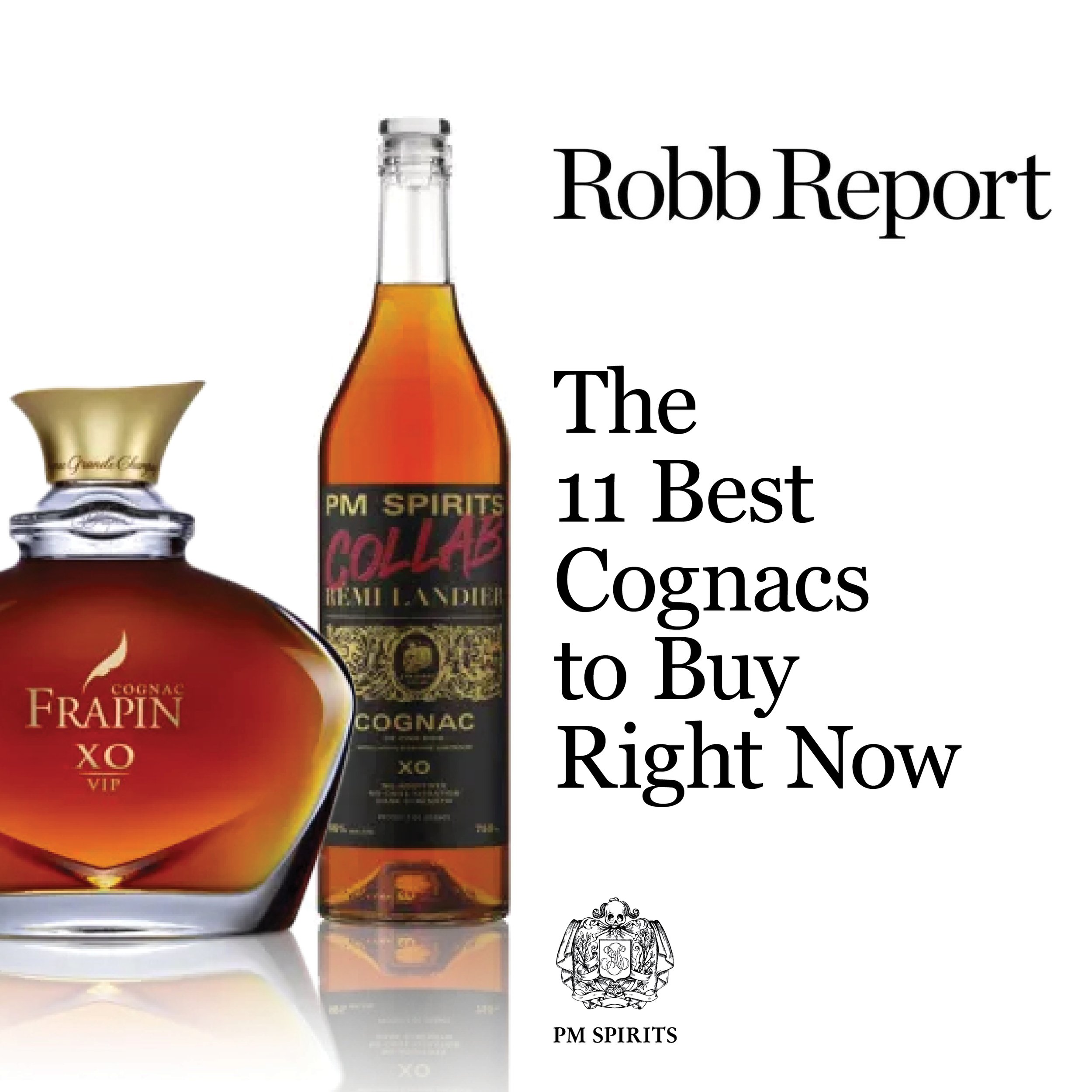
Robb Report: The 11 Best Cognacs to Buy Right Now

Best of, PM Spirits, Remi Landier, Cognac FrapinNicolas Palazzi

Cognac might not get as much attention as whiskey, particularly when it comes to bourbon or single malt scotch, but there’s a whole world of this French spirit to get familiar with and sample. There are a few rules to know—Cognac is a brandy made from grapes in the eponymous region or France that is aged in French oak barrels, either new or ones that have been used to age grape-based spirits. There are a few age designations to understand, from V.S. (at least two years old) to X.O. (minimum 10 years old). Cognac can be used to make a wide variety of cocktails, but is wonderful to sip on its own as well. We’ve put together a list of some of the best Cognacs in different categories to help you navigate this growing field, so happy hunting and santé.

Our Best Cognac Picks

Best X.O.

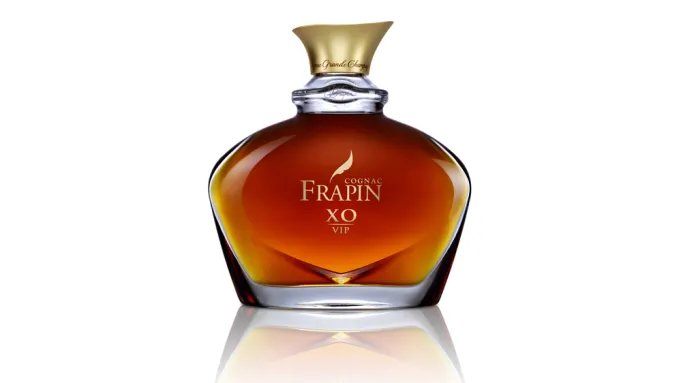
Frapin X.O. VIP

X.O. (“extra old”) is the next level of age in Cognac, a designation that means the eau-de-vie has been matured for a minimum of 10 years. X.O. is prime sipping Cognac, and one of the best in this category comes from Cognac Frapin. This is a single estate expression made from grapes grown in the Grande Champagne cru, and the eau-de-vie is aged in the humid cellars onsite. This is a thoroughly sophisticated sipper, with notes of caramel, chocolate, and dried fruit on the palate.


Best Single Cask

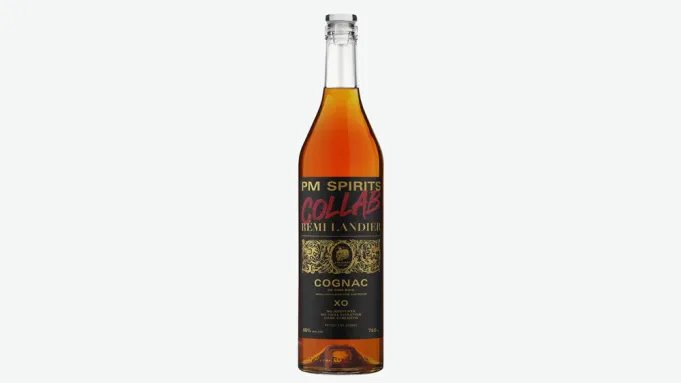
PM Spirits Rémi Landier XO Single Cask Collab

PM Spirits sources a wide array of spirits from different producers in various countries in all spirits categories. This Cognac is a small release that is worth tracking down, and it’s notable for being a single cask release as opposed to a blend of barrels. The producer is Remi Landier, a small family business that has been around since the 1970s. This particular Cognac was distilled in 1997, and is a blend of eau-de-vie from Fin Bois and Petite Champagne. If you’re looking to really expand your knowledge and palate in the world of Cognac, give this bottle a try.

https://robbreport.com/food-drink/spirits/best-cognac-brands-1235451298/

Barrel Hunting in Cognac: Unearthing Hidden Treasures in Dusty Old Cellars

cognac, Cognac, PM Spirits, Cognac Frapin, L'Encantada, Remi LandierNicolas Palazzi

There’s a popular vision of Cognac that’s all blinged out and dripping: crystal decanters, tasting rooms that look like jewelry stores and five-figure bottlings. This image is dominated by a handful of huge brands everyone recognizes: Hennessy, Martell, Rémy Martin and Courvoisier—the so-called Big Four, which sell nearly 90% of the Cognac consumed worldwide, according to the International Wines and Spirits Record. But there is another side of Cognac, too. One that’s based more on the gritty agricultural reality of the region.

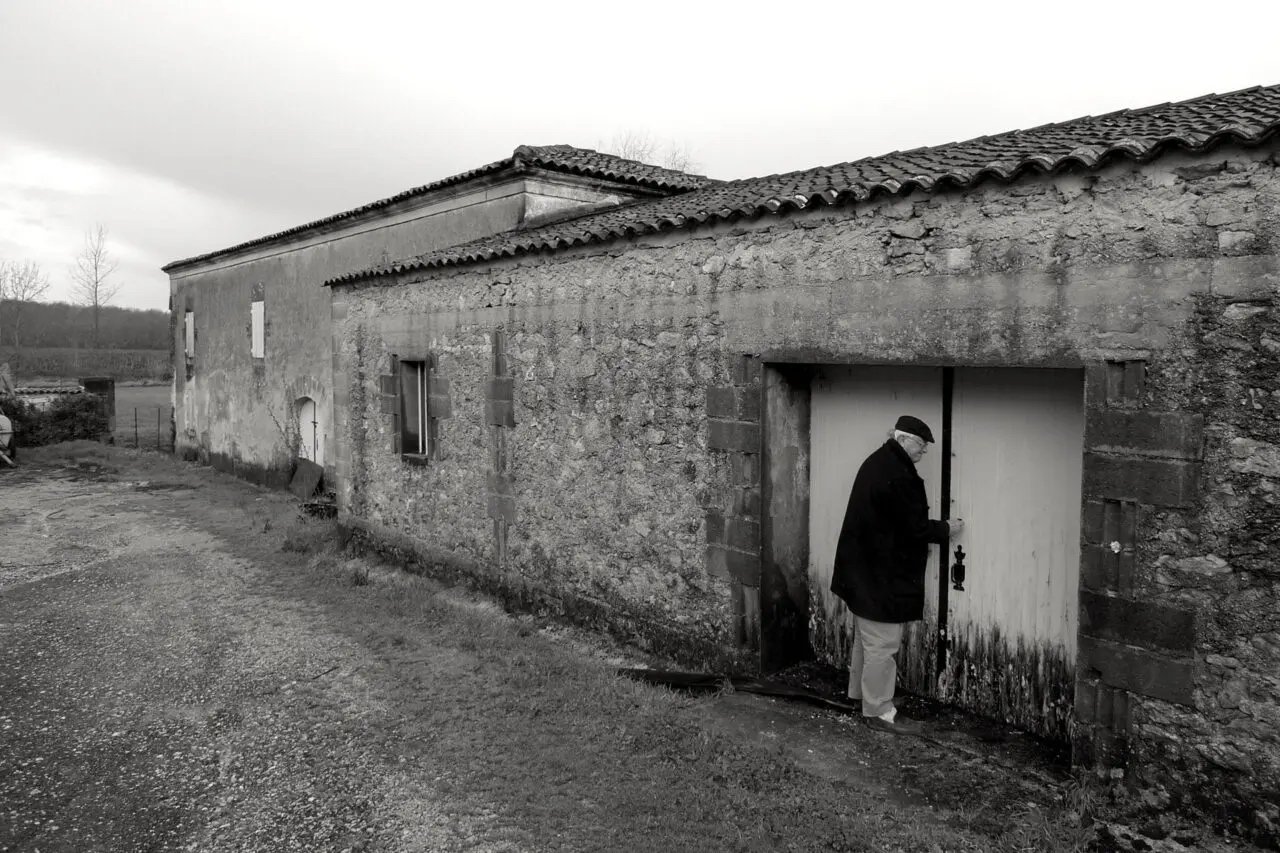
I saw it on a cold, gray day last winter at an unassuming farm in the small village of Verrières. This was probably the last place I’d expect to find pricey Cognac, but I was on a barrel hunt with Guilhem Grosperrin, among the new wave of négociants whose limited-edition releases are quickly becoming the most coveted bottles in Cognac. We visited one of the 150 small producers in his network, where Grosperrin crawls around old cellars looking for rare brandies.

When we arrived at the farm, four barking dogs rushed out to us, followed by a ruddy-faced septuagenarian who was still dressed from his boar hunt earlier in the day. Cognac is a secretive, rivalrous place and I was introduced to the man in hunting attire as only Marcel, no last name. Marcel eyed me suspiciously, then asked, “Well, does he like to drink?” Grosperrin chuckled and told Marcel that, yes, I liked to drink very much. With the ice broken, we stepped into his dark, dusty cellar to taste from his barrels, which had been aging since as early as the 1980s. “Sorry it’s dirty in here. I haven’t distilled since 2012,” Marcel said.

The nonstop luxury messaging from the Big Four makes people forget Cognac’s origin as wine. We sipped liquid from Marcel’s barrels that had begun as grapes in the family’s 10-hectare vineyard, which he picked, pressed, fermented and distilled. It’s a similar story for the roughly 4,300 winegrowers in Cognac, most of whom grow less than 20 hectares specifically for Cognac production. During his career, Marcel sold most of his stock to one Big Four house or another. But he always saved a few special barrels for himself. “What they keep is for pleasure, or patrimony, or as souvenirs, or for reasons that are not necessarily logical,” Grosperrin told me.

By age eight, Marcel was able to light the still, which he did in the morning while his father tended to the cows. Marcel remembers a wealthy neighbor who’d been a prisoner of war in Germany during World War II. That man wrote to his family from prison: “Cut down all the trees if you have to, but don’t stop distilling. Distill, distill, distill.” After the war, this guy’s cellar was full, and he became rich. Meanwhile, Marcel’s family had to rebuild its stocks. “The value of money is just in your head,” he said. “But the value of Cognac is solid, and you don’t lose it.”

To whiskey drinkers, single-cask offerings may seem like old hat. But it’s a relatively new phenomenon in brandy. Cognac is actually following a model that’s already been successful for Armagnac. Single-barrel Armagnac from négociants like L’Encantada are catching the fancy of American whiskey connoisseurs tired of paying whiskey prices. The problem in Armagnac is that the existing stock of barrels is small and shrinking.

That offers an opportunity for Cognac, where there is seemingly endless stock. Though, as Grosperrin points out, “It’s much more complicated to buy a cask here than in Armagnac. In Cognac, the producers are richer, and they don’t need small independent bottlers. They have contracts with the big houses.”

It’s still the early stages for the single-barrel Cognac revolution, and we’re just beginning to see these bottles in the U.S. La Maison du Whiskey’s “Through the Grapevine” series was one of the first to appear. PM Spirits has done several limited-edition bottlings, and this year has released rare single-cask offerings from renowned producers Frapin and Remi Landier. Last spring, Grosperrin released bottlings in the U.S. for the first time in several years. Importer Heavenly Spirits has released two single-barrel bottlings from the famed estate Jean Fillioux. Vallein-Tercinier and Jean-Luc Pasquet have plans to bring more of their single-cask offerings into the States.

To be clear, at the moment, single-barrel Cognac is still the domain of aficionados, with prices running more than $200 per bottle. But they’re still a fraction of something like Rémy Martin Louis XIII or Hennessy Paradis Imperial (both more than $3,000). Much of the price of those blingy brand names is wrapped up in specially designed decanters. The new wave of single-barrel offerings is something rarer and scarcer. “This is for people who want the unexpected. It’s a different philosophy. It’s outside of the current market,” said Vingtier.

https://www.wineenthusiast.com/culture/cognac-barrel-hunting/

Clear as a Bell

Bon Appétit, eau de vie, Laurent Cazottes, Cyril Zangs, Rum, clairinNicolas Palazzi

These elegant (but electric) digestifs are the perfect pick-me-up, nightcap, and grand finale—all in one glass

BY AMIEL STANEK PHOTOGRAPH BY ISA ZAPATA

Once the dessert forks have been surrendered and everyone swears they couldn’t possibly take even one more bite, a final pour of something special on Thanksgiving just feels right. While I can see the merits of trotting out a bottle of bark-bitter amaro or a mellow bourbon that’s seen a few years in oak, these days I take a different tack. When I want to round out a big meal in style, the choice is clear—a clear spirit, that is. I’m talking about things like eau-de-vie, grappa, mezcal, and clairin. Though these liquors are unique in terms of their geographic origin, composition, and production, they share a brazen character, making them ideal meal-enders. Instead of relying on extensive aging in wood to lend complexity, each spirit tastes unabashedly of the raw materials from which they were distilled and the places where they were made. Heirloom apples. Hand-harvested grapes. Pit-roasted agave. Wild-fermented sugarcane. These idiosyncratic products are as lively and expressive as the day they trickled out of the still; with no time spent in barrels to discipline their rougher edges, flavor has nowhere to hide. And at the end of a rich meal, one sharp sip immediately snaps you back to consciousness, like a cold plunge after a sweaty sauna session.

As is the case with all booze, spirits made with care by small, independent producers are going to be more compelling and often boast a price tag to match. But this is the most special of occasions, after all—when else are you going to break out the good stuff?

CYRIL ZANGS – DOUBLE ZÉRO EAU-DE-VIE DE CIDRE

This bright 100-proof apple brandy is a collaboration between culty Normandy cider maker Cyril Zangs and renowned distillery Calvados Roger Groult. It smells and tastes like a brisk fall stroll through an orchard: ripe fruit, a crisp breeze,

LAURENT CAZOTTES – GOUTTE DE REINE CLAUDE DORÉE

Laurent Cazottes’s eaux-de-vie are the stuff of legend, crafted from small parcels of his own lovingly tended trees and vines. To make this style, Cazottes painstakingly dries and hand-pits greengage plums before fermentation, which yields an extraordinarily concentrated elixir.

CLAIRIN VAVAL RUM

Traditional clairin, perhaps Haiti’s most revered spirit, is rum for mezcal nerds. Made from freshly pressed heritage sugarcane varietals and fermented with no added yeasts, each distillation is a unique expression of terroir. This one, from second-generation producer Fritz Vaval, is sunny and herbaceous, each sip gracefully ping-ponging between delicate flowers and salty funk.

https://www.bonappetit.com/