PM Spirits

Provider of Geeky Spirits

sherry,Bon Appétit

bon appétit: How One Man’s Obsession with Fruit Created the UK’s Most Exquisite Spirits

Bon Appétit, Capreolus, eau de vie, PM SpiritsNicolas Palazzi

Barney Wilczak and his tiny distillery are bottling the wildness of the orchard.

BY OSAYI ENDOLYN

May 12, 2025

The fruit is coming.”

The urgent phone call that Barney Wilczak anticipates typically comes in the middle of the night. The caller is one of his local farmer partners who has just walked their orchards to touch, smell, and taste the fruit. The brief exchange notifies Wilczak that the quince, perry pears, blood oranges, raspberries, or damson plums destined for distillation are ready to harvest. A distiller of groundbreaking eaux de vie, Wilczak describes his work as being “in service to the fruit.” Part of that service is to represent the fruit at its highest level of flavor, to harness its essence. So the processing must begin right away. Wilczak takes the farmer’s call as his cue, rises in the early darkness, and prepares to receive by the truckload literal tons of fruit.

Wilczak built Capreolus Distillery in 2016, on the same property as his childhood home in Cotswold, southwest England. His eaux de vie have an almost unnerving ability to transport the drinker to those abundant fields. The region is known for its endemic fruits, many of which don’t appear in other parts of the world. The name Capreolus refers to the deer that frequent Wilczak’s garden. “They’re the most beautiful native deer we have and they’re so ephemeral,” he says. “You see them and then they disappear. It felt apt, as we try to capture things that only last for moments.”

That late night/early morning phone call from Wilczak’s farmer collaborator wouldn’t have been a surprise. Wilczak firmly believes that production revolves entirely around the wisdom of the trees and the people who cultivate them, not marketing drives or quarterly sales targets. Every piece of fruit that arrives at the distillery is hand-sorted to check for outliers of “too much softness or spring,” before it is hand-pressed and guided through distillation and bottling.

Hand-sorting gooseberries at Capreolus. Photograph By Barney Wilczak

You might say that Wilczak practices a type of conservation: His farming supports much-needed biodiversity, and drinkers around the world can experience hyperlocal plants they wouldn’t otherwise have access to. The quince evokes notes of cinnamon, fig, and dark cherry. It tastes of earth yet bright twig and leaf—to drink these eaux de vie is to be situated in terrain.

“Last year we spent 7.5 hours sorting 700,000 individual raspberries. That’s 3.6 tons,” Wilczak says, with a look of bewilderment. All that fruit, time, and effort across a team of four people, yielded roughly three hundred 375-ml bottles. With a sense of pride and maybe surrender, he adds, “It’s ridiculous.”

Wilczak has fans, if not acolytes, of his so-called ridiculousness. Among them, famed cocktail bartender Ryan Chetiyawardana, professionally known as Mr. Lyan, who features Capreolus eaux de vie at Seed Library in London’s Shoreditch, Washington D.C. bar Silver Lyan, and Super Lyan in Amsterdam. He credits Dawn Davies of The Whisky Exchange for introducing him to the spirit. “It was revolutionary to try an eau de vie that represents my favorite fruits as a UK native,” Chetiyawardana says. “Barney sees the whole essence of the plant as not just a biological creature, but what it stands for. I was flabbergasted.”

A view of the orchard

Preserving nature in the bottle

Wilczak found distilling through his love of nature. As a student he thrived in botany and biology, but couldn’t make sense of working nonstop in a lab. He pivoted to study photography and specialized in conservation. In brief, he became a plant photojournalist. “I was photographing habitat restoration on six continents, building media libraries for botanic gardens in 118 countries.” Alongside his studies, he developed a hobby for making ciders, exploring the technicalities of distillation and méthode traditionnelle, a style of winemaking that involves a secondary fermentation in the bottle. The leap to distilling was not a huge jump. “It all comes down to a love for plants.”

As he approached age 30, Wilczak experienced “a bit of a life crisis.” He didn’t want to only document plants for visual archives. He wanted to promote the growth and appreciation of those plants for others. “I realized that people are obsessed with varietal differences in wine, but it’s also true of every single fruit.”

When Wilczak launched Capreolus, his bank account was overdraft by eight pounds, but supported by his partner Hannah Morrison, whose taste became imperative to Wilczak’s process. Everything was once done by hand and muscle, though he’s since acquiesced to buying a mill. He committed to work with farmers within a fifty-mile radius of his home-distillery, and just recently purchased meadowland to plant quince trees, which will soon bring that particular eau de vie production within range (it was previously the lone outlier).

His focus on local farmers came down to pay equity. “Early on I was talking to someone in Finland about wild-picked cranberries and they said, ‘We’ll get them to you for 2 euros per kilo.’ I knew that was really really cheap for wild-picked fruit,” he explains. The fruit would be picked in Russia. “What are the labor laws there? What are people getting paid?” Wilczak wanted to work with people he could meet, with operations he could see. “We wanted to pay people a proper wage, focused on farming well,” he says, a nod to the price point of his lineup, which can range from about $90 to $185.

With his local focus, he learned that there was not “a single piece of overlap in flavor or aroma.” The realization inspired him to learn how these individual expressions manifested. He spent about seven years studying fruit distillation practices in epicenters of Austria, Germany, Italy, and France, and translating non-English books on the subject.

After distilling perry pears from 200-year-old 45-foot trees, Wilczak was shocked. The distillation didn’t smell like fruit. “It smelled like sun-warmed bark, ripe and unripe wood, autumnal leaves, and almost like the grass around the trees,” he says. “My self-guided education had a huge focus on a technological, yield-driven way of working, but that robbed the eau de vie of complexity and organic structure,” he continues. “I became interested in making eaux de vie that are truly organic and expressive of where they come from.” That meant becoming dogmatic about respecting the inherent knowledge of the trees and the ecosystems that allowed them to produce such varied fruit. “Suddenly, the eaux de vie started to smell like the orchards.”

Black currant eau de vie in progress. Photograph By Barney Wilczak

Around the world with eaux de vie

In New York City, Jorge Riera, wine director at Frenchette, Le Roc, and the newly revamped Le Veau d’Or, features Capreolus eaux de vie as the finishing touch on leisurely, decadent meals. “It’s mind-blowing,” Riera says. “The delicacy, the finesse, the floral notes that Barney gets out of it. I was blown away.”

Riera first tasted the lineup in 2018 in Vienna, Austria, at Karakterre, a 14-year-old natural wine conference celebrating producers primarily from central and eastern Europe (the festival now has a NYC iteration going into its fourth year). Riera immediately called his importer, PM Spirits, to see about getting Capreolus to the States. “With the raspberry eau de vie, you feel the fuzz of the fruit in the nose,” he goes on. “They work with nature and it’s beautiful. But for me, I see the result at the dining table. I see the emotions from people immediately.”

One of the more evocative eaux de vie is the damson plum, a quintessential British fruit. “Old recipes of distilling damson take on this slightly jammy, tart note,” Chetiyawardana says. “Barney manages to capture the smell of the blossoms as you walk past the bush. It has that white flower elegance. The purple fruit notes encapsulate the tartness of the skin and the yield of the flesh. It pulls through to this wonderful fresh almond note from the kernel.”

For this writer, Capreolus eaux de vie feels like falling into a safe, warm memory you didn’t know you had. The damson plum is an example of Wilczak’s conservation ideology: “No one knows what to do with a cooking plum; it’s something we’ve lost from our vocabulary. We can let these things slip away. But if we want those genetics as a resource given changing climate, we have to give a justification for them to be grown.” His exquisite bottles make for a compelling reason. The only experience better than sipping Capreolus is to share it with someone as willing to be moved as you.

https://www.bonappetit.com/story/capreolus-distillery-united-kingdom-most-exquisite-spirit-eau-de-vie

Clear as a Bell

Bon Appétit, eau de vie, Laurent Cazottes, Cyril Zangs, Rum, clairinNicolas Palazzi

These elegant (but electric) digestifs are the perfect pick-me-up, nightcap, and grand finale—all in one glass

BY AMIEL STANEK PHOTOGRAPH BY ISA ZAPATA

Once the dessert forks have been surrendered and everyone swears they couldn’t possibly take even one more bite, a final pour of something special on Thanksgiving just feels right. While I can see the merits of trotting out a bottle of bark-bitter amaro or a mellow bourbon that’s seen a few years in oak, these days I take a different tack. When I want to round out a big meal in style, the choice is clear—a clear spirit, that is. I’m talking about things like eau-de-vie, grappa, mezcal, and clairin. Though these liquors are unique in terms of their geographic origin, composition, and production, they share a brazen character, making them ideal meal-enders. Instead of relying on extensive aging in wood to lend complexity, each spirit tastes unabashedly of the raw materials from which they were distilled and the places where they were made. Heirloom apples. Hand-harvested grapes. Pit-roasted agave. Wild-fermented sugarcane. These idiosyncratic products are as lively and expressive as the day they trickled out of the still; with no time spent in barrels to discipline their rougher edges, flavor has nowhere to hide. And at the end of a rich meal, one sharp sip immediately snaps you back to consciousness, like a cold plunge after a sweaty sauna session.

As is the case with all booze, spirits made with care by small, independent producers are going to be more compelling and often boast a price tag to match. But this is the most special of occasions, after all—when else are you going to break out the good stuff?

CYRIL ZANGS – DOUBLE ZÉRO EAU-DE-VIE DE CIDRE

This bright 100-proof apple brandy is a collaboration between culty Normandy cider maker Cyril Zangs and renowned distillery Calvados Roger Groult. It smells and tastes like a brisk fall stroll through an orchard: ripe fruit, a crisp breeze,

LAURENT CAZOTTES – GOUTTE DE REINE CLAUDE DORÉE

Laurent Cazottes’s eaux-de-vie are the stuff of legend, crafted from small parcels of his own lovingly tended trees and vines. To make this style, Cazottes painstakingly dries and hand-pits greengage plums before fermentation, which yields an extraordinarily concentrated elixir.

CLAIRIN VAVAL RUM

Traditional clairin, perhaps Haiti’s most revered spirit, is rum for mezcal nerds. Made from freshly pressed heritage sugarcane varietals and fermented with no added yeasts, each distillation is a unique expression of terroir. This one, from second-generation producer Fritz Vaval, is sunny and herbaceous, each sip gracefully ping-ponging between delicate flowers and salty funk.

https://www.bonappetit.com/

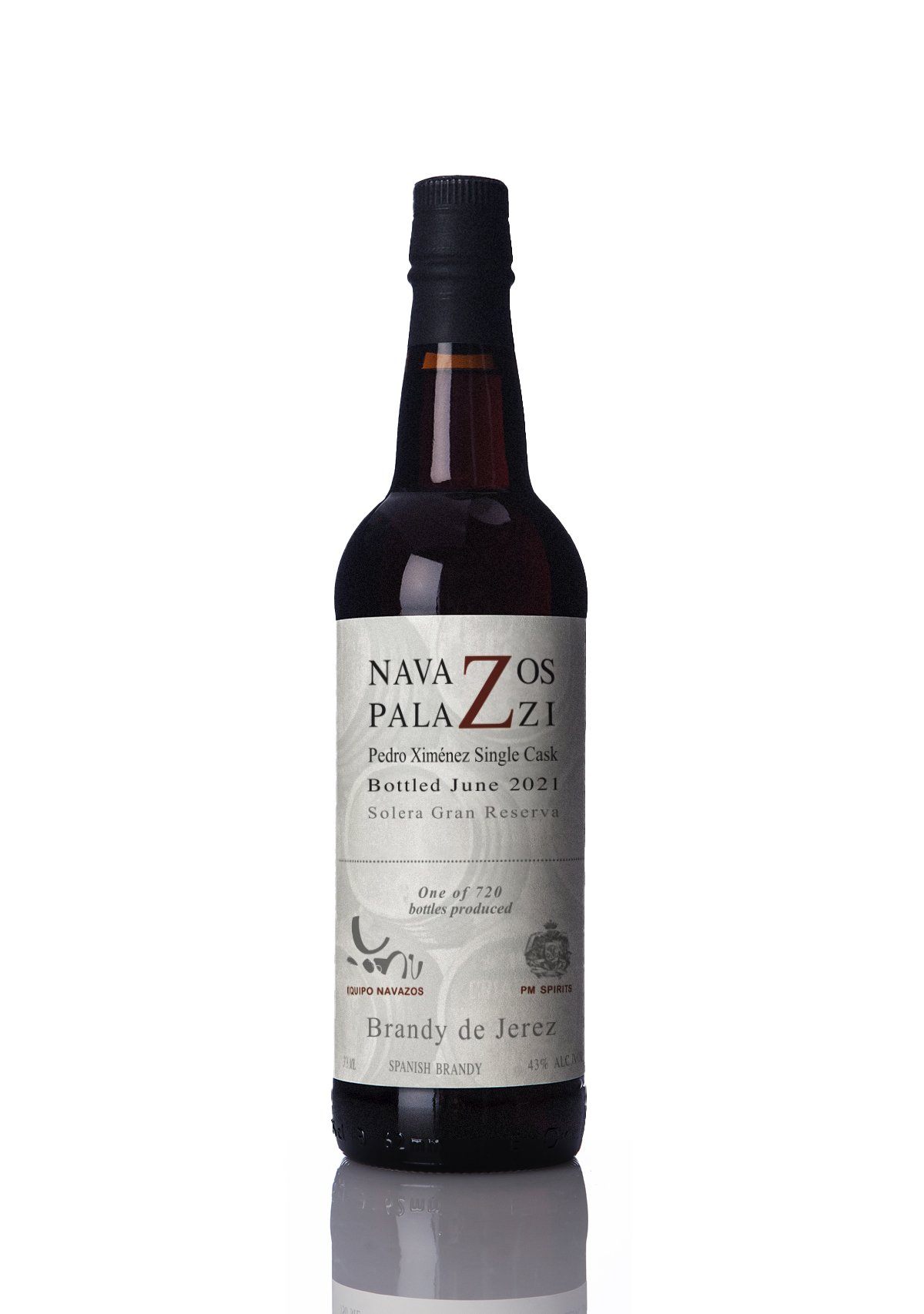
94 POINTS Navazos Palazzi Pedro Ximenez Single Cask Brandy

Best of, sherry, Brandy, Navazos PalazziNicolas Palazzi

This is a brandy de Jerez aged in oloroso casks, then finished three years in very old sweet Pedro Ximenez casks. The end result is an extraordinarily complex sipper that almost reads like a cocktail. The deep brown hue and bold dried fig aromas signal richness. While the first sips mingle toffee, maple, dried fruit, the finish is surprisingly dry and brisk, showing walnut skin, a hint of grapefruit peel, and cinnamon and cayenne glow. Bottled at cask strength, plan to add water or ice to mellow the appropriately fiery edge. Limited edition: 720 bottles produced. - KARA NEWMAN 

https://www.winemag.com/buying-guide/navazos-palazzi-pedro-ximenez-single-cask-brandy/

The Ultimate Guide to Aperitifs

Best of, Eater, vermouth, sherry, PM Spirits, Nicolas PalazziNicolas Palazzi

From bittersweet to botanical, there’s an appetite-stimulating aperitif out there for everyone in this growing category

by Tyler Zielinski Mar 10, 2022, 10:04am ESTPhotography by Michelle Min

HumansHumans are creatures of habit, and that’s especially true when it comes to our drinking rituals. We drink coffee for its ability to wake us up, herbal tea for relaxation, and wine to pair with food. But to stimulate the appetite before a meal, there’s one drink category most Americans tend to forget about: the aperitif.

The aperitif — a word derived from the Latin verb “aperire,” meaning “to open” — is a category of low-ABV beverages defined by when they’re consumed rather than how they’re produced. An aperitif can be a liqueur, fortified or aromatized wine (e.g., sherry or vermouth, respectively), or an aperitivo bitter (e.g., Aperol or Campari), making the category diverse and approachable for both bon vivants and novice drinks alike.

While the mindful and ritualistic consumption of aperitifs is slowly catching on in the U.S., in Europe, especially Italy, France, and Spain, aperitifs have been at the center of late afternoon and evening drinking rituals for decades — and, in some cases, centuries.

In Italy, aperitifs are consumed during the pre-dinner aperitivo hour — a time when family and friends gather to enjoy low-ABV tipples along with small bites (cicchetti, in Italian) to unwind from the day. In France, they practice apéro (short for apéritif) with French tipples such as pastis and Pineau des Charentes. And in Spain, sherries and vermut (vermouth) whet the appetite during “el aperitivo,” with new vermuterias, or vermouth bars, experiencing a renaissance among millennial drinkers.

Although a culturally ingrained drinking occasion such as aperitivo hour has not yet gained a permanent foothold in the U.S., interest in low/no-ABV drinks is expanding. The segment grew by 30 percent in 2020, and became a nearly $10 billion industry in 2021. As a result, the Aperol spritz has become as ubiquitous as the vodka soda in most major cities around the country; new sober bars and bars that strictly serve low-ABV aperitif-style cocktails are popping up; and a new wave of aperitifs is flooding the market at an unprecedented pace.

To kickstart your personal aperitivo hour practice, I’ve scoured the world of aperitifs to put together a list of some of the hottest bottlings from both domestic and international producers, broken down by flavor characteristics. Whether you’re a hardcore spritzer looking for an alternative to Aperol, a G&T lover open to trying a low-ABV botanical spirit to replace the gin, or a bon vivant who is just looking for the next hot low-ABV product, there’s a must-try aperitif for everyone.

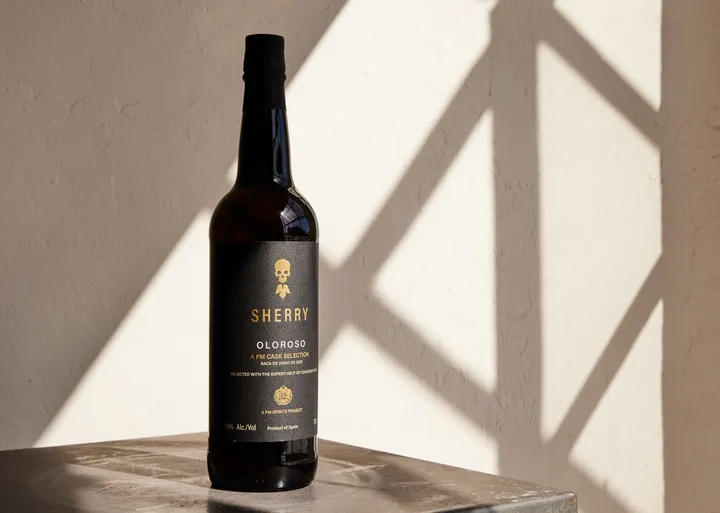
PM Spirits Oloroso Sherry 2021

PM Spirits is one of the most exciting U.S. importers and distributors of geeky spirits. The brand’s Project Sherries came to be after Nicolas Palazzi, owner of PM Spirits, and Eduardo Ojeda, co-owner of cult sherry bottlers Equipo Navazos and senior advisor to famed sherry producer Grupo Estévez, collaborated to release some of the finest sherries that Jerez has to offer.

The Oloroso sherry is aged for an average of 19 years, and is full-bodied and structured with notes of toasted hazelnuts, sesame seeds and walnuts, brown butter, leather, toffee, candied orange peel, and cinnamon. The flavor profile is balanced with a delicate acidity and salinity that makes it perfect for contemplative sipping. While it would also shine in a simple sherry cocktail such as a highball or Sherry Cobbler, at its price point, you’ll want to be sure your bartending skills are quite sharp.

Tximista Vermouth

As far as vermouths go, the Basque-produced Tximista is truly one of a kind. It’s the world’s first and only vermouth made with 100 percent Getariako Txakolina wine from sustainably farmed hondarrabi zuri grapes. The brand has two styles, rojo and blanco, both aromatized with local herbs, roots, and botanicals. The high-acid, mineral-driven Txakoli base makes these vermouths incredibly drinkable while also standing up beautifully in a vermouth and tonic or martini. The product made its debut in Spain in 2018, and it’s currently only available in New York, California, and Florida, with more states being added for distribution in the near future.

https://www.eater.com/22967137/guide-to-buying-aperitifs-liqueurs-bitters-fortified-wine

Wine & Spirits Magazine 90 Points, PM Spirits - Palo Cortado

sherry, PM Spirits, Best ofNicolas Palazzi

90pts | PM Spirits

Jerez-Xérès-Sherry Palo Cortado Saca de Junio de 2021

Nicolas Palazzi and the team at PM Spirits worked with Eduardo Ojeda– chief winemaker at Valdespino and a co-owner of Equipo Navazos—to blend their own propriety brand of Sherries. This one is a selection from several criaderas, the wines an average age of 15 years. It still holds a brisk, salty memory of its time as a Fino, even as the flavors broaden out into saturated richness of barrel age. Serve it with bolitas de bacalao.

—J.G.   PM Spirits, Wilmington, DE

https://www.wineandspiritsmagazine.com/

Sherry’s Indie Moment

sherry, Equipo Navazos, PM Spirits, Nicolas PalazziNicolas Palazzi

A growing number of independent bottlers is aiming to showcase a more nuanced, variable side to fino, manzanilla and more.

There’s no single origin point for the modern sherry renaissance, but the aged cask of amontillado that Eduardo Ojeda and Jesús Barquín of Equipo Navazos bottled in December 2005 would be a solid place to start.

Like so many examples of its kind, the wine had been forgotten for decades in a dusty bodega, where it would have continued to slumber if not for the private club of investors, organized by Ojeda and Barquín, who pooled together the funds to rescue it from oblivion. Titled “La Bota de Amontillado” (after the Edgar Allen Poe story) and shared exclusively among club members, that initial release gave birth to a series of chronologically numbered editions. Hype quickly followed, and in April 2007 the project released its first commercial effort: La Bota de Palo Cortado No. 6.

It may come as a surprise that one of the driving forces behind the current sherry revival basically started off as a Kickstarter campaign. But according to Peter Liem, sherry expert and co-author (along with Barquín) of Sherry, Manzanilla & Montilla: A Guide to the Traditional Wines of Andalucía, few were interested in purchasing, let alone marketing, these wines. “The only reason that all these old wines still existed is that nobody wanted them,” he explains, citing the economic collapse and fall from relevance that decimated the sherry industry toward the end of the 20th century.

More than 100 “Botas” later (as of 2022, the library consists of 107), the project has redefined sherry for many U.S. drinkers. As Liem puts it, “They opened our eyes to the fact that something completely different existed in this region, which nobody was talking about.” That alone would have been enough to secure Equipo Navazos’ lasting place in the zeitgeist. But in recent years, their success has paved the way for a new set of independent bottlers who are following a similar playbook, sourcing minuscule quantities of wine from bodegas across the Sherry Triangle.

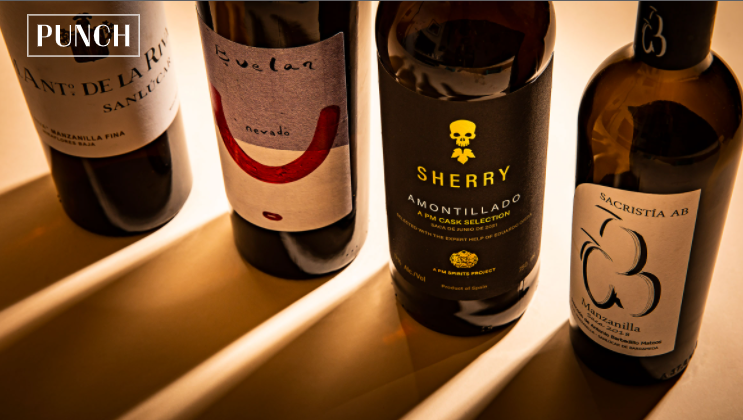
Some are Jerez natives, such as Antonio Barbadillo Mateos of the Sacristía AB project, and Ramiro Ibáñez and Willy Pérez, the duo behind the resurrected M. Antonio de la Riva label. Others, including Nicolas Palazzi of PM Spirits and Buelan Compañía de Sacas’ Nick Africano, operate out of the United States. They are united not only in their rejection of sherry as a standardized, industrial wine, but also in their desire to carve out a more intimate model for the region.

For Nicolas Palazzi, owner of rare spirits distributor PM Spirits, the collection of sherries he released late last year signaled a case study in sherry’s diversity. Since 2012, Palazzi has partnered with Equipo Navazos to bottle a series of highly-coveted single-cask Spanish brandy, whisky and rum under their Navazos Palazzi label. Even as someone who makes his living importing small-batch spirits, Palazzi was struck by the enormous variation between barrels in a single sherry solera system. “When you’re sampling different casks of spirits, a lot of the time you will find some small differences, but if it’s the same run, put in the same type of cask and aged in the same place for the same amount of time, the stuff you get is going to be pretty similar,” he explains. “But with sherry, it’s mind-bending. You can taste four different casks of the same exact wine and they’re all vastly different.”

“I saw a gap in the market for serious wines from this region, since everyone thought of manzanilla as something cheap, relatively young and accessible.”

In a typical bottling process, the solera would absorb and assimilate the individual profiles of these casks, rounding out their wayward edges into a smooth and seamless whole. At the scale that Palazzi describes, however, the goal is to capture the unique personality of a single barrel, or the distinctions that exist from one barrel to the next. “It sounds like a cliché, but these casks are living things,” Palazzi says.

New bottlers like Palazzi have arrived in Jerez at an inflection point. For all the recent talk of a renaissance, sherry remains a niche category. And while the cult model adopted by Equipo Navazos and its descendants has ushered in a new era of critical appreciation for the region’s finest wines, that’s not enough to sustain an entire wine industry. The question on everyone’s minds, then, is: What’s next?

INDIE SHERRIES TO TRY

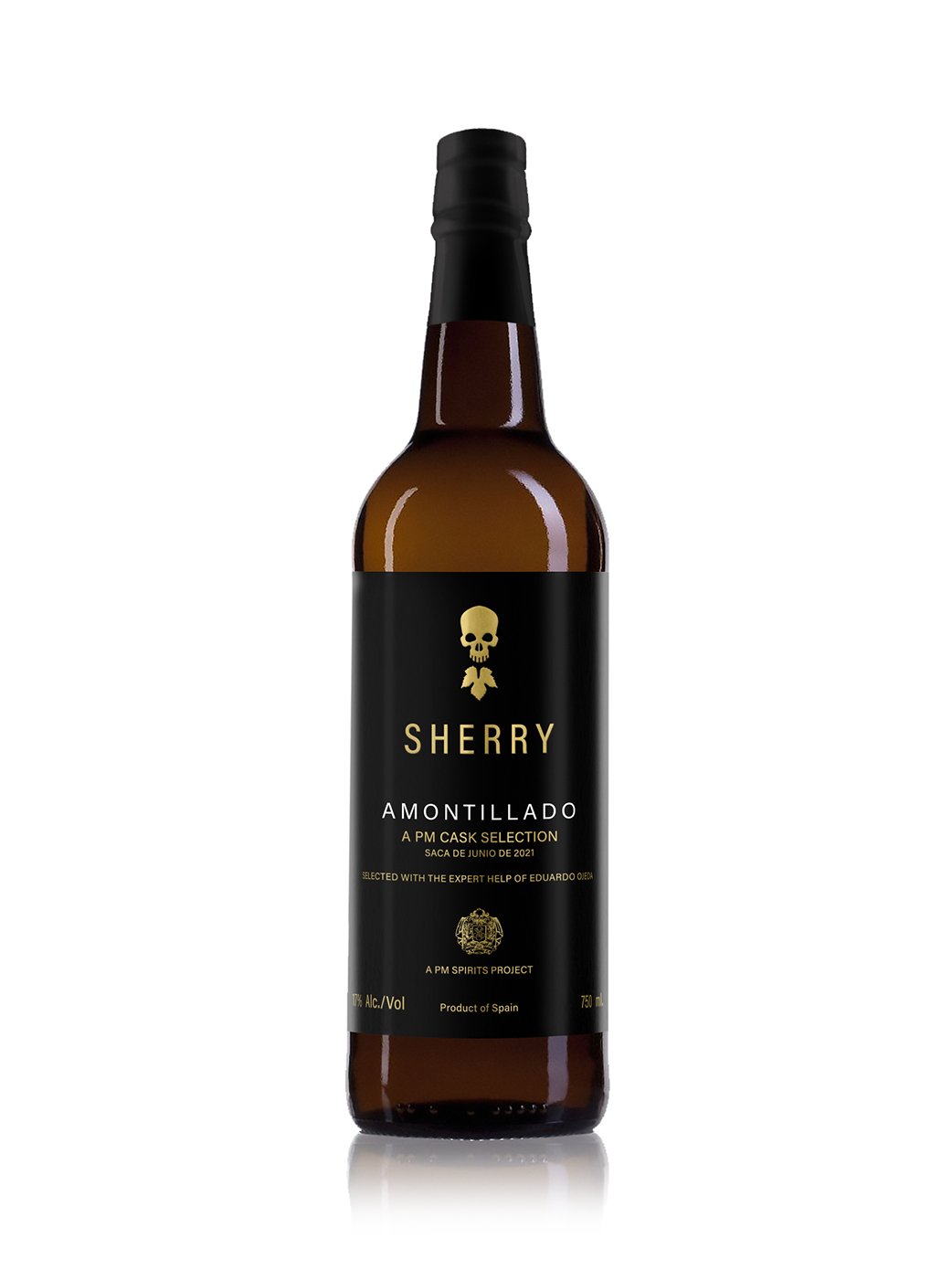
PM Spirits Amontillado

“Selected with the expert help of Eduardo Ojeda,” as its label proudly declares, the PM Spirits amontillado drinks noticeably brighter and fresher than many examples of the genre, happily embracing its inner fino with a pronounced flor character. Although the packaging doesn’t mention where it was sourced, Palazzi notes that the wine came from several casks belonging to a prominent bodega with roots in the late 19th century. Light amber in the glass, it’s energetic and lively, especially for the style—as close to easy-drinking as amontillado gets.

https://punchdrink.com/articles/fino-manzanilla-amontillado-sherry-indie-moment/