PM Spirits

Provider of Geeky Spirits

Beenleigh,Imbibe

Imbibe: Passion Project Nicolas Palazzi and the art of selling to 50 people

Imbibe, Nicolas PalazziNicolas Palazzi

We’ve never had a market,” says Nicolas Paul-Marie Palazzi, Miami-based owner of PM Spirits. “Fifteen years ago there wasn’t a market, and there’s no market now.”

This seems an odd thing for the founder of a successful spirits-importing company to say. But it’s true in one way: Palazzi doesn’t really identify markets; he identifies bottles. He finds spirits he loves, brings them into the country, and then goes looking for the handful of people who will appreciate them, too.
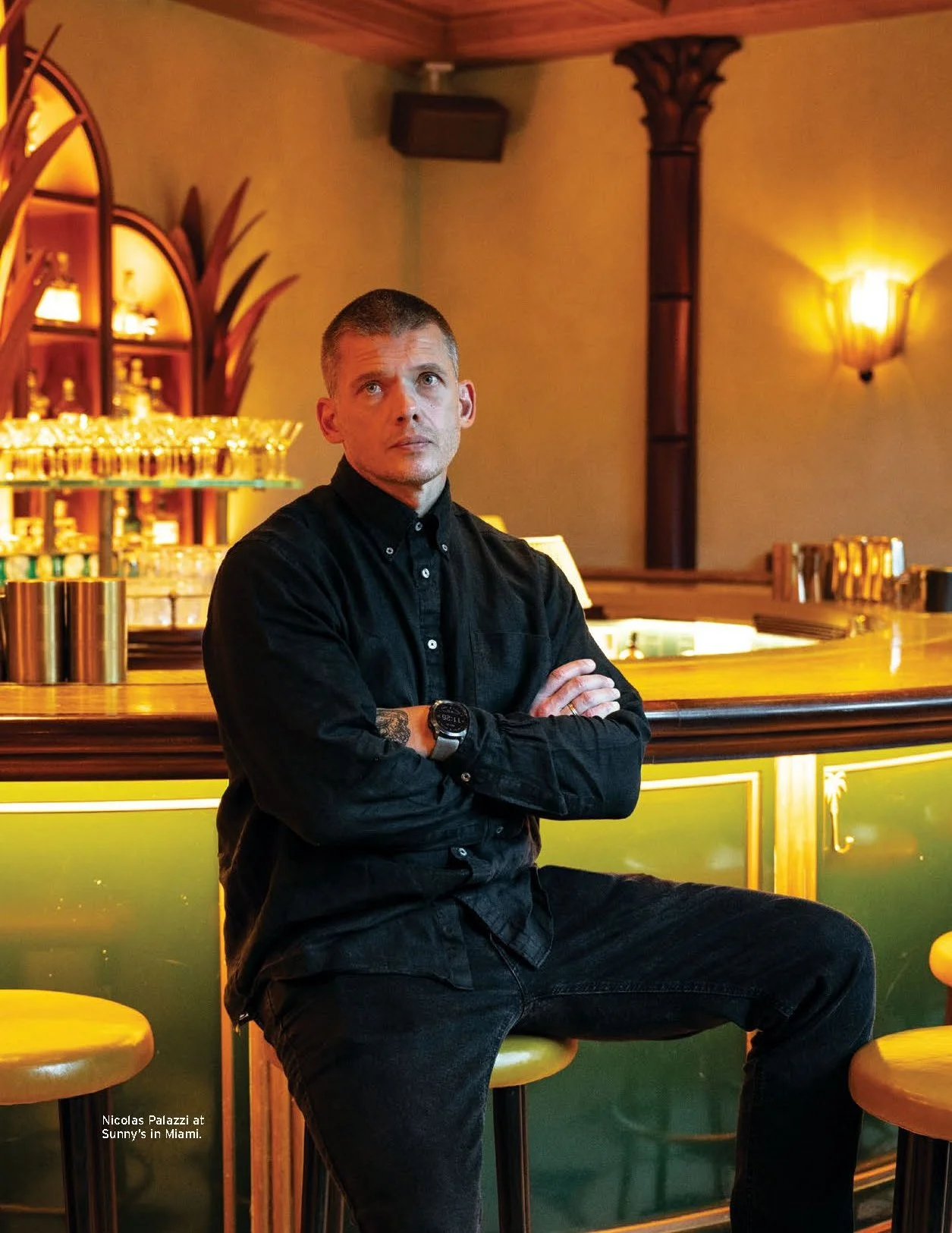
Photo by DAVID SALAZAR

Palazzi, who moved to New York from his native France in 2004, has emerged as one of the most admired spirits importers among aficionados and collectors, almost to the point of cultishness. His portfolio features outlier Cognacs, Armagnacs, single-malt whiskies, and big, funky rums. These include unicorns like Jacky Navarre Cognac, L’Encantada Armagnac, and Hampden Estate rums.

“The French are often the most traditional, and they like rules, whether it’s cheese or honey or spirits or whatever,” says Monique Huston, vice president of spirits portfolio at Winebow, an importer and distributor of wines and spirits. “Nicolas just kind of went anti-French.”

Palazzi was born and raised in Bordeaux, where familiarity with fine wines and brandy is all but mandatory. His mother’s family makes wine with their small business in Côtes de Bourg, and one of his grandfather’s closest friends was a well-regarded Cognac distiller. “At Sunday family lunches at my grandparents’ house,” Palazzi recalls, “we’d finish with Cognac made by this gentleman.” Palazzi wasn’t immediately drawn to the world of beverages. He left home to study engineering, and, after engineering school, worked several years as an environmental engineer for the French national electric utility company EDF. When a friend invited him to visit New York City, his life took a new trajectory. He left his unsatisfying job, moved across the Atlantic to join his friend (now his wife and mother to their two children), and found a new job managing a medical research lab. He had a respectable technical career but still didn’t feel content, and he eventually realized that he should build a life around something he actually cared about. “I would get up in the morning and just feel upset for no reason,” he says. “It wasn’t healthy.”

He considered his options. “My basic thoughts were, what are the things that I genuinely like to do?” he says. “And I liked wine and spirits.”

His interest led him first to hanging out, then working on weekends at Jean-Luc Le Du’s boutique wine shop in Manhattan’s West Village. He sharpened his knowledge of wine through seminars, blind-tasting groups, and connections with the sommeliers who patronized the shop.

New York impressed him with its wide diversity of available wines, especially compared to Bordeaux. He was particularly drawn to the bottles from smaller, family-run vineyards. But he found the spirits shelves lacked that depth and were dominated by larger, corporate brands. Palazzi’s instincts told him that New York would welcome curated, lesser-known spirits. So he quit his laboratory job and took his first, tentative steps into the beverage-importing business.

The standard advice for building a successful business is this: Identify demand in a market, then satisfy it. Palazzi didn’t follow that approach. His business model, if it can be called that, was to seek out spirits he liked—made as naturally and with as little intervention as possible—and then strike an import deal with the producer. Put the bottles on the store shelves, and assume fellow lovers of spirits would eventually find and buy them. While his plan was vague at best, he did have a short list of contacts, ranging from producers he knew in France to buyers he’d met at Le Du’s wine shop.

Palazzi flew home to France and visited his grandfather’s friend, the Cognac maker, who became a mentor. “His operation was super tiny, just one dude, but he was real artisanal and really good at what he did,” he said. “I approached him and said, ‘I like spirits. And I’m thinking that I would like to do something around it, and I don’t know anything about it, really.’”

With his mentor’s advice and introductions to a few other distillers, Palazzi launched PM Spirits, named to honor his father, Paul-Marie Palazzi. His first import was Guillon-Painturaud Hors d’Age, a Grande Champagne Cognac, provided by his family’s friend. Back in New York, he took to the streets with bottles in a bag, talking with restaurateurs and liquor shop owners one at a time, hoping to convince them to stock his product. One agreed, then another, and in time he sought out other spirits worthy of attention, including his second import, a Cognac from the house of Paul Beau.

He learned the mechanics of importing the hard way: by screwing up. He underpriced bottles and sold them at a loss. He bought inventory without understanding cash flow. He learned about duties, invoices, and the peculiar financial limbo in which an importer pays suppliers and the government long before customers pay him. “I’ve done a lot of things that did not work out,” he says. “But none of them were fatal.”

A central problem was finding someone to distribute these obscure bottles—a common lament among smaller importers. So Palazzi did what became a recurring feature of his career: When the conventional system didn’t work for him, he worked around it. He began distributing his own spirits in New York, selling bottles himself. To this day, PM Spirits consists of two businesses: a New York wholesale operation, in which his company self-distributes the products in the state, and an importing business that supplies distributors throughout much of the rest of the nation. (Palazzi and his family moved from Brooklyn to Miami in 2019.)

Bit by bit, drinkers started to pay attention. Palazzi returned to France and discovered Armagnacs and Calvados that he thought worthy of attention, and began importing those as well.

He visits each distillery to assure himself that it’s managed by artisans, not accountants. “We meet the people—we need to be like-minded individuals,” Palazzi says. It’s telling that his online directory of imported products often features pictures of the producers, not shots of stills or barrel houses. “It’s meaningful,” says Kate Perry, U.S. market manager for La Maison & Velier, who met Palazzi in 2014 and has partnered with him in importing and marketing his spirits in the U.S. “They’re real—real farmers, real people, real communities. A very personal thing, which is not often the case with spirits brands.”

His explorations have taken him far beyond French brandies, and his portfolio has expanded to include whiskies, rums, agave spirits, eau de vie, and liqueur—all ticking the boxes Palazzi has set out, foremost among them being that he likes drinking them. Palazzi has also partnered with likeminded others in collaborative ventures. “We see if we can work together and do something that’s cool and tastes very good, and that I can afford,” Palazzi says.

Perhaps the best known of his “collabs” is the partnership with Equipo Navazos, a boutique sherry producer in Spain. Palazzi came across this sherry at a wine dinner organized by Levi Dalton in New York, and later toured Spanish bodegas with co-founders Eduardo Ojeda and Jesus Barquin. Ojeda and Barquin took an approach to sherry similar to that embraced by Palazzi: find and market excellent, distinctive sherries crafted by independent producers.

The trio soon partnered on a line of spirits, starting with Spanish brandy that had been aged in sherry casks in hot, dry Spain—a process that transformed a middling brandy into something worthy of a snifter. They later applied the same method to other spirits, including gin, Spanish whiskey, and rum, all sold under the Navazos-Palazzi label. Their rum in particular attracted fans. A Caribbean rum aged five years in ex-bourbon casks and then further in oloroso sherry barrels for more than a decade, it was praised by critics for its notes of quince, walnut, and caramelized roasted meat. In one review, the taster concluded that the rum evokes a full, festive meal in a glass. Palazzi has also released his own branded line of PM Spirits, which includes Cobrafire, launched in 2016. It’s an unaged Armagnac, produced with Domaine d’Espérance, sold as an eau de vie de raisin.

A “drink less, drink better” ethos has spread in recent years, as spirits fans consume less but are willing to spend more on higher-caliber bottles. In some ways, the buying public has caught up with Palazzi, who has become an inadvertent avatar of this movement. There is something almost stubbornly old-fashioned about his approach. It’s not exactly a recipe for building a mass market. But that’s never really been the point. “I don’t have any marketing money,” Palazzi says with a shrug. Finding great spirits is easy, he says. Getting people to try them (and, importantly, buy them) is much harder. “So the only thing that I can do is put a product on the market that looks cool and tastes very good, then try and convince people it’s worth their attention and their money.”

“I think it’s gotten to the point that putting the PM Spirits stamp on something says Nick has tasted this,” says Huston, “and that means it’s really good quality. Maybe his audience is 50 people.” And she appreciates that Palazzi’s approach is essentially: “How about I bring this beautiful thing in for those 50 people?”

Vinepair: The 30 Best Rums for 2024

Best of, La Maison & Velier, PM Spirits, Rhum, Rum, Vinepair, Privateer, La Maison Velier, Isautier, Hampden, Beenleigh, Papalin, ClarinNicolas Palazzi

As much as any other spirit, it’s safe to say there’s a style of rum for everyone. Nations across the globe have made it for centuries, with regions and producers offering different interpretations via distinct base ingredients — fresh cane juice, cane syrup, and molasses — as well as varied fermentation and distillation techniques.

Expressions arrive unaged and uncut; matured but with color later stripped away; or following decades in casks old and new. Some bottles are specifically produced for cocktails; others, owing to the price tags that accompany them, demand to be sipped, whether neat, on the rocks, or proofed down to the drinker’s preference. Then there are flavored or spiced releases, which accounted for over 50 percent of the rum sold in the U.S. in 2023.

With all due respect to the fictitious sailors that typically adorn such bottles, we did not consider flavored selections for our annual roundup of the best rums to drink right now. But we did dive deep into the diverse range of examples listed prior, tasting more than 120 bottles from over 20 nations across the globe.

Those samples were sent to VinePair (free of charge) by producers, importers, distributors, and PR firms. We tasted each one non-blind because we recognize that price plays one of the most important roles when you’re shopping at the liquor store or online, and should therefore be considered when evaluating a product.

The final list does not represent the 30 highest-scoring rums from the tasting, and instead aims to showcase the best offerings at every price point and across every interpretation of the category. We’re confident that the final selection offers a solid option for every occasion, budget, and palate. After all, there’s a style of rum for everyone.

The Best Rums Under $50

Transcontinental Rum Line High Seas

As the saying goes, “what one rum can’t do, three rums can.” Sure, you can craft your own blends, but why bother when the fine folks behind Transcontinental Rum have done it for you with this excellent mix of Panamanian, Jamaican, and Martinique distillates? Expressive and brimming with character, its savory, vegetal, slightly sweet profile offers a solid foundation for world-class cocktails.

The Best Rums Under $100

The Spirit of Haiti Clairin Vaval

Bottled at a precise 53.5 percent ABV, this Clairin is produced by Distillerie Arawaks, owned and operated by Fritz Vaval, whose family has been in the farm distillery business for close to 80 years. Fermented using ambient yeasts and distilled on a proprietary still, the nose of this spirit juxtaposes papaya and mango with salty umami aromas. The palate commits to more fruity and vegetal notes, with an enjoyably abrasive finish that speaks to the hands-on, traditional practices that led to its creation.

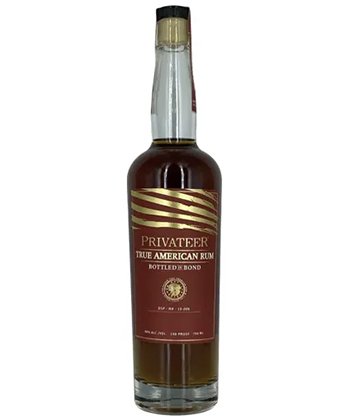
Privateer True American Bottled In Bond Rum

Magical things are happening in the rum realm up in Massachusetts, specifically at the premises of Ipswich-based Privateer Rum. Fusing American traditions with Caribbean-style spirits, this molasses-based bottled-in-bond release might seem initially shy on the nose, but that’s only a reflection of its refined, nuanced character. Where aromas of molasses, mocha, and caramel arrive softly, they explode on the palate, landing with a rich, borderline syrupy mouthfeel. Ideal for bourbon drinkers, this is a bona fide sipper.

Papalin 7 Years Old

A blend of two Jamaican pot still rums, this release features spirits distilled and aged at Worthy Park and Hampden Estate. The nose reveals classic Jamaican funk alongside hints of underripe stone fruit and grassy notes. The palate shifts to savory, umami character, with a Band-Aid note emerging on the finish that evokes a touch of peated Scotch. A complex rum that makes for a great sipping experience with or without ice, at 46 percent ABV, most drinkers won’t find the switch in temperature and dilution necessary, but it certainly isn’t unwelcome on a warm summer’s day.

Beenleigh Artisan Distillers 2013 Single Blended Rum

Beenleigh, Australia’s oldest operating distillery, was founded in 1884 in the sugar cane-rich northeastern state of Queensland. Those 140 or so years of experience have translated to a fruity and energetic spirit here, with oak and vanilla aromas raising the curtain, followed by more pronounced notes of tropical fruit and melon. At 10 years old, the palate is similarly lively, with ginger syrup and pomegranate molasses leading the charge. This is an elegant but easygoing sipper.

Hampden Estate HLCF Classic

A flagship expression from one of Jamaica’s most renowned producers, HLCF is shorthand for “Hampden Light Continental Flavoured.” Production features ambient yeasts, extended fermentation periods, 100 percent pot still distillation, and four years aging in tropical climates, which the brand notes is “equivalent” to 11 years in Europe. What does that translate to? Plenty of funk on the nose with added aromas of papaya, tart/savory tropical fruits, and molasses. A classically Jamaican profile on the palate, this rum certainly sips above its modest age statement.

The Best Rums Over $100

Isautier Traditional Rum 16 Year

Another stellar inclusion from the small island of Réunion, this rum was put into barrel in May 2006 and bottled in September 2022. Its producer, seven-generation family-run Maison Isautier, unusually makes both cane-juice- and molasses-based rums. This release falls into the latter camp, arriving at 57 percent ABV — not that you’d guess that from the nose or palate, though. Instead, aromas of dried stone fruits, vanilla, and used oak shine through, while the flavor profile leans mineral-rich, with accents of roasted coffee, dried licorice, and Dmerara syrup.

La Maison & Velier Flag Series 24 Year Old Guyana Rum 1998

La Maison & Velier’s “Flag Series” aims to showcase remarkable bottles from regions where extended aging periods are an option. Guyana rum aged for almost a quarter-century definitely fits that bill, and in this case, the lengthy maturation was only possible because the initially bourbon-barrel-aged spirit was transferred at 2 years old from its tropical home to Europe, where it was then transferred to Port casks. The profile of the final spirit is understandably dense and concentrated and we found that it benefitted from a few minutes to fully open up. At which point, a stunning array of tropical fruit (particularly pineapple husk), oaky sweetness (vanilla), and red berry compote emerge. The palate follows with cacao, salted caramel, and zesty citrus notes, as if to remind us that this fine sipping rum is still remarkably full of life and energy.

https://vinepair.com/buy-this-booze/best-rums-2024/

Radio Imbibe Episode 46: Nicolas Palazzi of PM Spirits

Armagnac, cognac, interview, Nicolas Palazzi, ImbibeNicolas Palazzi
Episode 46: Nicolas Palazzi
Radio Imbibe

The cover story of our March/April 2022 issue features brandy, and for this episode, we wrap up our coverage of the spirit with Nicolas Palazzi. Born in Bordeaux and now living in Brooklyn, Palazzi is the founder of PM Spirits, an importer and distributor of specialty spirits, including Cognac, Armagnac, and Calvados. For this episode, we talk with Palazzi about his search for memorable barrels of brandy, what he looks for in great brandies, and his work to bring these spirits to an American audience. 

Radio Imbibe is the audio home of Imbibe magazine. In each episode, we dive into liquid culture, exploring the people, places, and flavors of the drinkscape through conversations about cocktails, coffee, beer, spirits, and wine. Keep up with us on Instagram, Twitter, and Facebook. And if you’re not already a subscriber, we’d love to have you join us—click here to subscribe.  

https://imbibemagazine.com/podcast/radio-imbibe-episode-46-nicolas-palazzi-pm-spirits/

BRANDY - From Cognac to California, the historic spirit’s influence runs deep.

Interview, L'Encantada, Cognac Frapin, cognac, Cognac, Brandy, ImbibeNicolas Palazzi

JUICY FRUIT

From vineyard or orchard to bottle and bar, brandy’s influence runs deep.

Cognac, Armagnac, applejack, schnapps—in whichever form brandy is found, these spirits made from fruit have no parallel in the glass. While whisk(e)y, tequila, and rum get lots of love these days (deservedly so) from cocktail lovers and spirits drinkers, brandy is evolving and emerging on its own terms, slowly building a fan base to take this timeless spirit into the future.

We’re taking a closer look at today’s world of brandy—the ways it’s made and appreciated around the world, the details behind its complex production, and the reasons it should be the next bottle you reach for when cocktail hour rolls around.

Nicolas Palazzi

Bordeaux-born and Brooklyn based, Palazzi is the importer behind PM Spirits, specializing in independent spirits such as L’Encantada Armagnac, Cognac Frapin, and Cobrafire eau-de-vie de raisin.

“Something that’s really cool is when you’re in a brandy cellar, with 50, 60, 100 casks in front of you; even if they’re from the same batch of distillation, every cask is its own world. You could taste 15 casks distilled the same day, and you’ll find tremendous differences between them—whereas something like bourbon would be very consistent. There’s so much aroma and flavor profile available in brandy. If someone thinks Cognac is just one thing and it’s boring or they don’t like it, I assure you, I can find a single-cask Cognac that’ll blow your socks off. It’s a world that deserves to be discovered, for sure.”

https://www.dropbox.com/s/mel2ts24hjap0oq/MA22-Imbibe-Brandy.pdf?dl=0