PM Spirits

Provider of Geeky Spirits

la Quintinye,Mic.Drop.,Mic.Drop.,Mic.Drop.,Mic.Drop.

In Search of the Ultimate Freezer Martini

la Quintinye, martiniNicolas Palazzi
Screen Shot 2021-05-18 at 4.44.48 PM.png

We asked 10 of the world's best bartenders to submit their finest recipe for the pre-batched Martini—then blind-tasted them all to find the best of the best.

It’s been nearly a year since PUNCH conducted a new edition of the long-running “ultimate” blind-tasting series. In the age of COVID-19, such close gatherings of drink judges, sipping from successive versions of the same cocktail, all prepped by a guest bartender, were strictly a non-starter.

So, with COVID Nation still very much a thing, what drink could safely bring the series back to life? The prebatched, prechilled Martini, naturally. The prefab format of the classic—which was an established trend and served in many bars before the pandemic arrived—is perfectly suited to this new at-home era.

On a recent Monday, I was joined by PUNCH editors Talia Baiocchi and Chloe Frechette and bar owners Meaghan Dorman (Raines Law Room, Dear Irving) and St. John Frizell (Fort Defiance, Gage & Tollner) via Zoom to taste through 10 batched Martinis submitted by bartenders from the United States and England. The drinks had already arrived via contactless delivery. Judges were instructed to keep the mini-bottles in the freezer until tasting time.

Though batched cocktails can be controversial—many people are attached to the ritual of a bartender making their drink on the spot, particularly when it comes to the Martini—the panel convened with no prejudices. “We’re longtime fans of freezer Martinis,” said Frechette, who added that she thought batching was the way to prepare spirit-forward recipes during quarantine. Dorman agreed that premade drinks are an ideal fit for the current times, when most folks are entertaining at home for themselves and maybe a partner or roommate. “I think you should treat yourself right now and this is the way to do it,” she said.

This particular tasting brought to the table a few new variables that wouldn’t apply in a standard sampling of Martinis. Dilution had to be addressed anew. Since the cocktails are designed to simply be pulled from the freezer and poured, they weren’t receiving their dose of softening water through the usual spin in a mixing glass filled with ice. Instead, water was added directly to the batch and had to be precisely portioned out. Too much or too little could prove disastrous. One Martini in the running didn’t make the cut because the judges thought it too strong—i.e., lacked sufficient H2O. Another suffered from a surplus of added water, rendering it weak and, well, watery.

Temperature, too, was an important factor. Martinis are expected to be cold, naturally, but these freezer-born numbers were particularly icy—a consideration the bartenders had to factor in when choosing their ingredients and honing their ratios. “Martinis in this format dull the aroma and the alcohol comes forward,” explained Baiocchi.

That issue notwithstanding, the panel was surprised by the variety of character they encountered from one glass to the next. And, as would be expected in any sampling of signature Martinis, there were some odd flights of fancy. One recipe called for both sherry and peated Scotch; another included a hefty dose of absinthe. The judges didn’t necessarily dislike either drink; they simply didn’t read as Martinis.

Finding favor was a unique specimen submitted by Orlando Franklin McCray of Brooklyn’s Nightmoves, who put together high-proof, saffron-tinged Old Raj gin, La Quintinye Extra Dry vermouth and orange bitters. The judges liked the concentration of bold flavors but thought the recipe would have benefited from higher dilution.

With the vast changes in bar regulations brought on by COVID, Frizell said that he both hopes and expects to see more prebatched cocktails on the market when the pandemic recedes and bars fully reopen.

“My hat is off to the New York State Liquor Authority for the first time in my life, for freeing up the rules so quickly,” he said. “We’re able to do so many things now that we would have lost our license for before.”

For the time being, however, he’s doing what most every other cocktail lover has been doing for the past year: shaking up his own at home. “I’ve been drinking my own Martini almost every day,” said Frizell.

https://punchdrink.com/articles/ultimate-best-freezer-frozen-pre-batched-martini-recipe/

NEAL BODENHEIMER'S OLD HICKORY

vermouth, la Quintinye, recipeNicolas Palazzi

Mastering the Old Hickory With Neal Bodenheimer

The obscure vermouth classic gets retooled with an eye toward more flavor and less dilution.

The “raisinated vibe” and wormwood bitterness of La Quintinye Blanc forms one half of the 50/50 vermouth split.

The “raisinated vibe” and wormwood bitterness of La Quintinye Blanc forms one half of the 50/50 vermouth split.

If you’ve never heard of the Old Hickory, you’re not alone. A simple 50/50 mix of sweet and dry vermouths punched up with bitters, this low-proof classic has long existed in the shadow of the Bamboo and Adonis. Neal Bodenheimer wants to put it center stage.

Though he started workshopping the drink at his New Orleans bar Cure, he “really dug in,” as he describes the process, on the Old Hickory for Dauphine’s, a New Orleans–inspired bar and seafood restaurant slated to open this spring in Washington, D.C.. “It felt modern, and like things I wanted to drink,” he explains of the simple build. However, “it felt like a cocktail that never really got its due.”

Part of the New Orleans canon of cocktails, the Old Hickory first appeared in print in Stanley Clisby Arthur’s 1937 book, Famous New Orleans Drinks And How to Mix ’Em. Supposedly, “Old Hickory” was a nickname given to General (and later U.S. president) Andrew Jackson, a reference to his fortitude as he led troops through the Battle of New Orleans in the winter of 1814-15. Although Arthur writes that the drink was Jackson’s “favorite tipple,” Bodenheimer dismisses the claim: “I don’t think people were drinking vermouth in America in 1850.”

Though his vision for the Dauphine’s interpretation is a pre-batched version, Bodenheimer preserves elements of the cocktail-making ritual. The format coalesced at an event held at New York’s James Beard House in September 2019, intended as a preview for Dauphine’s. For the seated dinner with cocktail pairings, Bodenheimer sought out food-friendly pours, and the vermouth-forward Old Hickory seemed like a natural fit. Yet, stirred with ice, it felt too thin and watered-down. The solution was to pre-batch the vermouths and refrigerate the mixture until ready to serve. Bitters were stirred in at the last minute—“bitters expand in a batch over time, so I keep them out,” says Bodenheimer—and the mixture was then poured over a large ice cube and quickly served. The end result presented like a cocktail, but retained the texture of wine.

“We said, ‘What if we made it like an Old-Fashioned setup, and less like a vermouth cocktail?’” he recalls. “We always had our vermouth in the fridge anyway, so we always had a chilled vermouth bottle.”

https://punchdrink.com/articles/mastering-old-hickory-vermouth-cocktail-recipe-neal-bodenheimer-dauphines/

Review: Mic.Drop Rye L20-01 4 Years Old

Mic.Drop., rye, PM SpiritsNicolas Palazzi
Mic.Drop-L20-01.png

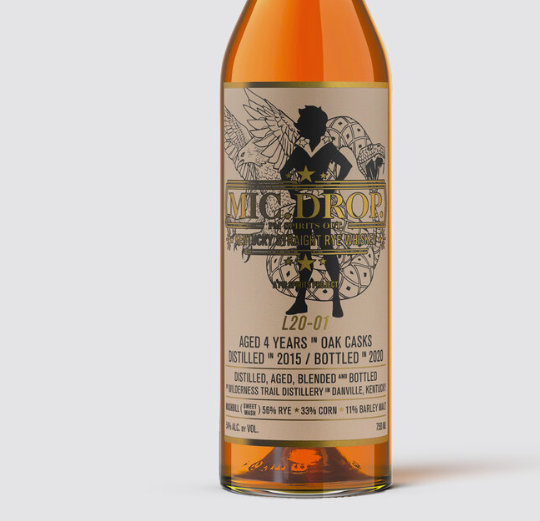
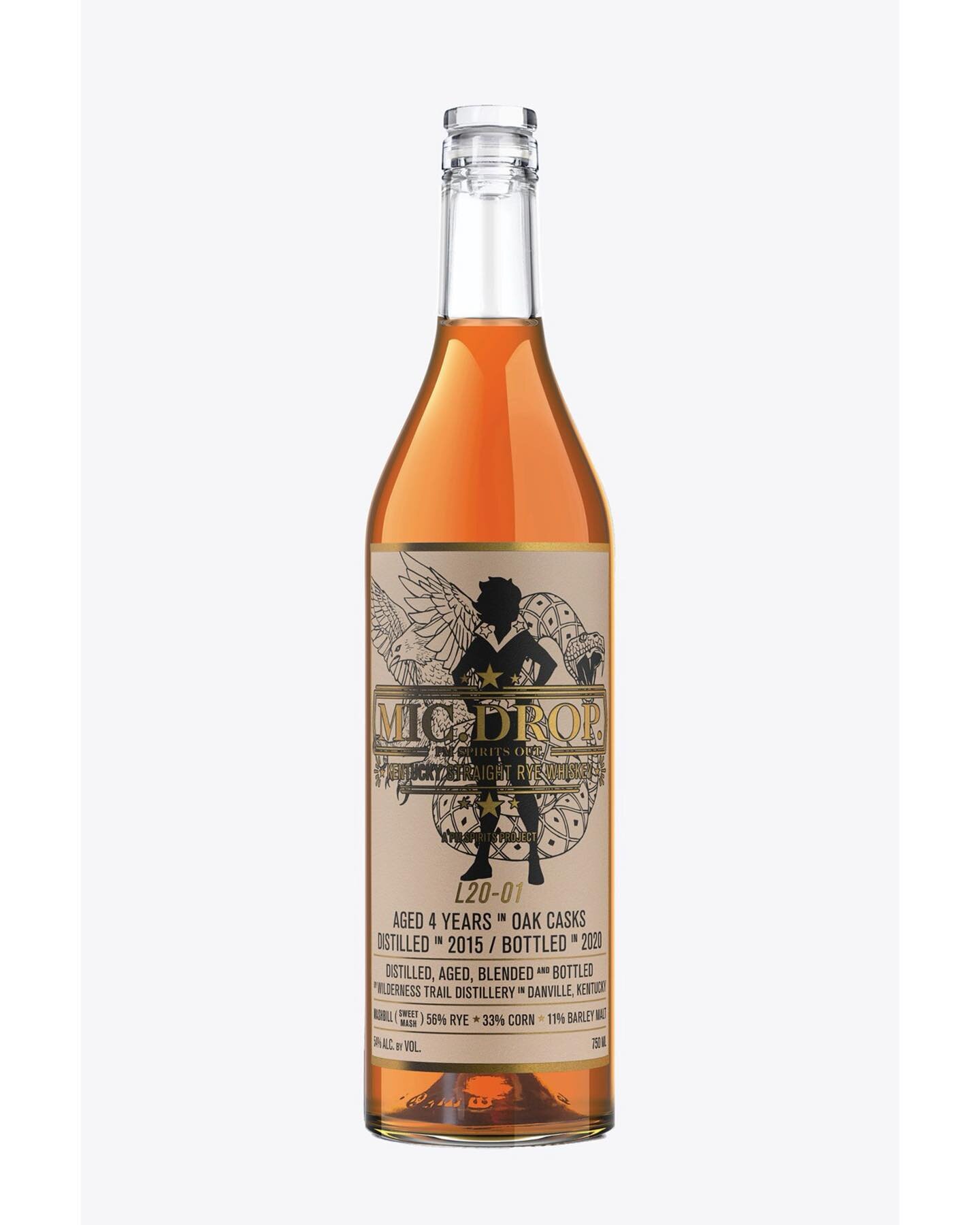
The latest Mic.Drop release from PM Spirits isn’t a bourbon but a rye, another young gun at 4 years old, sourced from Wilderness Trail Distillery in Danville, Kentucky. Mic.Drop L20-01, which was released late last year, is drawn from just 5 casks of rye distilled in 2015 and bottled in 2020, made from a mash of 56% rye, 33% corn, and 11% barley malt. This is purportedly the first time Wilderness Trail has ever sold barrels of aged whiskey to anyone instead of bottling it themselves.

Well, let’s try it out.

Hearty on the nose, the whiskey has the classic punch of rye, all spice and pepper and dried fruits, impregnated with cedar wood and notes of dill. The palate is quite sweet but also impressively spiced, the notes of green herbs and fresh-cut cedar wood punching with some force. Then comes more of the fruit: Apple fritters in sweet cream. A splash of water does some good, tempering the heat and bringing out more of the barrel influence, including a gentle chocolate note that emerges on the finish. Hints of vanilla and brown sugar calm some of the unruly rye spice notes up top, letting the young but expressive rye do its thing with more of a sense of balance.

In the final analysis, it’s really fun stuff. Tough to justify at nearly $100 a bottle, though, but I presume you can convince yourself through whatever logic you need.

108 proof.

A-

https/wwwdrinkhackercom/2021/05/07/review-mic-drop-rye-l20-01-4-years-old

The 25 Best Bourbons of the 21st Century (So Far)

Best of, Mic.Drop., PM SpiritsNicolas Palazzi

Bourbons have become increasingly collectible. Here are the ones you need to stash away.

There’s much to love about the world’s great Japanese, Scotch and Irish whiskey distilleries. But when it comes to innovation, the wily bourbon producers in the United States have been leading the way for years. In Kentucky and beyond, purveyors of America’s native spirit have refused to let the excellence of their existing products stand in the way of coming up with new ones. And over the last decade and a half, a plenitude of incredible new whiskey with a mash bill of at least 51 percent corn and aged in charred new oak barrels—the house rules for a whiskey to be called a bourbon—has come to market, some from brand-new producers, others new expressions from venerated houses. Fortunately, we’ve got you covered. Here are 25 of the best bourbon releases of the last 20 years.

Mic.Drop.

A delicious blend of 20 different casks of eight-year-old whiskey that offers multifarious flavors highlighted by maple syrup, coconut, cloves, and dark fruit. Mic.Drop. came out of nowhere in 2017 and now resides on the back bars of some of the country’s most prestigious drinking establishments. It’s easy to spot, too, with an eye-catching label designed by comic book artist Chris Batista. The follow up, Mic.Drop.2, was released in 2018 —140 bottles at $450 a pop.

https://robbreport.com/food-drink/spirits/best-bourbons-21st-century-2817790/

WhiskyCast reviewed - Mic Drop Rye, 93 pts

Mic.Drop., reviewNicolas Palazzi
MicDrop_WCast.jpg

MIC DROP RYE L20-01

Country: USA
Region: Kentucky
Type: Rye Whiskey
Bottler: PM Spirits
ABV: 54%
Score: 93 points

This 4-year-old Rye was distilled at Kentucky’s Wilderness Trail Distillery using sweet mash fermentation with a mashbill of 56% rye, 33% corn, and 11% malted barley. The nose has good notes of baking spices along with a touch of oak, toasted caramel, cocoa beans, black cherries, and molasses. The taste is very spicy with cinnamon bark, allspice, and clove, while a hint of maple syrup comes out as the spices start to fade along with black cherries, pipe tobacco, and oak. The finish is long with lingering spices and hints of maple syrup, anise, and oak. Excellent!  (December, 2020) 

https://whiskycast.com/ratings/mic-drop-rye-l20-01/