Best blanco tequila, and who actually makes it
We are not making tequila. I am not making tequila. PM Spirits is not making tequila. A lot of brands are not making tequila. It's being made for them by people who are really gifted and whose job it is to make your product.
Azul Force, at $34.99, is the bottle under $50. Punch picked it blind in 2025.
You choose out of four formulas
I have a hard time with the idea of slapping a label on something that has been pre made for you. You choose out of four formulas, and you go with it.
If I come at you and I say we did this and we worked on it, and then you asked me four more questions, and you realize there's three formulas. This distillery, they do three things. They sell it to a hundred people. You just have a white label on this. It doesn't feel right.
When I started in spirits, what was mind bending to me is when I was buying stuff from retail back in New York, when I moved to the US, most of the stuff that was sitting on shelves would be brands. There was few artisanal thing that I could think of, and you had no idea who made that.
What the label does not tell you
We think that the consumer, the person who cares about booze, will care about a product that expresses somebody's vision, a sense of place, that expresses the raw material that it's made from. And that can't translate if the stuff is covered in additives. If that color is not real, if there's a bunch of sugar added to it, if there's a bunch of flavoring, what's the point. These products, they already exist anyway.
It'd be easier if it was just some brand, and we put no info whatsoever on the label. And that's easy.
The amount of labels that I see that read or feel like a LinkedIn update, where you wanna shoot yourself when you read that. I don't want to do that. I'm not into that.
I don't want to have some marketing stuff that says it tastes like cloud on a breezy night.
Whatever is relevant to the flavor profile of that thing, whatever are the main parameters, should be on the damn thing. It's a self contained product where you should have everything that you need. If you're a retailer, you should not have to know anything about it. And if you tasted it and you look at the back, you knew more than most people.
On the very first batch, that thing was made with three ingredients. There was nothing added to it. And so we voiced it on the label.
What transparency costs
I ended up being told when agaves were harvested, when they were ripe. They were ripe at five years and seven months. That doesn't sound bad to me. But the back label says agave age six year. So now we got the stuff that's in a bottle, that stuff is labeled, that stuff is in boxes, but it can't leave Mexico.
The next step is that we need to remove the labels on everything, print new labels that says five year, and label everything.
We want to do the right thing. We don't want to cut corners. We want to be transparent. And it ends up, we're learning right now, that it just takes more time. And it takes more and more money.
The reason why we created that little niche in the artisanal spirits game here in the US is because we have always followed the hard path. We're the people who are tasked to import and wholesale the shit that's hard to sell. And we've been doing it for 15 years. I don't see why we should be trying to go down an easier route.
Why blanco, and no reposado or anejo
There's something about agave, there's something about tequila, where there's this elegance, the floral quality of the aroma, that can really be crushed super quick by the wood.
I would bet dinner that there are a lot of very overlooked, poorly aged tequilas out there. Because as soon as you start to have a pile of casks, if you're not tasting them every week or every two weeks, the stuff is going to suck pretty quickly.
I would like to do that, but I don't think it's wise. The reason is that I really want to be able to bottle something that I think is at its peak. If we were starting to do repo or anejo, I need to be there every month to go and taste, because I don't think you can do that from a distance.
We tend to think from a tequila standpoint that a distillery can make amazing blanco, an amazing reposado, an amazing anejo. I don't necessarily think it's true. An amazing repo or anejo is not necessarily a fantastic blanco that has been put in the barrel.
The distillate will be such that coming out of the still it might be less pretty, but it's made in a way where the distiller knows that after X years in a cask such and such thing will happen, and that product will become incredible. But initially it's not as pretty and elegant and appealing as it could be.
I think that some distilleries could make amazing anejo but doesn't necessarily mean that their blanco is superior.
40 or 55
My team and I were discussing what should be the proof of this stuff. Whoever is going to buy things from us is enough of a grownup to add his own water.
At the same time, I understand the idea that 40% is a little more approachable. And also it might be cheaper. Since we couldn't decide what the proof should be, we decided to do both.
The 55, it's distilled at 55. The 40 is the 55 brought down to 40 alcohol. The 55 is just distilled. It's the distillation proof.
One oven at a time
Most people that we started to talk to asked us this question. They were like, how many bottles do you want? What's the quantity? And I had no clue about quantities.
So I looked at the process. And what felt logical to me was that the unit of production seemed to be the oven. One oven has a specific content, a specific weight of agave that it can fit depending on the size of the oven.
We started to do that, the single oven type stuff, not to be fancy, not to create a category that doesn't exist. You want to do something, you look at what is the logical unit as far as quantity, and you look at if you can afford it.
Only 30 tons of agave. The cooking is 20 hours under heat, and then an additional 20 hours where the agave is rested. The agave cogollo is removed, so the bitterness is gone. Then the agaves are shredded.
The yeast is a proprietary yeast that the distillery is using. Fermentation time is something that we played around with a little bit, understanding that the speed and duration of fermentation is something that will impact tremendously the flavor profile of this stuff.
Right now fermentation is 72 hours. And then there's an additional 48 hours where the stuff is resting.
You do an oven and depending on the proof of the stuff, you have anywhere between four and 6,000 bottles.
We would like to do two ovens a year. On paper, two batches a year. In reality it probably is 1.3 batches a year, and they usually land at the worst possible time that you can think of.
The people who make it
This entire game is a people thing. It's a network thing. You want to be working with like minded individuals.
That distillery 1468 is owned by two women. We started with them in 2020.
It makes a lot of sense to shed the light on that distillery and the people making the juice.
He was the person that I initially was introduced to via Jose Luis. He was the owner of Grupo Tequilero Mexico. He was the person who I started to interact with and learn from when it comes to tequila. He is the person who was heading over to Mexico for our first batch and the trials that we did. He unexpectedly passed away after a heart surgery that didn't go too well at the beginning of 2022, and we ended up releasing our second batch only a few months after he had passed. Now his daughter Esmeralda is running the business.
So we wanted to pay homage to the guy.
His name, Juan Antonio, is on the label.
How we decide what to put our name on
Never had a plan. In 15 years we still don't have a plan.
Whatever booze we're involved with, we want it to click, we want to have a personality. I want that stuff to talk to me. I want my brain for some reason be like, oh shit, this is cool.
The second aspect is understanding how that stuff's made, understanding whether corners are cut or not, because we're not interested in selling stuff that's been manufactured.
Over the years we added a third tenet, which is not only should the stuff talk to the brain, have a sense of place and be additive free. But it also should be made by good people, people you want to work with, good humans.
There is only one way that you can possibly sell a product that no one knows about, that nobody needs, that is not a brand that anybody has heard about. It needs to be good.
Words that stopped meaning anything
A lot of people using the word curation. It's like small batch nowadays, it doesn't mean anything anymore.
The goal is not to grow this PM Tequila, which it's not even a brand. There's no brand name if you think about it. The goal is to use this as a business card. It's one of many business cards that says, this is what we believe in, and this is what we're about.
People tend to drink less. When they drink, they want to make it count. They're not going to drink shit.
The agave spirits PM imports
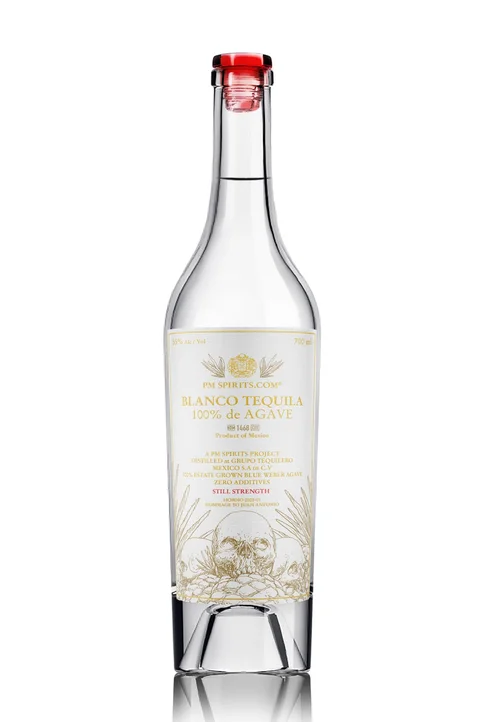
PM Spirits Blanco Tequila
NOM 1468, one oven at a time, no additives. Blue Weber agave at four to six years, around 35 brix. 700ml at 40%, and a still strength bottling at 55%.
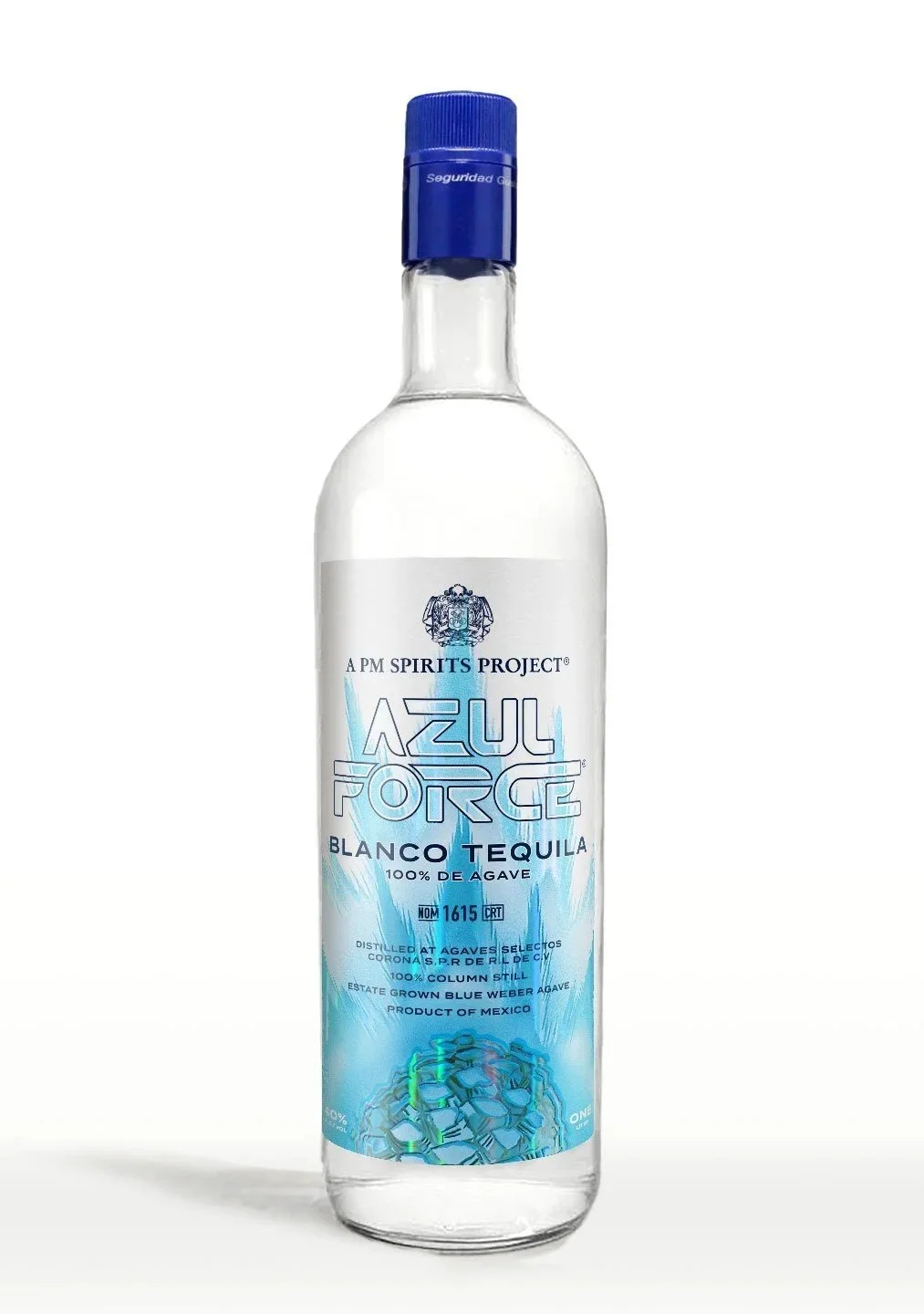
Azul Force Blanco
Azul Force exists because we were looking for a blanco tequila priced for cocktails, made to our exact specifications.
Agaves Selectos Corona, NOM 1615, in Tonaya, southwest of Guadalajara. Estate grown Blue Weber at around six years and 24 brix, cooked in autoclave. No horno and no diffuser. Wild fermented on ambient yeast for three to seven days, distilled on a 30 plate column, proofed with aquifer water treated by reverse osmosis.
1 litre at 40%. It sells for $34.99.
We've been very proud to import Cinco Sentidos as we're proud to import Neta.
Cinco Sentidos
This is a project by Jason Cox. Jason has an extremely good palate. He has a very clear vision of what he wants to achieve.
Cinco Sentidos is Jason touring Mexico to find extremely good and very different mezcals wherever they are made. Five regions, five expressions, five master distillers. The maestros are named, not blended away: Alberto Martinez, Atenogenes and Jose Garcia, Tio Tello Perez Ramos, Delfino Tobon Mejia, Tio Pedro Hernandez Arellanes, Amando Alvarez, and the bottlings of La Coleccion Mixteca. More at drink5sentidos.com.
You have casks that are in the jungle. You're literally walking and there's trees, and boom, you have casks that are stacked up just under a tree, and it's incredible. And the flavor profile of the things is really remarkable.
Neta
Neta is Niki Nakazawa and Max Rosenstock. Neta means truth, the real deal. More at netaspirits.com.
Neta is a study in terroir within one delimited community, a little like studying terroir by drinking Burgundies from appellations that sit close to each other.
Since 2012 they have worked with more than twenty small family producers in the southern valleys and hills of Miahuatlan, Oaxaca, many of them in the cooperative Grupo Productor Logoche. Logoche is a village of 110 people, and every release is bottled and labelled there by members of the community.
Every bottling is a single batch, meaning one oven or one harvest. Nothing is blended, homogenised or standardised to a set ABV, and everything is bottled at still strength, so the quantity of each release is whatever that oven yielded.
They publish the soil types of the plots the agave grew in: tierra colorada, tierra blanca, tierra negra, and cascajo, which is roughly 60 percent stone and the one maguey likes most because the roots can grow better.
Ixcateco
Through Jason we ended up importing Ixcateco, which originally was a papalome mezcal under the Cinco Sentidos brand. Jason very kindly helped the mezcalero develop his own brand.
The full agave range is on the PM Spirits national import portfolio.
What Punch found when they tasted it blind
In April 2025 the Punch editors blind tasted 21 blanco tequilas priced at $50 or less and picked five that were additive free. Azul Force was one of the five. Their summary of the five: complex, affordable and additive-free bottles for sipping and mixing.
Their panel called it mellow, with layers of complexity that feel exceptionally integrated, and described it as one of the better values on the market. They listed it at $32 for the litre at the time. It sells for $34.99 now.
Punch puts it at roughly 70 percent of all tequila containing undisclosed additives.
The full piece is The Best Blanco Tequilas Under $50, by Punch Staff, 23 April 2025.
Where to buy
For wholesale orders, email info@pmspirits.com or call 347 689 4414. Out of state wholesalers can go straight to our US Market Manager, Meryl Cocuzza, at meryl@pmspirits.com. All the ways to reach us are on the contact page.
The full list of what we bring into the United States is on the PM Spirits national import portfolio, chosen by Nicolas Palazzi.
https://punchdrink.com/articles/best-affordable-blanco-tequila-2025/