PM Spirits

Provider of Geeky Spirits

Tequila

vinepair: Tequila Isn’t the Only Spirit to Use Additives. Why Aren’t We Talking About the Others?

cognac, Rum, Whiskey, Vinepair, Nicolas Palazzi, TequilaNicolas Palazzi

WORDS:SUSANNAH SKIVER BARTON

Spirits additives have been in the news a lot lately, almost solely in relation to tequila. A clash between the independently run Additive Free Alliance and the Consejo Regulador del Tequila (CRT), tequila’s regulatory body, has chilled the growing movement for transparency in the category, and currently, per the CRT, no brands may legally discuss use or non-use of additives — which are legal — on their packaging or in their marketing. The stalemate seems likely to continue without a satisfying resolution unless and until the regulator and the industry can reach a compromise.

Meanwhile, many other spirits use additives, too, almost always without explicit disclosure: Cognac, rum, Scotch, and many more. Sometimes they employ caramel coloring to make a brand appear consistent from batch to batch, or to give the impression of greater cask influence. They may add sugar to sweeten a spirit or impart a rounder, more pleasing mouthfeel. Other additives can mimic the impact of prolonged oak aging, or layer on flavors to simulate more complexity.

The conflict in tequila has cast the issue of additives in black-and-white terms. For many spirits enthusiasts, additives are seen as deceptive, a way to cheat the natural processes at play in fermentation, distillation, and maturation. But that binary framework isn’t the only way of understanding the issue.

“Additives are not necessarily bad,” says Nicolas Palazzi, founder of PM Spirits, which imports tequila, rum, Cognac, and other spirits. “Yes, most of the time the product is subpar and therefore to make it more palatable … you need to put makeup on it.” But, he explains, there are other examples when using additives “makes a better product.” The key difference, Palazzi says, is “the way they’re used and why they’re used.”

Examining the legacy and tradition of additives across the spirits world can shed some light on the debate, even as it remains largely unsettled. The core issues at play — transparency and consumer choice — aren’t going away. And potential solutions could take a number of forms.

Whiskey’s History of Additives

Additive use in spirits was historically quite common. In the 19th-century United States, rectifiers added everything from prune juice to turpentine to their “whiskey” — often badly made or unaged spirit — to make it appear older or taste better. The practice directly led to the passage of the Bottled-in-Bond Act of 1897, which set the first standards for truth in labeling and made it clear to consumers that the whiskey in the bottle was unadulterated. Today, bourbon and other straight whiskeys are not allowed to contain any additives. Non-straight whiskeys and blends, including blends of straight whiskeys, may include up to 2.5 percent allowed coloring and flavoring materials without disclosure.

These are settled questions of law, and for the most part, whiskey drinkers aren’t clamoring for more information from brands — although there was a period, circa 2014–2015, when added flavoring in Templeton Rye became a flashpoint for what was then a new conversation about transparency in whiskey. A commentator named Steve Ury wrote a blog post at the time digging into whether ryes that did not include a “straight” designation might include added flavor. The exercise is still valid a decade, and many dozens of other brands, later, but doesn’t seem to stir up much conversation currently.

The additive that many drinkers do want to know about is caramel coloring, which is widely permitted outside straight American whiskey, including in heavily regulated categories like Scotch. It’s almost a guarantee that every blended Scotch, Irish, and Canadian whisky includes caramel for consistent color, as do many single malts and premium offerings, but there’s no requirement for disclosure. Still, some brands now tout “no added color” as part of their labeling and marketing — often alongside “non-chill filtered,” a Bat Signal for whiskey connoisseurs who believe the common practice has a negative impact on a whiskey’s flavor.

The Wide World of Rum Additives

Rum can contain caramel coloring, too, and often many other additives, though it is not a total free-for-all everywhere. Several rums are made under the rules of an established geographical indication (GI), including Jamaican, Cuban, and Demerara rums, as well as rhum agricole. GI-regulated rums typically eschew most additives, with the exceptions of caramel coloring — which is broadly permitted — and sugar, which several GIs allow. A major exception is the GI for Venezuelan rum, which allows “caramel, fresh or dry fruit macerations, bark, maceration of oak chips, and other approved substances.”

“If a brand puts that level of transparency and disclosure out there and the enthusiasts like it, they’re going to tell their friends. [They may be] half a percentage of your business, but they’re the ones talking to bartenders and bar managers.”

Beyond GI regulations, rum producers only have to work within the constraints of their permitting authority and those of the places they export to, which broadly means additives of all kinds may be used. Sugar is perhaps most common, not only because there’s historical precedent for it in many rum traditions, but because it’s widely favored by consumer palates.

“They’ve been [adding sugar] for hundreds of years,” says Matt Pietrek, rum expert and author of several books, including “Modern Caribbean Rum.” “Not in any attempt to deceive people; it’s more like, this tastes good and people like it.”

Palazzi agrees. “Most of the rums that people like are sweet, because they’re sweetened,” he says. “A lot of people feel that if the rum is dry there’s something wrong with it.”

Though Pietrek notes that he prefers dry, additive-free rums, he’s in favor of letting each producer make the rum they want. And he’d love to see producers across the rum world adopt some kind of transparency measure, like nutritional labeling, to give consumers more information about what’s in the spirit.

“Consumers can vote with their dollars,” he says, pointing out how Planteray includes a host of detailed information on the label, including how much dosage (added sugar) it includes. “Great! Literally any producer can do this.”

A Legacy in Cognac

For Cognac, in addition to caramel coloring, there’s a long tradition of adding both sugar and a substance called boisé, sometimes described as oak extract. All three additives may be aged before being blended with the spirit, though they aren’t necessarily. The use of boisé dates back to at least the 19th century and is rooted in what Amy Pasquet, one half of the husband-and-wife team at Cognac Pasquet, describes as a “waste-not, want-not” mentality. After distilling the spirit, wood chips left over from coopering were put into the still with water, their tannins serving to strip the interior of gunk. That liquid, rich with woody flavors, was then used to proof down the aged Cognac.

“Instead of saying we don’t add anything, we say everything is natural. Whiskey people really want that on the label.”

Nowadays, most boisé is produced commercially rather than in-house, and it’s likely widely employed in the leading houses. Many experts say boisé is not just an imitation of maturation. Ury, who shifted his attention from whiskey to brandy many years ago and now runs the Facebook group Serious Brandy, notes that it “may well be responsible for a lot of the rancio notes that people favor in Cognac.”

Although there are several independent, small Cognac houses — like Pasquet — that don’t use boisé or other additives, the substance’s longstanding legacy is respected by many connoisseurs like Ury. “It’s not as if [brands using boisé] are scam artists or something — it’s just a different way of doing things,” he says.

The rise in openly additive-free Cognac is relatively recent, spurred by whiskey enthusiasts migrating their attention to French brandy. Though it once made its own boisé, Pasquet stopped using additives in 2011; labels now state that the Cognac is hand-bottled, non-chill filtered, non-dosed, and natural color. “Instead of saying we don’t add anything, we say everything is natural,” Pasquet explains, noting that the brand’s German importer encouraged the labeling disclosure. “Whiskey people really want that on the label.”

Pasquet and its ilk represent a tiny fraction of overall Cognac volumes, but consumers’ desire for more information has penetrated even the big houses. A cohort of industry players that includes the likes of Hennessy, Rémy Martin, and Martell have agreed to voluntarily disclose ingredients, excluding boisé, on their labels or via QR code going forward. (VinePair reached out to the Bureau National Interprofessionnel du Cognac, the industry’s trade group, for clarification on why boisé is not included but has not received a response.)

How Many People Really Care, Though?

In spite of the furor of the additive debate among spirits enthusiasts, the issue isn’t even on the radar for the vast majority of consumers. “The people who really care are going to look for transparency and how the product is made and whether there are additives,” says Palazzi. “But there’s a lot of people who couldn’t care less.”

The average Hennessy VS drinker isn’t checking the label to see if there’s added sugar. Captain Morgan fans, if they stop to think about it, would likely accept without hesitation that the rum is full of flavoring. Only the hobbyists, those who self-identify as geeks, are concerned about whether their whiskey or brandy or rum has caramel coloring.

But although this group is a small minority, it’s often quite vocal — and usually willing to spend more on a bottle than the casual drinker. To a brand looking to cultivate that kind of engaged customer, playing up additive-free status can be a savvy marketing move.

“If a brand puts that level of transparency and disclosure out there and the enthusiasts like it, they’re going to tell their friends,” Pietrek says. “[They may be] half a percentage of your business, but they’re the ones talking to bartenders and bar managers. If you give them what they want, they will be your de facto brand ambassadors.”

And eventually, the movement that starts among the geeks can ripple outward. “Twenty-five years ago, no one cared about caramel in Scotch — that wasn’t a thing,” Ury says. Then enthusiasts started questioning the practice. “It was consumer-driven and you started seeing bottles saying ‘no coloring added,’” he says.

So even though the issue is moot for the majority of consumers, spirits brands still have to address it if they care about their most engaged fans. The conversation ultimately boils down to the broader issue of transparency, which has driven much of the consumer conversation in food and drink in the past few decades. People want to know what they’re putting in their bodies, and when brands don’t disclose that, mistrust can grow.

Piecemeal efforts from individual brands can be a workable approach, if they’re allowed to share information openly — something every category can currently do except for tequila. Potentially more effective are industry-wide moves like the one taking shape in Cognac. But the biggest game-changer would be mandated reporting from regulatory authorities like the Alcohol and Tobacco Tax and Trade Bureau (TTB).

The agency is currently considering a proposal to add certain nutrition facts to alcoholic beverages, similar to those found on food, including major allergens and calories per serving. But it stops short of requiring an actual ingredients list, and any public rollout is likely years away, if it ever occurs at all. For now, consumers looking for full transparency about a given spirit are largely at the mercy of individual brands. Those that talk openly about ingredients like additives serve as an example to others.

“I would love to see more transparency in Cognac,” Pasquet says. “We work for that day and night.”

https://vinepair.com/articles/examining-additives-in-spirits/
Best Blanco Tequila: Why We Only Make Blanco

agave, Best of, PUNCH Drink, PM Spirits, TequilaNicolas Palazzi

Best blanco tequila, and who actually makes it

We are not making tequila. I am not making tequila. PM Spirits is not making tequila. A lot of brands are not making tequila. It's being made for them by people who are really gifted and whose job it is to make your product.

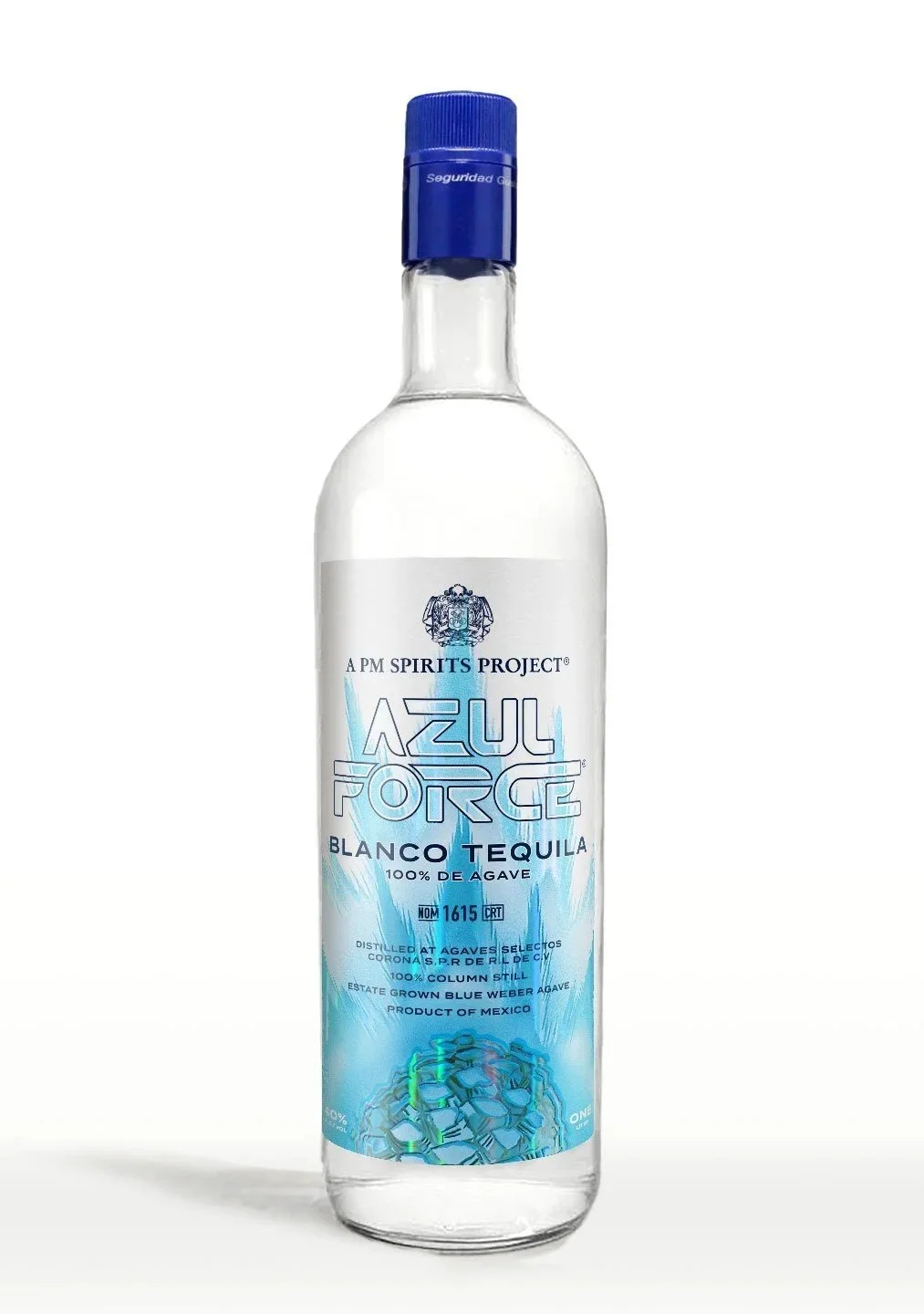
Azul Force, at $34.99, is the bottle under $50. Punch picked it blind in 2025.

You choose out of four formulas

I have a hard time with the idea of slapping a label on something that has been pre made for you. You choose out of four formulas, and you go with it.

If I come at you and I say we did this and we worked on it, and then you asked me four more questions, and you realize there's three formulas. This distillery, they do three things. They sell it to a hundred people. You just have a white label on this. It doesn't feel right.

When I started in spirits, what was mind bending to me is when I was buying stuff from retail back in New York, when I moved to the US, most of the stuff that was sitting on shelves would be brands. There was few artisanal thing that I could think of, and you had no idea who made that.

What the label does not tell you

We think that the consumer, the person who cares about booze, will care about a product that expresses somebody's vision, a sense of place, that expresses the raw material that it's made from. And that can't translate if the stuff is covered in additives. If that color is not real, if there's a bunch of sugar added to it, if there's a bunch of flavoring, what's the point. These products, they already exist anyway.

It'd be easier if it was just some brand, and we put no info whatsoever on the label. And that's easy.

The amount of labels that I see that read or feel like a LinkedIn update, where you wanna shoot yourself when you read that. I don't want to do that. I'm not into that.

I don't want to have some marketing stuff that says it tastes like cloud on a breezy night.

Whatever is relevant to the flavor profile of that thing, whatever are the main parameters, should be on the damn thing. It's a self contained product where you should have everything that you need. If you're a retailer, you should not have to know anything about it. And if you tasted it and you look at the back, you knew more than most people.

On the very first batch, that thing was made with three ingredients. There was nothing added to it. And so we voiced it on the label.

What transparency costs

I ended up being told when agaves were harvested, when they were ripe. They were ripe at five years and seven months. That doesn't sound bad to me. But the back label says agave age six year. So now we got the stuff that's in a bottle, that stuff is labeled, that stuff is in boxes, but it can't leave Mexico.

The next step is that we need to remove the labels on everything, print new labels that says five year, and label everything.

We want to do the right thing. We don't want to cut corners. We want to be transparent. And it ends up, we're learning right now, that it just takes more time. And it takes more and more money.

The reason why we created that little niche in the artisanal spirits game here in the US is because we have always followed the hard path. We're the people who are tasked to import and wholesale the shit that's hard to sell. And we've been doing it for 15 years. I don't see why we should be trying to go down an easier route.

Why blanco, and no reposado or anejo

There's something about agave, there's something about tequila, where there's this elegance, the floral quality of the aroma, that can really be crushed super quick by the wood.

I would bet dinner that there are a lot of very overlooked, poorly aged tequilas out there. Because as soon as you start to have a pile of casks, if you're not tasting them every week or every two weeks, the stuff is going to suck pretty quickly.

I would like to do that, but I don't think it's wise. The reason is that I really want to be able to bottle something that I think is at its peak. If we were starting to do repo or anejo, I need to be there every month to go and taste, because I don't think you can do that from a distance.

We tend to think from a tequila standpoint that a distillery can make amazing blanco, an amazing reposado, an amazing anejo. I don't necessarily think it's true. An amazing repo or anejo is not necessarily a fantastic blanco that has been put in the barrel.

The distillate will be such that coming out of the still it might be less pretty, but it's made in a way where the distiller knows that after X years in a cask such and such thing will happen, and that product will become incredible. But initially it's not as pretty and elegant and appealing as it could be.

I think that some distilleries could make amazing anejo but doesn't necessarily mean that their blanco is superior.

40 or 55

My team and I were discussing what should be the proof of this stuff. Whoever is going to buy things from us is enough of a grownup to add his own water.

At the same time, I understand the idea that 40% is a little more approachable. And also it might be cheaper. Since we couldn't decide what the proof should be, we decided to do both.

The 55, it's distilled at 55. The 40 is the 55 brought down to 40 alcohol. The 55 is just distilled. It's the distillation proof.

One oven at a time

Most people that we started to talk to asked us this question. They were like, how many bottles do you want? What's the quantity? And I had no clue about quantities.

So I looked at the process. And what felt logical to me was that the unit of production seemed to be the oven. One oven has a specific content, a specific weight of agave that it can fit depending on the size of the oven.

We started to do that, the single oven type stuff, not to be fancy, not to create a category that doesn't exist. You want to do something, you look at what is the logical unit as far as quantity, and you look at if you can afford it.

Only 30 tons of agave. The cooking is 20 hours under heat, and then an additional 20 hours where the agave is rested. The agave cogollo is removed, so the bitterness is gone. Then the agaves are shredded.

The yeast is a proprietary yeast that the distillery is using. Fermentation time is something that we played around with a little bit, understanding that the speed and duration of fermentation is something that will impact tremendously the flavor profile of this stuff.

Right now fermentation is 72 hours. And then there's an additional 48 hours where the stuff is resting.

You do an oven and depending on the proof of the stuff, you have anywhere between four and 6,000 bottles.

We would like to do two ovens a year. On paper, two batches a year. In reality it probably is 1.3 batches a year, and they usually land at the worst possible time that you can think of.

The people who make it

This entire game is a people thing. It's a network thing. You want to be working with like minded individuals.

That distillery 1468 is owned by two women. We started with them in 2020.

It makes a lot of sense to shed the light on that distillery and the people making the juice.

He was the person that I initially was introduced to via Jose Luis. He was the owner of Grupo Tequilero Mexico. He was the person who I started to interact with and learn from when it comes to tequila. He is the person who was heading over to Mexico for our first batch and the trials that we did. He unexpectedly passed away after a heart surgery that didn't go too well at the beginning of 2022, and we ended up releasing our second batch only a few months after he had passed. Now his daughter Esmeralda is running the business.

So we wanted to pay homage to the guy.

His name, Juan Antonio, is on the label.

How we decide what to put our name on

Never had a plan. In 15 years we still don't have a plan.

Whatever booze we're involved with, we want it to click, we want to have a personality. I want that stuff to talk to me. I want my brain for some reason be like, oh shit, this is cool.

The second aspect is understanding how that stuff's made, understanding whether corners are cut or not, because we're not interested in selling stuff that's been manufactured.

Over the years we added a third tenet, which is not only should the stuff talk to the brain, have a sense of place and be additive free. But it also should be made by good people, people you want to work with, good humans.

There is only one way that you can possibly sell a product that no one knows about, that nobody needs, that is not a brand that anybody has heard about. It needs to be good.

Words that stopped meaning anything

A lot of people using the word curation. It's like small batch nowadays, it doesn't mean anything anymore.

The goal is not to grow this PM Tequila, which it's not even a brand. There's no brand name if you think about it. The goal is to use this as a business card. It's one of many business cards that says, this is what we believe in, and this is what we're about.

People tend to drink less. When they drink, they want to make it count. They're not going to drink shit.

The agave spirits PM imports

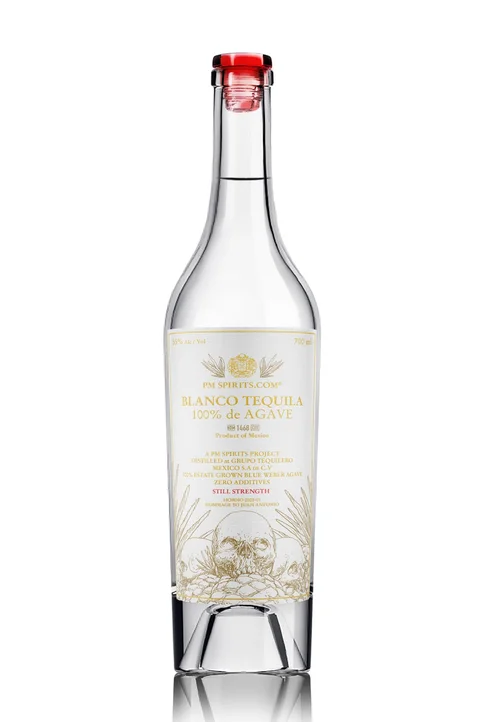
PM Spirits Blanco Tequila

NOM 1468, one oven at a time, no additives. Blue Weber agave at four to six years, around 35 brix. 700ml at 40%, and a still strength bottling at 55%.

PM Spirits Project Blanco Tequila, still strength 55% abv, 700ml, NOM 1468, red wax capsule and gold skull label

Azul Force Blanco

Azul Force exists because we were looking for a blanco tequila priced for cocktails, made to our exact specifications.

Agaves Selectos Corona, NOM 1615, in Tonaya, southwest of Guadalajara. Estate grown Blue Weber at around six years and 24 brix, cooked in autoclave. No horno and no diffuser. Wild fermented on ambient yeast for three to seven days, distilled on a 30 plate column, proofed with aquifer water treated by reverse osmosis.

1 litre at 40%. It sells for $34.99.

Azul Force Blanco Tequila, NOM 1615, 1 litre at 40%, additive free, imported by PM Spirits

We've been very proud to import Cinco Sentidos as we're proud to import Neta.

Cinco Sentidos

This is a project by Jason Cox. Jason has an extremely good palate. He has a very clear vision of what he wants to achieve.

Cinco Sentidos is Jason touring Mexico to find extremely good and very different mezcals wherever they are made. Five regions, five expressions, five master distillers. The maestros are named, not blended away: Alberto Martinez, Atenogenes and Jose Garcia, Tio Tello Perez Ramos, Delfino Tobon Mejia, Tio Pedro Hernandez Arellanes, Amando Alvarez, and the bottlings of La Coleccion Mixteca. More at drink5sentidos.com.

You have casks that are in the jungle. You're literally walking and there's trees, and boom, you have casks that are stacked up just under a tree, and it's incredible. And the flavor profile of the things is really remarkable.

Neta

Neta is Niki Nakazawa and Max Rosenstock. Neta means truth, the real deal. More at netaspirits.com.

Neta is a study in terroir within one delimited community, a little like studying terroir by drinking Burgundies from appellations that sit close to each other.

Since 2012 they have worked with more than twenty small family producers in the southern valleys and hills of Miahuatlan, Oaxaca, many of them in the cooperative Grupo Productor Logoche. Logoche is a village of 110 people, and every release is bottled and labelled there by members of the community.

Every bottling is a single batch, meaning one oven or one harvest. Nothing is blended, homogenised or standardised to a set ABV, and everything is bottled at still strength, so the quantity of each release is whatever that oven yielded.

They publish the soil types of the plots the agave grew in: tierra colorada, tierra blanca, tierra negra, and cascajo, which is roughly 60 percent stone and the one maguey likes most because the roots can grow better.

Ixcateco

Through Jason we ended up importing Ixcateco, which originally was a papalome mezcal under the Cinco Sentidos brand. Jason very kindly helped the mezcalero develop his own brand.

The full agave range is on the PM Spirits national import portfolio.

What Punch found when they tasted it blind

In April 2025 the Punch editors blind tasted 21 blanco tequilas priced at $50 or less and picked five that were additive free. Azul Force was one of the five. Their summary of the five: complex, affordable and additive-free bottles for sipping and mixing.

Their panel called it mellow, with layers of complexity that feel exceptionally integrated, and described it as one of the better values on the market. They listed it at $32 for the litre at the time. It sells for $34.99 now.

Punch puts it at roughly 70 percent of all tequila containing undisclosed additives.

The full piece is The Best Blanco Tequilas Under $50, by Punch Staff, 23 April 2025.

Where to buy

For wholesale orders, email info@pmspirits.com or call 347 689 4414. Out of state wholesalers can go straight to our US Market Manager, Meryl Cocuzza, at meryl@pmspirits.com. All the ways to reach us are on the contact page.

The full list of what we bring into the United States is on the PM Spirits national import portfolio, chosen by Nicolas Palazzi.

https://punchdrink.com/articles/best-affordable-blanco-tequila-2025/

The Agave Social Club: PM Spirits and Nicolas Palazzi

agave, PM Spirits, Tequila, Nicolas PalazziNicolas Palazzi
PM Spirits and Nicolas Palazzi
The Agave Social Club

I speak with PM Spirits founder Nicolas Palazzi about his journey into bringing incredible spirits to the market. We discuss and taste their super small batch PM Spirits Tequila Blanco as well as talk about some of the other brands they are working with. To learn more about PM Spirits, you can go to https://www.pmspirits.com

https://theagavesocialclub.buzzsprout.com/1271420/13799662-pm-spirits-and-nicolas-palazzi