PM Spirits

Provider of Geeky Spirits

Tequila,calvados

vinepair: Tequila Isn’t the Only Spirit to Use Additives. Why Aren’t We Talking About the Others?

cognac, Rum, Whiskey, Vinepair, Nicolas Palazzi, TequilaNicolas Palazzi

WORDS:SUSANNAH SKIVER BARTON

Spirits additives have been in the news a lot lately, almost solely in relation to tequila. A clash between the independently run Additive Free Alliance and the Consejo Regulador del Tequila (CRT), tequila’s regulatory body, has chilled the growing movement for transparency in the category, and currently, per the CRT, no brands may legally discuss use or non-use of additives — which are legal — on their packaging or in their marketing. The stalemate seems likely to continue without a satisfying resolution unless and until the regulator and the industry can reach a compromise.

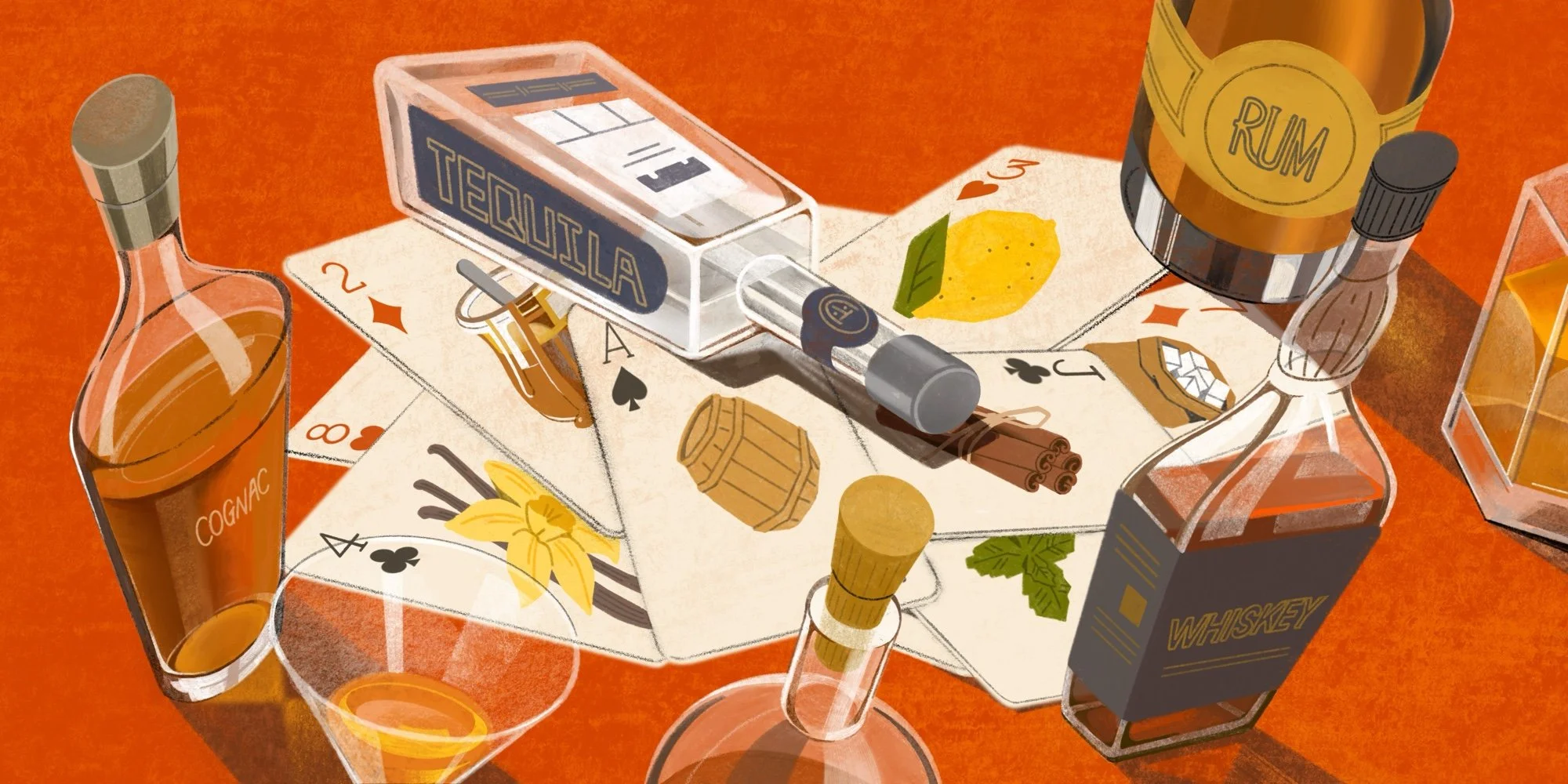
Meanwhile, many other spirits use additives, too, almost always without explicit disclosure: Cognac, rum, Scotch, and many more. Sometimes they employ caramel coloring to make a brand appear consistent from batch to batch, or to give the impression of greater cask influence. They may add sugar to sweeten a spirit or impart a rounder, more pleasing mouthfeel. Other additives can mimic the impact of prolonged oak aging, or layer on flavors to simulate more complexity.

The conflict in tequila has cast the issue of additives in black-and-white terms. For many spirits enthusiasts, additives are seen as deceptive, a way to cheat the natural processes at play in fermentation, distillation, and maturation. But that binary framework isn’t the only way of understanding the issue.

“Additives are not necessarily bad,” says Nicolas Palazzi, founder of PM Spirits, which imports tequila, rum, Cognac, and other spirits. “Yes, most of the time the product is subpar and therefore to make it more palatable … you need to put makeup on it.” But, he explains, there are other examples when using additives “makes a better product.” The key difference, Palazzi says, is “the way they’re used and why they’re used.”

Examining the legacy and tradition of additives across the spirits world can shed some light on the debate, even as it remains largely unsettled. The core issues at play — transparency and consumer choice — aren’t going away. And potential solutions could take a number of forms.

Whiskey’s History of Additives

Additive use in spirits was historically quite common. In the 19th-century United States, rectifiers added everything from prune juice to turpentine to their “whiskey” — often badly made or unaged spirit — to make it appear older or taste better. The practice directly led to the passage of the Bottled-in-Bond Act of 1897, which set the first standards for truth in labeling and made it clear to consumers that the whiskey in the bottle was unadulterated. Today, bourbon and other straight whiskeys are not allowed to contain any additives. Non-straight whiskeys and blends, including blends of straight whiskeys, may include up to 2.5 percent allowed coloring and flavoring materials without disclosure.

These are settled questions of law, and for the most part, whiskey drinkers aren’t clamoring for more information from brands — although there was a period, circa 2014–2015, when added flavoring in Templeton Rye became a flashpoint for what was then a new conversation about transparency in whiskey. A commentator named Steve Ury wrote a blog post at the time digging into whether ryes that did not include a “straight” designation might include added flavor. The exercise is still valid a decade, and many dozens of other brands, later, but doesn’t seem to stir up much conversation currently.

The additive that many drinkers do want to know about is caramel coloring, which is widely permitted outside straight American whiskey, including in heavily regulated categories like Scotch. It’s almost a guarantee that every blended Scotch, Irish, and Canadian whisky includes caramel for consistent color, as do many single malts and premium offerings, but there’s no requirement for disclosure. Still, some brands now tout “no added color” as part of their labeling and marketing — often alongside “non-chill filtered,” a Bat Signal for whiskey connoisseurs who believe the common practice has a negative impact on a whiskey’s flavor.

The Wide World of Rum Additives

Rum can contain caramel coloring, too, and often many other additives, though it is not a total free-for-all everywhere. Several rums are made under the rules of an established geographical indication (GI), including Jamaican, Cuban, and Demerara rums, as well as rhum agricole. GI-regulated rums typically eschew most additives, with the exceptions of caramel coloring — which is broadly permitted — and sugar, which several GIs allow. A major exception is the GI for Venezuelan rum, which allows “caramel, fresh or dry fruit macerations, bark, maceration of oak chips, and other approved substances.”

“If a brand puts that level of transparency and disclosure out there and the enthusiasts like it, they’re going to tell their friends. [They may be] half a percentage of your business, but they’re the ones talking to bartenders and bar managers.”

Beyond GI regulations, rum producers only have to work within the constraints of their permitting authority and those of the places they export to, which broadly means additives of all kinds may be used. Sugar is perhaps most common, not only because there’s historical precedent for it in many rum traditions, but because it’s widely favored by consumer palates.

“They’ve been [adding sugar] for hundreds of years,” says Matt Pietrek, rum expert and author of several books, including “Modern Caribbean Rum.” “Not in any attempt to deceive people; it’s more like, this tastes good and people like it.”

Palazzi agrees. “Most of the rums that people like are sweet, because they’re sweetened,” he says. “A lot of people feel that if the rum is dry there’s something wrong with it.”

Though Pietrek notes that he prefers dry, additive-free rums, he’s in favor of letting each producer make the rum they want. And he’d love to see producers across the rum world adopt some kind of transparency measure, like nutritional labeling, to give consumers more information about what’s in the spirit.

“Consumers can vote with their dollars,” he says, pointing out how Planteray includes a host of detailed information on the label, including how much dosage (added sugar) it includes. “Great! Literally any producer can do this.”

A Legacy in Cognac

For Cognac, in addition to caramel coloring, there’s a long tradition of adding both sugar and a substance called boisé, sometimes described as oak extract. All three additives may be aged before being blended with the spirit, though they aren’t necessarily. The use of boisé dates back to at least the 19th century and is rooted in what Amy Pasquet, one half of the husband-and-wife team at Cognac Pasquet, describes as a “waste-not, want-not” mentality. After distilling the spirit, wood chips left over from coopering were put into the still with water, their tannins serving to strip the interior of gunk. That liquid, rich with woody flavors, was then used to proof down the aged Cognac.

“Instead of saying we don’t add anything, we say everything is natural. Whiskey people really want that on the label.”

Nowadays, most boisé is produced commercially rather than in-house, and it’s likely widely employed in the leading houses. Many experts say boisé is not just an imitation of maturation. Ury, who shifted his attention from whiskey to brandy many years ago and now runs the Facebook group Serious Brandy, notes that it “may well be responsible for a lot of the rancio notes that people favor in Cognac.”

Although there are several independent, small Cognac houses — like Pasquet — that don’t use boisé or other additives, the substance’s longstanding legacy is respected by many connoisseurs like Ury. “It’s not as if [brands using boisé] are scam artists or something — it’s just a different way of doing things,” he says.

The rise in openly additive-free Cognac is relatively recent, spurred by whiskey enthusiasts migrating their attention to French brandy. Though it once made its own boisé, Pasquet stopped using additives in 2011; labels now state that the Cognac is hand-bottled, non-chill filtered, non-dosed, and natural color. “Instead of saying we don’t add anything, we say everything is natural,” Pasquet explains, noting that the brand’s German importer encouraged the labeling disclosure. “Whiskey people really want that on the label.”

Pasquet and its ilk represent a tiny fraction of overall Cognac volumes, but consumers’ desire for more information has penetrated even the big houses. A cohort of industry players that includes the likes of Hennessy, Rémy Martin, and Martell have agreed to voluntarily disclose ingredients, excluding boisé, on their labels or via QR code going forward. (VinePair reached out to the Bureau National Interprofessionnel du Cognac, the industry’s trade group, for clarification on why boisé is not included but has not received a response.)

How Many People Really Care, Though?

In spite of the furor of the additive debate among spirits enthusiasts, the issue isn’t even on the radar for the vast majority of consumers. “The people who really care are going to look for transparency and how the product is made and whether there are additives,” says Palazzi. “But there’s a lot of people who couldn’t care less.”

The average Hennessy VS drinker isn’t checking the label to see if there’s added sugar. Captain Morgan fans, if they stop to think about it, would likely accept without hesitation that the rum is full of flavoring. Only the hobbyists, those who self-identify as geeks, are concerned about whether their whiskey or brandy or rum has caramel coloring.

But although this group is a small minority, it’s often quite vocal — and usually willing to spend more on a bottle than the casual drinker. To a brand looking to cultivate that kind of engaged customer, playing up additive-free status can be a savvy marketing move.

“If a brand puts that level of transparency and disclosure out there and the enthusiasts like it, they’re going to tell their friends,” Pietrek says. “[They may be] half a percentage of your business, but they’re the ones talking to bartenders and bar managers. If you give them what they want, they will be your de facto brand ambassadors.”

And eventually, the movement that starts among the geeks can ripple outward. “Twenty-five years ago, no one cared about caramel in Scotch — that wasn’t a thing,” Ury says. Then enthusiasts started questioning the practice. “It was consumer-driven and you started seeing bottles saying ‘no coloring added,’” he says.

So even though the issue is moot for the majority of consumers, spirits brands still have to address it if they care about their most engaged fans. The conversation ultimately boils down to the broader issue of transparency, which has driven much of the consumer conversation in food and drink in the past few decades. People want to know what they’re putting in their bodies, and when brands don’t disclose that, mistrust can grow.

Piecemeal efforts from individual brands can be a workable approach, if they’re allowed to share information openly — something every category can currently do except for tequila. Potentially more effective are industry-wide moves like the one taking shape in Cognac. But the biggest game-changer would be mandated reporting from regulatory authorities like the Alcohol and Tobacco Tax and Trade Bureau (TTB).

The agency is currently considering a proposal to add certain nutrition facts to alcoholic beverages, similar to those found on food, including major allergens and calories per serving. But it stops short of requiring an actual ingredients list, and any public rollout is likely years away, if it ever occurs at all. For now, consumers looking for full transparency about a given spirit are largely at the mercy of individual brands. Those that talk openly about ingredients like additives serve as an example to others.

“I would love to see more transparency in Cognac,” Pasquet says. “We work for that day and night.”

https://vinepair.com/articles/examining-additives-in-spirits/
Best Blanco Tequila: Why We Only Make Blanco

agave, Best of, PUNCH Drink, PM Spirits, TequilaNicolas Palazzi

Best blanco tequila, and who actually makes it

We are not making tequila. I am not making tequila. PM Spirits is not making tequila. A lot of brands are not making tequila. It's being made for them by people who are really gifted and whose job it is to make your product.

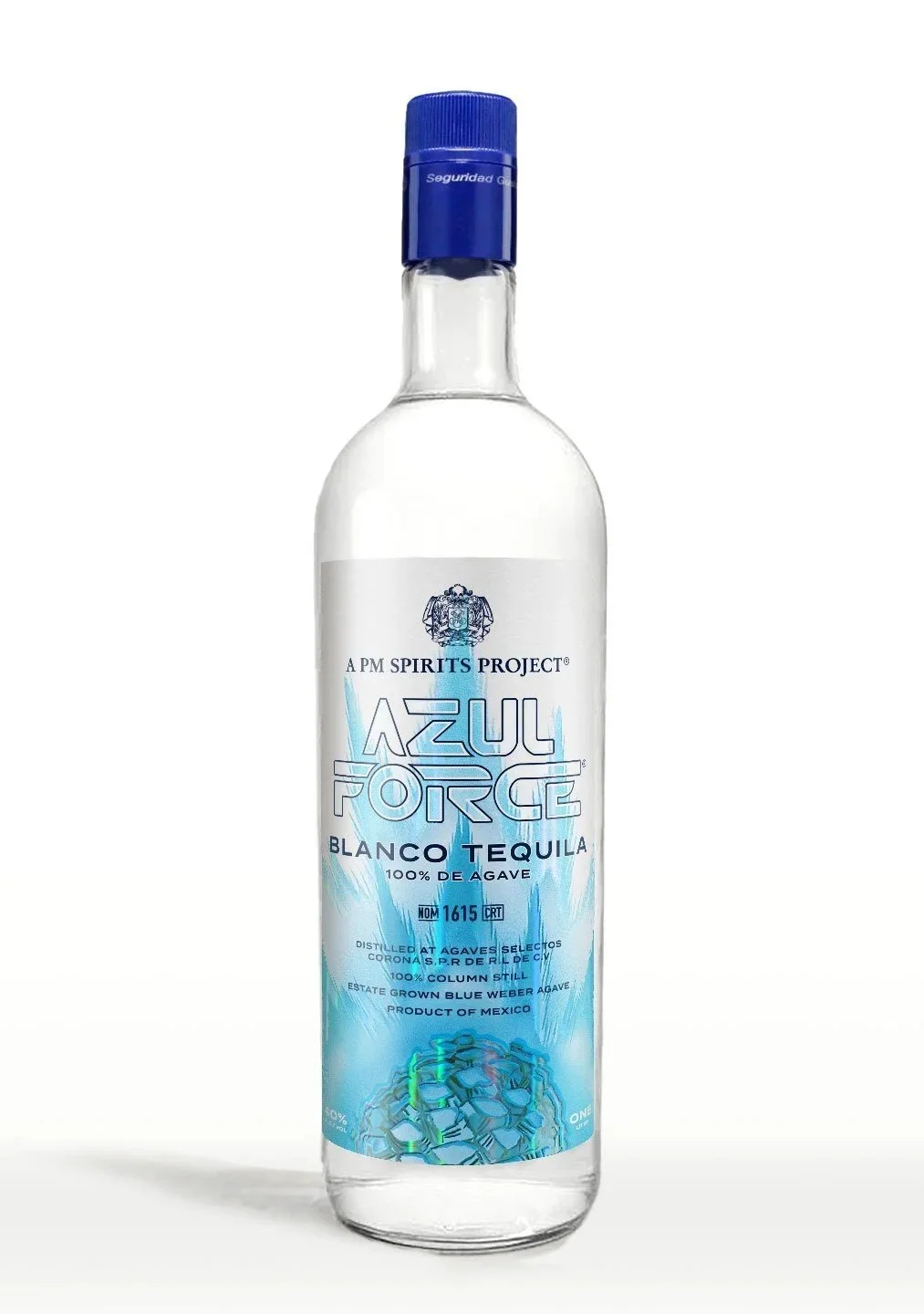
Azul Force, at $34.99, is the bottle under $50. Punch picked it blind in 2025.

You choose out of four formulas

I have a hard time with the idea of slapping a label on something that has been pre made for you. You choose out of four formulas, and you go with it.

If I come at you and I say we did this and we worked on it, and then you asked me four more questions, and you realize there's three formulas. This distillery, they do three things. They sell it to a hundred people. You just have a white label on this. It doesn't feel right.

When I started in spirits, what was mind bending to me is when I was buying stuff from retail back in New York, when I moved to the US, most of the stuff that was sitting on shelves would be brands. There was few artisanal thing that I could think of, and you had no idea who made that.

What the label does not tell you

We think that the consumer, the person who cares about booze, will care about a product that expresses somebody's vision, a sense of place, that expresses the raw material that it's made from. And that can't translate if the stuff is covered in additives. If that color is not real, if there's a bunch of sugar added to it, if there's a bunch of flavoring, what's the point. These products, they already exist anyway.

It'd be easier if it was just some brand, and we put no info whatsoever on the label. And that's easy.

The amount of labels that I see that read or feel like a LinkedIn update, where you wanna shoot yourself when you read that. I don't want to do that. I'm not into that.

I don't want to have some marketing stuff that says it tastes like cloud on a breezy night.

Whatever is relevant to the flavor profile of that thing, whatever are the main parameters, should be on the damn thing. It's a self contained product where you should have everything that you need. If you're a retailer, you should not have to know anything about it. And if you tasted it and you look at the back, you knew more than most people.

On the very first batch, that thing was made with three ingredients. There was nothing added to it. And so we voiced it on the label.

What transparency costs

I ended up being told when agaves were harvested, when they were ripe. They were ripe at five years and seven months. That doesn't sound bad to me. But the back label says agave age six year. So now we got the stuff that's in a bottle, that stuff is labeled, that stuff is in boxes, but it can't leave Mexico.

The next step is that we need to remove the labels on everything, print new labels that says five year, and label everything.

We want to do the right thing. We don't want to cut corners. We want to be transparent. And it ends up, we're learning right now, that it just takes more time. And it takes more and more money.

The reason why we created that little niche in the artisanal spirits game here in the US is because we have always followed the hard path. We're the people who are tasked to import and wholesale the shit that's hard to sell. And we've been doing it for 15 years. I don't see why we should be trying to go down an easier route.

Why blanco, and no reposado or anejo

There's something about agave, there's something about tequila, where there's this elegance, the floral quality of the aroma, that can really be crushed super quick by the wood.

I would bet dinner that there are a lot of very overlooked, poorly aged tequilas out there. Because as soon as you start to have a pile of casks, if you're not tasting them every week or every two weeks, the stuff is going to suck pretty quickly.

I would like to do that, but I don't think it's wise. The reason is that I really want to be able to bottle something that I think is at its peak. If we were starting to do repo or anejo, I need to be there every month to go and taste, because I don't think you can do that from a distance.

We tend to think from a tequila standpoint that a distillery can make amazing blanco, an amazing reposado, an amazing anejo. I don't necessarily think it's true. An amazing repo or anejo is not necessarily a fantastic blanco that has been put in the barrel.

The distillate will be such that coming out of the still it might be less pretty, but it's made in a way where the distiller knows that after X years in a cask such and such thing will happen, and that product will become incredible. But initially it's not as pretty and elegant and appealing as it could be.

I think that some distilleries could make amazing anejo but doesn't necessarily mean that their blanco is superior.

40 or 55

My team and I were discussing what should be the proof of this stuff. Whoever is going to buy things from us is enough of a grownup to add his own water.

At the same time, I understand the idea that 40% is a little more approachable. And also it might be cheaper. Since we couldn't decide what the proof should be, we decided to do both.

The 55, it's distilled at 55. The 40 is the 55 brought down to 40 alcohol. The 55 is just distilled. It's the distillation proof.

One oven at a time

Most people that we started to talk to asked us this question. They were like, how many bottles do you want? What's the quantity? And I had no clue about quantities.

So I looked at the process. And what felt logical to me was that the unit of production seemed to be the oven. One oven has a specific content, a specific weight of agave that it can fit depending on the size of the oven.

We started to do that, the single oven type stuff, not to be fancy, not to create a category that doesn't exist. You want to do something, you look at what is the logical unit as far as quantity, and you look at if you can afford it.

Only 30 tons of agave. The cooking is 20 hours under heat, and then an additional 20 hours where the agave is rested. The agave cogollo is removed, so the bitterness is gone. Then the agaves are shredded.

The yeast is a proprietary yeast that the distillery is using. Fermentation time is something that we played around with a little bit, understanding that the speed and duration of fermentation is something that will impact tremendously the flavor profile of this stuff.

Right now fermentation is 72 hours. And then there's an additional 48 hours where the stuff is resting.

You do an oven and depending on the proof of the stuff, you have anywhere between four and 6,000 bottles.

We would like to do two ovens a year. On paper, two batches a year. In reality it probably is 1.3 batches a year, and they usually land at the worst possible time that you can think of.

The people who make it

This entire game is a people thing. It's a network thing. You want to be working with like minded individuals.

That distillery 1468 is owned by two women. We started with them in 2020.

It makes a lot of sense to shed the light on that distillery and the people making the juice.

He was the person that I initially was introduced to via Jose Luis. He was the owner of Grupo Tequilero Mexico. He was the person who I started to interact with and learn from when it comes to tequila. He is the person who was heading over to Mexico for our first batch and the trials that we did. He unexpectedly passed away after a heart surgery that didn't go too well at the beginning of 2022, and we ended up releasing our second batch only a few months after he had passed. Now his daughter Esmeralda is running the business.

So we wanted to pay homage to the guy.

His name, Juan Antonio, is on the label.

How we decide what to put our name on

Never had a plan. In 15 years we still don't have a plan.

Whatever booze we're involved with, we want it to click, we want to have a personality. I want that stuff to talk to me. I want my brain for some reason be like, oh shit, this is cool.

The second aspect is understanding how that stuff's made, understanding whether corners are cut or not, because we're not interested in selling stuff that's been manufactured.

Over the years we added a third tenet, which is not only should the stuff talk to the brain, have a sense of place and be additive free. But it also should be made by good people, people you want to work with, good humans.

There is only one way that you can possibly sell a product that no one knows about, that nobody needs, that is not a brand that anybody has heard about. It needs to be good.

Words that stopped meaning anything

A lot of people using the word curation. It's like small batch nowadays, it doesn't mean anything anymore.

The goal is not to grow this PM Tequila, which it's not even a brand. There's no brand name if you think about it. The goal is to use this as a business card. It's one of many business cards that says, this is what we believe in, and this is what we're about.

People tend to drink less. When they drink, they want to make it count. They're not going to drink shit.

The agave spirits PM imports

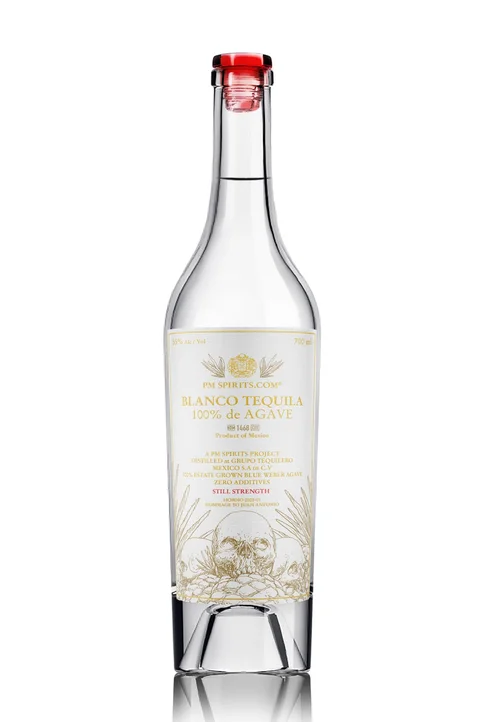
PM Spirits Blanco Tequila

NOM 1468, one oven at a time, no additives. Blue Weber agave at four to six years, around 35 brix. 700ml at 40%, and a still strength bottling at 55%.

PM Spirits Project Blanco Tequila, still strength 55% abv, 700ml, NOM 1468, red wax capsule and gold skull label

Azul Force Blanco

Azul Force exists because we were looking for a blanco tequila priced for cocktails, made to our exact specifications.

Agaves Selectos Corona, NOM 1615, in Tonaya, southwest of Guadalajara. Estate grown Blue Weber at around six years and 24 brix, cooked in autoclave. No horno and no diffuser. Wild fermented on ambient yeast for three to seven days, distilled on a 30 plate column, proofed with aquifer water treated by reverse osmosis.

1 litre at 40%. It sells for $34.99.

Azul Force Blanco Tequila, NOM 1615, 1 litre at 40%, additive free, imported by PM Spirits

We've been very proud to import Cinco Sentidos as we're proud to import Neta.

Cinco Sentidos

This is a project by Jason Cox. Jason has an extremely good palate. He has a very clear vision of what he wants to achieve.

Cinco Sentidos is Jason touring Mexico to find extremely good and very different mezcals wherever they are made. Five regions, five expressions, five master distillers. The maestros are named, not blended away: Alberto Martinez, Atenogenes and Jose Garcia, Tio Tello Perez Ramos, Delfino Tobon Mejia, Tio Pedro Hernandez Arellanes, Amando Alvarez, and the bottlings of La Coleccion Mixteca. More at drink5sentidos.com.

You have casks that are in the jungle. You're literally walking and there's trees, and boom, you have casks that are stacked up just under a tree, and it's incredible. And the flavor profile of the things is really remarkable.

Neta

Neta is Niki Nakazawa and Max Rosenstock. Neta means truth, the real deal. More at netaspirits.com.

Neta is a study in terroir within one delimited community, a little like studying terroir by drinking Burgundies from appellations that sit close to each other.

Since 2012 they have worked with more than twenty small family producers in the southern valleys and hills of Miahuatlan, Oaxaca, many of them in the cooperative Grupo Productor Logoche. Logoche is a village of 110 people, and every release is bottled and labelled there by members of the community.

Every bottling is a single batch, meaning one oven or one harvest. Nothing is blended, homogenised or standardised to a set ABV, and everything is bottled at still strength, so the quantity of each release is whatever that oven yielded.

They publish the soil types of the plots the agave grew in: tierra colorada, tierra blanca, tierra negra, and cascajo, which is roughly 60 percent stone and the one maguey likes most because the roots can grow better.

Ixcateco

Through Jason we ended up importing Ixcateco, which originally was a papalome mezcal under the Cinco Sentidos brand. Jason very kindly helped the mezcalero develop his own brand.

The full agave range is on the PM Spirits national import portfolio.

What Punch found when they tasted it blind

In April 2025 the Punch editors blind tasted 21 blanco tequilas priced at $50 or less and picked five that were additive free. Azul Force was one of the five. Their summary of the five: complex, affordable and additive-free bottles for sipping and mixing.

Their panel called it mellow, with layers of complexity that feel exceptionally integrated, and described it as one of the better values on the market. They listed it at $32 for the litre at the time. It sells for $34.99 now.

Punch puts it at roughly 70 percent of all tequila containing undisclosed additives.

The full piece is The Best Blanco Tequilas Under $50, by Punch Staff, 23 April 2025.

Where to buy

For wholesale orders, email info@pmspirits.com or call 347 689 4414. Out of state wholesalers can go straight to our US Market Manager, Meryl Cocuzza, at meryl@pmspirits.com. All the ways to reach us are on the contact page.

The full list of what we bring into the United States is on the PM Spirits national import portfolio, chosen by Nicolas Palazzi.

https://punchdrink.com/articles/best-affordable-blanco-tequila-2025/

BBC: 'Is it for a day or four years?' Tariff uncertainty spooks small businesses

destilados, Mezcal Mal Bien, Nicolas Palazzi, TequilaNicolas Palazzi

Donald Trump's talk of applying new tariffs to goods from America's biggest trade partners has sparked months of uncertainty for business owners.

On Saturday, the president made good on his threats, ordering a new 25% tax on shipments from Mexico and Canada and raising existing tariffs on goods from China by 10%.

But that has not stopped the questions.

"Is it for a day, is it a political flex or is it something that will last for four years?" asked Nicolas Palazzi, the founder of Brooklyn-based PM Spirits. He runs a 21-person business that imports and sells wine and spirits, about 20% of which come from Mexico.

Trump's orders set in motion threats that the president has discussed for months, striking at shipments from America's top three trade partners, which together account for more than 40% of the roughly $3tn goods the US imports each year.

Canadian oil and other "energy resources" will face a lower 10% rate. But otherwise, there will be no exceptions, the White House said.

Trump said the tariffs were intended to hold Canada and Mexico accountable for promises to address illegal immigration and drug trafficking.

The measures go into effect on 4 February and are to remain in place "until the crisis is alleviated," according to the orders.

If the plans were not a surprise, they still presented a potentially stunning blow to many businesses, especially for those in North America. The three countries have become tightly linked economically after decades of free trade under a treaty signed in the 1990s, known then as Nafta and updated and renamed under the Trump administration to USMCA.

The growth of mezcal in the US, brought in by businesses like Palazzi's, has been part of this shift.

Since 2003, consumption of tequila and mezcal has roughly tripled, increasing at a rate of more than 7% each year, according to Distilled Spirits Council, a trade group.

Overall since the 1990s, trade in spirits between the US and Mexico has surged by more than 4,000% percent, said the organisation, which issued a statement after the president's announcement warning that the tariffs would "significantly harm all three countries".

For months, Palazzi has been fielding nervous questions from his suppliers in Mexico, who are typically small, family owned businesses and may not survive if the tariffs are prolonged.

If it sticks, he said the 25% tax on the bottles of mezcal, tequila and rum he brings in will push up prices - and sales will drop.

"Definitely this is going to impact the business negatively. But can you really plan? No," he said. "Our strategy is roll-with-the-punches, wait and see and adapt to whatever craziness is going to unfold."

Economists say the hit from the tariffs could push the economies of Mexico and Canada into recession.

Ahead of the announcement, Dan Kelly, president of the Canadian Federation of Independent Businesses, described the looming tariffs from the US, and expected retaliation, as "existential" for many of his members.

"Look, we get that the government has got to respond in some fashion …. But at the same time we urge the government to use caution," he said, comparing tariffs on imports to chemotherapy: "It poisons your own people in order to try and fight the disease."

"It's going to have an effect everywhere," said Sophie Avernin, director of De Grandes Viñedos de Francia in Mexico, noting that many Americans own Mexican alcohol brands and Modelo beer is actually owned by a Belgian company.

Trump, who has embraced tariffs as a tool to address issues far removed from trade, has dismissed concerns about any collateral damage to the economy in the US.

But analysts have warned the measures will weigh on growth, raise prices and cost the economy jobs - roughly 286,000, according to estimates by the Tax Foundation, not including retaliation.

Those in the alcohol business said the industry had already been struggling to emerge from the shadow of the pandemic and its after-shocks, including inflation, which has prompted many Americans to cut back on dining out and drinking.

Smaller firms, who typically have less financial cushion and ability to swallow a sudden 25% jump in cost, will bear the brunt of the disruption.

"I'm pretty frustrated," said California-based importer Ben Scott, whose nine-person business Pueblo de Sabor brings in brands from Mexico such as Mal Bien and Lalocura.

"There's just a huge cost that's going to affect so many people in ways other than they're paying a couple bucks more for a cocktail, which doesn't sound like a tragedy."

Fred Sanchez has spent years pushing to expand his business, Bad Hombre Importing, a small California-based importer and distributor of Mexican agave-based spirits like Agua del Sol, and was recently working on deals in New York and Illinois.

But his potential partners started hesitating as Trump's tariff talk ramped up last year.

Now, instead of expanding, he is contemplating selling off his stock of liquor and possibly shutting down. He said he had little capacity to absorb the jump in costs and saw little scope for raising prices in the current economy.

"25% is just not something that we can realistically pass onto the consumer," he said.

Sanchez said he believed that Trump might be using tariffs as a negotiating tactic, and the tax could be short-lived. Still, for his business, damage is already done.

https://www.bbc.com/news/articles/c1kmp99431mo

Everyday Drinking: Is Calvados Finally...Sexy?

calvados, Roger Groult, Alexandre VingtierNicolas Palazzi

I've been telling you about my favorite apple brandy for years. Maybe during our Brat Summer you'll finally embrace it. Plus: 15 bottle recommendations!

JASON WILSON

JUN 27, 2024

About a decade ago, a research study was published suggesting that apple consumption improved women’s sex lives. Researchers divided study subjects (more than 700 Italian women aged 18 to 43) into two groups: Those who ate apples on a daily basis and those who averaged less than one apple per day. The daily apple eaters scored much higher on the Female Sexual Function Index, which measures factors including desire, arousal, and satisfaction. According to the study, there’s evidence that apple consumption could be “related to better sexual quality of life.”

I mention this study today because, for more than a decade, I have attempted to convince more people to try Calvados, the exquisite apple brandy from Normandy—with rather limited success. I first tried, in the late aughts, in the Washington Post (twice actually). In the mid-2010s, I made my pitch at Tales of the Cocktail. In 2018, I tried to elevate Calvados with my critical eye at a highbrow wine magazine. I even put in a good word for it in my 2019 book, The Cider Revival. Of course, I’ve held forth extensively on Calvados here at Everyday Drinking.

So far, if I’m being totally honest, none of it has really moved the needle for my beloved apple spirit. Everyone loves Calvados when I pour it for them, but in general, it still remains out of the mainstream.

Sex, on the other hand, sells. And so, I begin my annual pitch for Calvados by highlighting the scientifically studied apple-sex correlation. To wit, a bottle of Calvados is made from about 15 pounds of apples. I’m not saying you’ll want to rethink your date-night drink of choice. I’m simply confident that my readers are people who believe in science.

In any case, now would be a perfect time to dive into Calvados, especially at the top end. There’s honestly never been a more exciting time to be a fan of apple brandy from Normandy. Recently, the Interprofession de Appellations Cidricole (IDAC) launched an expensive “Drink Calvados” marketing campaign with an early aughts indie sleaze vibe that might fit with the hot, trashy Brat Summer aesthetic we’re now experiencing.

Over the past few months, I have tasted a string of very exciting Calvados expressions from benchmark producers such as Roger Groult (18-year-old single cask), Christian Drouin (17 year-old, finished in Caroni rhum barrel) and Domaine du Coquerel (24 year-old-single cask).

But perhaps the most-awaited new bottles come from a collaboration between French spirits expert Alexandre Vingtier and importer PM Spirits. Vingtier selected three exceptional Calvados casks, a 12-year-old from Domaine Olivier, a 26-year-old from Domaine du Coquerel, and a 45-year-old from Cave Normande.

Vingtier is publisher of French rum magazine, Rumporter, and he writes for La Revue du vin de France, the leading French wine magazine. On my last trip to Cognac this winter, Vingtier and I spent an evening at his home, tasting through more than 30 brandy samples, including a dozen Calvados cask selections—a preview of what’s to come in the near future.

Born in Normandy, Vingtier insists that his native brandy ticks all the boxes that contemporary spirits geeks desire. “It's a very unique spirit,” he says. “It’s mostly sourced from small farms and distilleries, with little to no artificial fertilizers, the fruit of a very well balanced ecosystem with cow and horses living next to the trees. It's kind of the French mezcal, as some production is commercial but still a lot is family-produced for personal consumption.”

He’s convinced that Calvados is ready to be discovered by a worldwide audience. “Think mezcal in the 1990s,” says Vingtier. “Most of Calvados is not released internationally. Most small producers sell directly to consumers on their farm. So many terroirs and expressions have almost never been released. Especially single casks and cask-strength. Have even a hundred Calvados ever been bottled as single cask or cask-strength so far? I doubt it.”

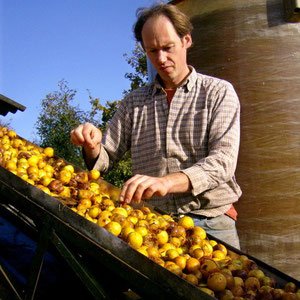
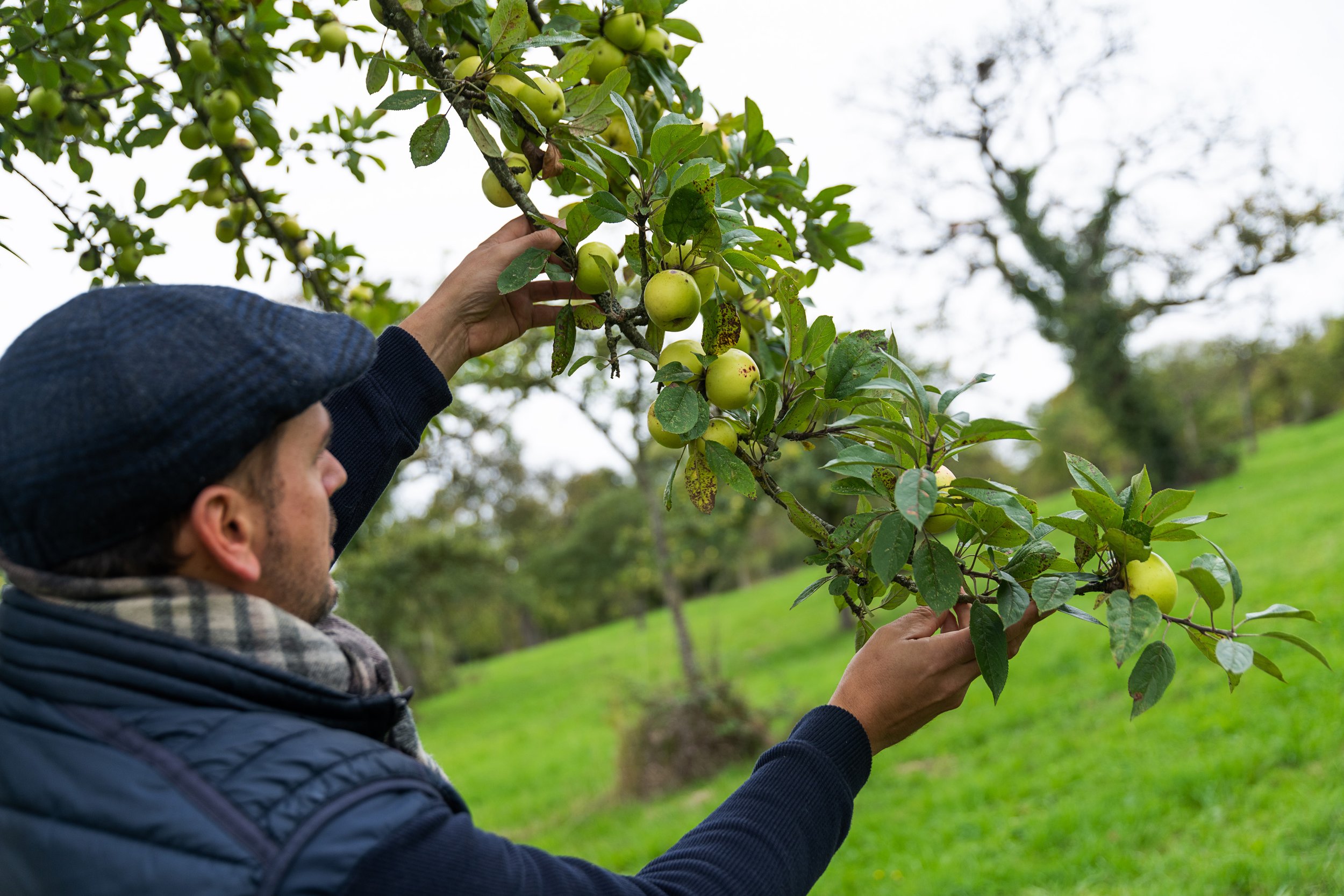
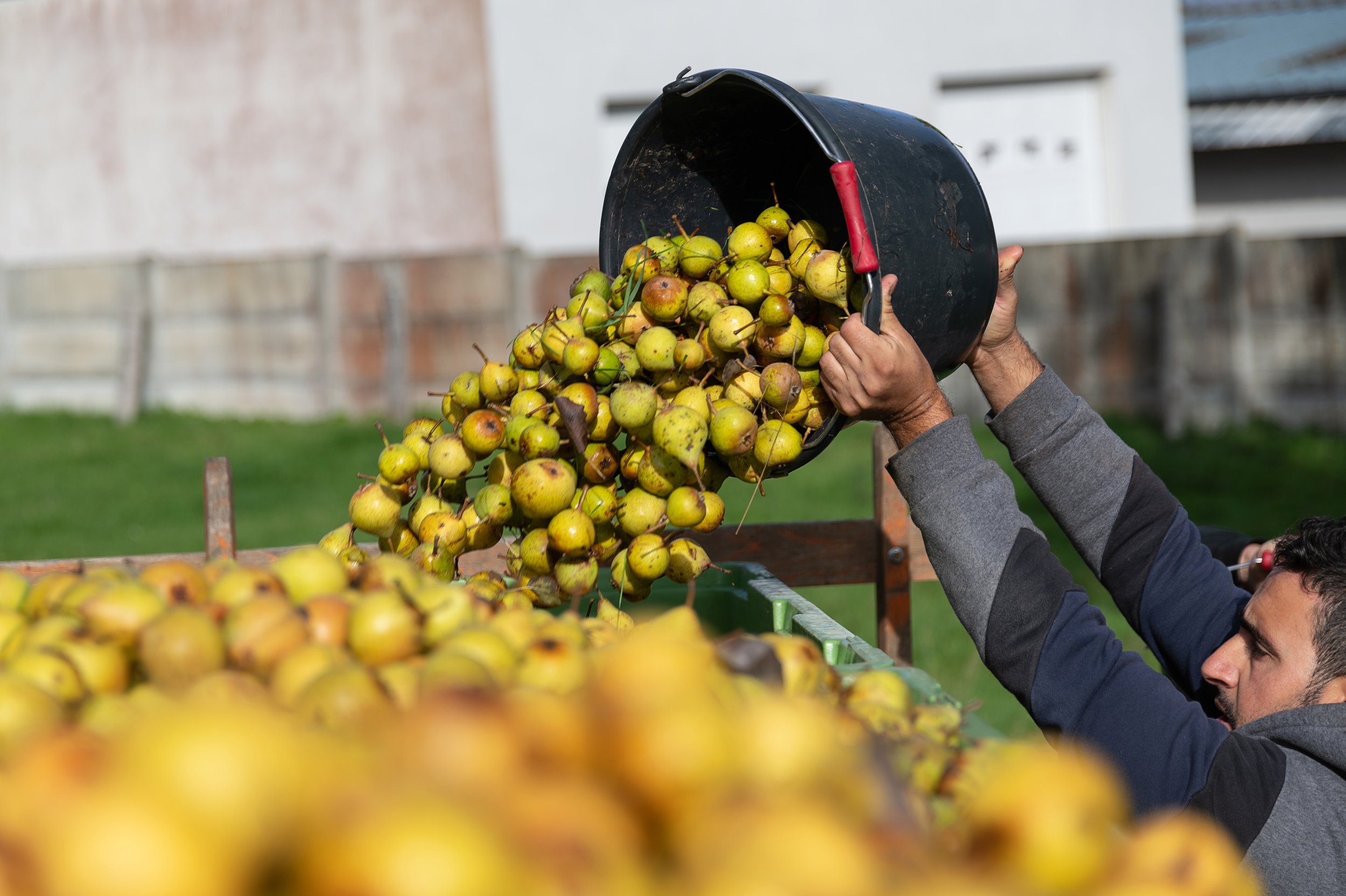
Clockwise from left: Alexandre Vingtier; PM Spirits Collab Calvados; Domaine du Coquerel; Still at Cave Normande; Domaine Olivier; In the orchard; Pears at Cave Normande.

Palazzi of PM Spirits is a veteran of trying to sell expensive French brandy to Americans. But he sees something special in Calvados. “To me, Calvados is the last frontier of French brandy, as close as it gets to pure expression,” he says. “It talks to your ‘soul.’ It is not made to please anyone, it is not made to hit specific notes. It hasn't been altered by the large brands or conglomerates.”

Now is the time to jump on the Calvados bandwagon. Below are notes on nine top expressions, followed by a half-dozen value selections that are great introductions to the spirit.

Calvados Is Calling

PM Spirits Collab - Alexandre Vingtier Selections 12 year Calvados ($155)

Single cask distilled and aged at Domaine Olivier, a top producer in Domfrontais, known for its pear ciders and pear-based brandies. This 50/50 blend of apples and pears come from 30-year-old organic apple orchards and pear trees more then 200 years old. Aged 12 years in French barrique, and it delivers incredible complexity at such a young age. Dark amber, aromas of gingerbread, pineapple pastry, dark chocolate, molasses, and flavors of tropical fruit, membrillo, maple syrup, pepper, licorice, with a long nutty, balsamic, and kirsch-like finish. (47.9% abv)

PM Spirits Collab - Alexandre Vingtier Selections 26 year Calvados ($230)

Single cask distilled at Domaine du Coquerel from 95% apples and 5% pears from an orchard with 50-year-old trees. Complex nose of burnt orange peel, grilled apple, tobacco, hay, roasted nuts, with rich rancio notes throughout. On the palate it’s bold and fiery (bottled at 57.1% abv, super high for Calvados). Balanced by nuttiness and spice, as well dessert notes of tarte tatin, dates, and crème caramel, with unique, floral finish that lingers and lingers. Very distinct spirit that belies Calvados’ rustic roots.

PM Spirits Collab - Alexandre Vingtier Selections 45 year Calvados ($500)

Remarkably rare single-cask distilled at Cave Normande, made from a 50/50 blend of apple (15 varieties) and pears (12 varieties) from an orchard with trees ranging from 20 to 200 years. Nut brown in color, redolent of rancio: by turns sherry-like, rum-like, with beautiful aromas of antique furniture varnish, candied orange, and black tea. On the palate, there’s honeyed and dried fruit notes—fig, membrillo—spices and chocolate, and miles-long finish of grilled apple, almond paste, and cigar smoke. Imagine a Calvados with hair on its chest, wearing gold chain, and possibly driving a Corvette.

Roger Groult 18 Year Old ($100)

Show me an 18-year-old spirit, in any category, that offers better value than this. Expressive nose, at first full of carmelized apple, then candied citrus, then finally crisp apple peel, herbs, and autumn leaves. Silky and expansive in the mouth, balanced by juicy freshness, baking spice, and mouthwatering acidity at the midpalate. The long, earthy finish is a savory swirl of russeted apple skin, fruit leather, espresso, and wet stone that’s unique for a brandy of this age. (41% abv)

“Value” Picks Under $100

Everyone defines value differently. With prices continuing to rise, these days $60 is as low as I would go for quality Calvados—one that I would enjoy neat rather than use in a cocktail. Is $60 to $90 a value? I guess it all depends on your definition. When I look at categories like tequila, mezcal, rum, or whiskey, I’d say it’s comparable. Remember: An $80 bottle of spirits contains a little more than a dozen two-ounces pours. That’s roughly $6.67 per pour. How does that compare to what you pay for a middling spirit at your local bar?

Roger Groult 8 Year Old, Pays d’Auge, $80

This 8-year-old bottling is a reminder that Calvados doesn’t always need decades of aging. Intense nose, with baked apple, mulled spice, and sandalwood. But in the mouth it’s fresh and juicy, with ripe and crisp apple notes, and a creaminess at the midpalate. Notes of cardamom, cinnamon, and peppercorn throughout that slides into a long finish. Always a good, value introduction to Calvados. (41% abv)


https://www.everydaydrinking.com/p/is-calvados-finallysexy?publication_id=22259&utm_campaign=email-post-title&r=kymsx&utm_medium=email

The Agave Social Club: PM Spirits and Nicolas Palazzi

agave, PM Spirits, Tequila, Nicolas PalazziNicolas Palazzi
PM Spirits and Nicolas Palazzi
The Agave Social Club

I speak with PM Spirits founder Nicolas Palazzi about his journey into bringing incredible spirits to the market. We discuss and taste their super small batch PM Spirits Tequila Blanco as well as talk about some of the other brands they are working with. To learn more about PM Spirits, you can go to https://www.pmspirits.com

https://theagavesocialclub.buzzsprout.com/1271420/13799662-pm-spirits-and-nicolas-palazzi

Seven Fifty Daily: What’s Driving the Growth of Calvados in the U.S. Market?

calvados, Seven Fifty Daily, Nicolas Palazzi, Roger Groult, Eric Bordelet, Domaine du TertreNicolas Palazzi

As Americans’ love for apples coincides with a rising appreciation for brown spirits, Calvados finds a new home in the U.S. market

Calvados is a traditional spirit dating back to 1800s France, but it’s experiencing exponential growth in the U.S. Photo Courtesy of Rogery Groulty Calvados.

In the U.S., cider is no longer enjoying the amazing growth of the past decade, but apples remain a perennial favorite among Americans. Meanwhile, the popularity of brown spirits continues unabated, expanding to embrace brandy as well. These two trends have collided to bring Calvados, France’s classic apple brandy, into more American homes and bars than ever before.

According to the Interprofession des Appellations Cidricoles (IDAC), Calvados exports to the U.S. grew 70 percent in 2021, and then repeated that feat again in 2022, making the U.S. the second largest export market for the apple brandy, after Germany. Numbers like these sometimes need to be taken with a grain of salt coming out of the topsy-turvy years of the pandemic and the global shipping crisis.

Nicolas Palazzi, the owner of PM Spirits, imports three Calvados producers, Roger Groult, Eric Bordelet, and Domaine du Tertre. According to Palazzi, importers are overstocked after bringing in extra product to protect themselves against shipping challenges, and he expects import volumes to level out. 

But Guillaume Drouin, the third-generation owner of Calvados Christian Drouin, feels the trend has legs. “Within the brandy category, apple brandy is doing very well,” says Drouin. “U.S. cider producers have started to produce apple brandy, and there are many more American apple brandies on the shelf than even just five years ago. Calvados is the historical apple brandy of the world, so hopefully it’s taking part in that trend.” 

On this point Palazzi agrees, noting that American drinkers have typically heard of the U.S. apple distillate Applejack at the very minimum. “Calvados, being the big brother of Applejack, being more complex by design, and being from a region where the name signifies something in terms of history, means it’s not as hard to sell when you already have that frame of reference.”

Indeed, the data suggests that this confluence of trends is driving a new wave of interest in Calvados among U.S. consumers and professionals alike.


From the Orchard to the Bottle

Normandy’s Calvados is one of the three classic brandies of France, alongside Cognac and Armagnac; it’s also the only one not made from grapes. The region’s history of producing apple- and pear-based spirits extends back at least five centuries, and the name Calvados came into use after the French Revolution. Production methods were formalized by the end of the nineteenth century, around the same time that Calvados rose in popularity across France, while its grape-based competitors struggled with the effects of phylloxera.

To make Calvados, apples are harvested and vinified as cider without any additions of gas, acid, or sugar, and the cider is then distilled and aged in wooden casks. A mix of apple types are permitted, but at least 70 percent must be bitter or bittersweet apples, and the rest classified as sharp or sweet; all are apple varieties that would otherwise be inedible to human palates.

Owner of Calvados Christian Drouin, Guillaume Drouin (pictured above) believes the sudden interest in Calvados spirits has staying power in the U.S. Photo courtesy of Calvados Christian Drouin.

The traditional Calvados orchard is planted with tall, high-stem trees, with fewer than 300 trees per hectare. Modern orchards are more densely planted with smaller, low-stem trees that are easy to manage and higher yielding, but are more work intensive. High-stem vineyards allow for cow pasturing and other uses among the trees. Many leading producers favor high-stem vineyards, and some use them exclusively.

Types of Calvados

Today, Calvados is made under three different appellations spread across Normandy and dipping occasionally into neighboring departments. The largest, Calvados AOC, makes up 70 percent of production, and is typically distilled in a column still; 35 percent of the apples must come from high-stem vineyards and the spirit must be aged for a minimum of two years. The Calvados Pays d’Auge is the oldest AOC, created in 1942. It’s a smaller area, has the same aging requirements, but is more stringent regarding apple sources, 45 percent of which must come from high-stem orchards. Calvados Pays d’Auge, uniquely, must also be double distilled in a pot still. While other Calvados can have substantial amounts of pears used in their production, Pays d’Auge limits pears to 30 percent of the fruit used.

In contrast, the newer, more southerly Calvados Domfrontais AOC, created in 1997, requires a minimum of 30 percent pears; the area is dominated by high-stem pear orchards. Calvados Domfrontais is produced using a column still and must age for at least three years before bottling; despite the longer aging requirements, the column still and high pear content typically yields a fresher, lighter style of Calvados.

All the Calvados appellations are open-minded regarding labeling rules, allowing age and quality statements on products that meet the given requirements. There is enough room within the regulations for producers to offer specialty products, so Calvados is able to keep up with trends found among other brown spirits. For example, Calvados can be aged in different types of vessels, such as older barrels left over from a previous generation, and bottled separately.

Christian Drouin has collaborated with distilleries such as Hine Cognac, Calle 23 Tequila, and Caroni Rum to use their barrels to finish Drouin Calvados bottlings. Drouin, Groult, and others have stepped outside the Calvados appellation to produce unaged apple brandies as well. Some producers have also introduced cask strength Calvados, bottled without being reduced back to 40 percent alcohol.

Small Producers, Small Environmental Impact

Compared to other French brandies, Calvados is well-suited to fit in with the craft ethos of America’s brandy scene, with a wide range of medium and small producers. “Calvados is still a very craft category,” says Drouin. “Even the bigger Calvados producers are very small compared to the Cognac or whiskey industry.” Calvados overall includes 8,000 hectares of orchards, making it just over a tenth the size of Cognac. Nonetheless, Calvados includes about three hundred producers, a greater number than in the more famous grape brandy region.

Drouin says Calvados’s green credentials also deserve to be better known. “We examined the carbon footprint of our company, and we calculated that every time we produce a bottle of Calvados, the equivalent of three kilos of CO2 is absorbed,” says Drouin. “So it’s probably the only spirit in the world which can show, without any effort, a negative carbon footprint.” According to the IDAC, Calvados orchards on average sequester 35 to 50 tons of carbon per hectare over a 25-year period, and the orchards also provide four times the habitat for bees and other pollinators than other field crops. 

Calvados is also seamlessly sustainable, requiring very little in the way of reducing the carbon footprint of the spirit’s production. Photo courtesy of Roger Groult Calvados.

That footprint is tied to the small volume produced per hectare—about one quarter that of grape brandy—and the biodiversity in the orchards, with cows grazing on the grass beneath the trees. In addition, the traditional, tall-tree orchards require no spraying. Workers visit the vineyards for pruning and harvesting, but little else; it’s very minimal interference compared to grain fields or vineyards, where tractors might pass through on a weekly basis. “It’s nothing new,” says Drouin. “It’s historical. We just have a protected way of production that’s sustainable.”

Calvados and American Cocktail Culture 

While the pandemic spurred more off-premise purchases of Calvados, Drouin says 70 percent of their sales go to on-premise outlets. Leanne Favre, the creative director of Leyenda and Clover Club in Brooklyn, says that as a spirits geek she enjoys Calvados neat at home, but that sales in the two bars are mostly in the form of cocktails. “It’s getting a lot more showtime in cocktails and on menus than I’ve ever seen before,” she says.

Favre adds that the wide range of styles available, from lighter, fresher examples to more aged expressions, means Calvados has a lot of different uses today, and needn’t be confined to autumnal, seasonal drinks. “It’s amazing how much range Calvados can bring to your menu when you start including it.”

More and more Calvados producers have been visiting the U.S. market and promoting their spirits, and Favre praises the Calvados industry for recent initiatives that have helped highlight the variety the category can offer. “You had forty different producers banding together; it really showed how dynamic the category can be, just like Mezcal,” she says. “It’s really worth it to try different producers and expressions.”

https://daily.sevenfifty.com/whats-driving-the-growth-of-calvados-in-the-u-s-market/